
Reviewed · SKIP THE LINE
Skip-the-Line Warsaw Royal Castle Private Guided Tour
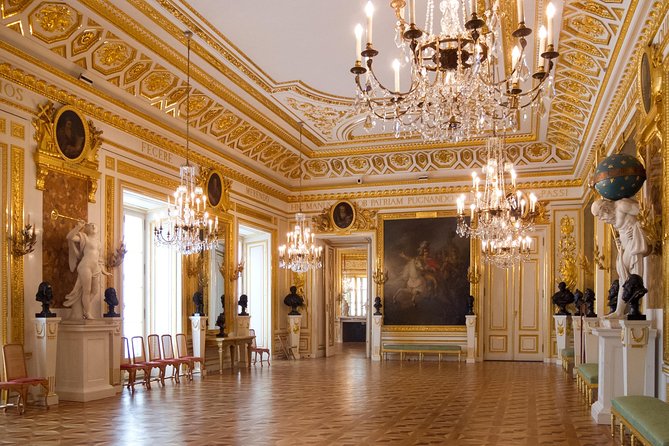
This Skip-the-Line Warsaw Royal Castle private guided tour is interesting because it stitches together Warsaw’s reconstructed Old Town, the Royal Castle, and meaningful memorial stops in one walkable loop. I love having a licensed guide who connects the buildings to Polish monarchs and medieval Poland, so you do not just stare at walls. Starting at Plac Zamkowy near Sigismund’s Column helps you orient fast.
I also love the mix of indoor and outdoor highlights, with Royal Castle Museum time for the recreated 17th-century rooms plus a climb up St. Anne’s bell tower for close-up views. The only catch is that the route packs in a lot of ground, and castle security means you must show up on time and stay within the entry schedule.
Key points to know before you go
- Skip-the-Line focus around the Royal Castle so you spend more time seeing and less time waiting
- Private tour, only your group for a more personal pace and more Q and A time
- A 2.5 mile Road of Kings along Krakowskie Przedmiescie, with major monuments on the way
- WWII remembrance built into the walk at stops like the Warsaw Uprising Monument and the Little Insurgent statue
- Request-based entrances for certain churches and viewpoints, like St. Anne’s tower and selected interiors
Why the Royal Castle and Old Town story works in one tour
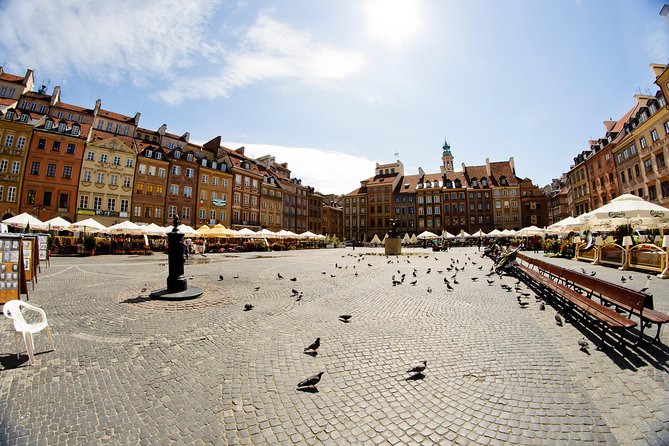
Warsaw’s Old Town is not just pretty streets. It is a place where history was erased and then rebuilt on purpose. You start in the heart of it, among Gothic alleyways, baroque palaces, churches, and tiered burgher houses that were reconstructed to bring back the feel of earlier centuries.
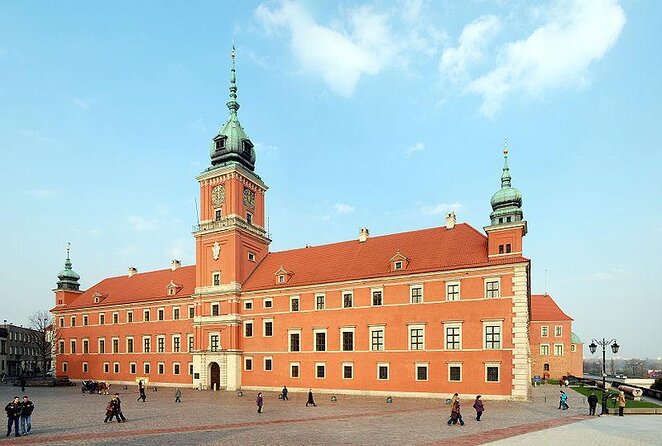
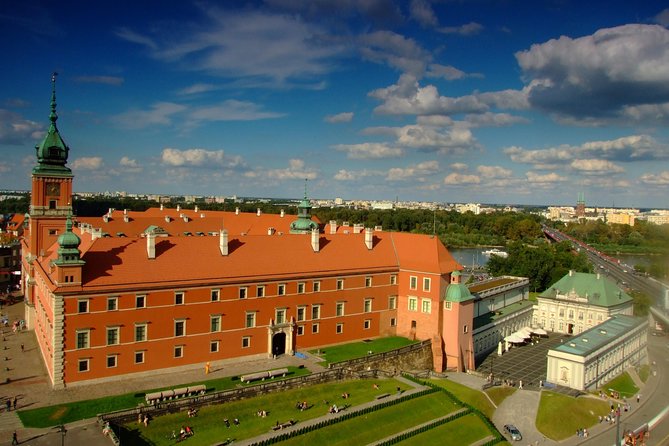
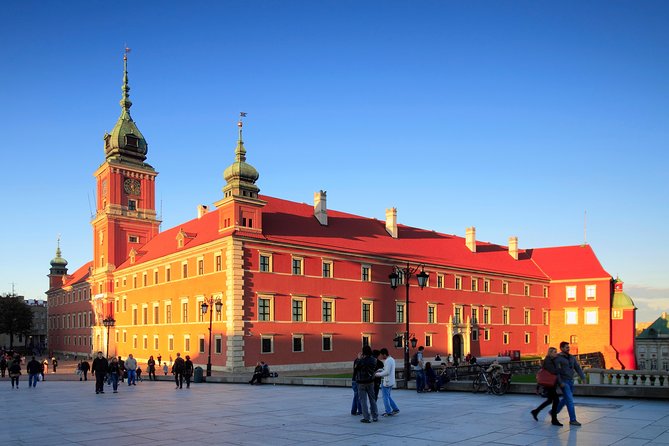
Then you pivot from atmosphere to “how do they do that” with the Royal Castle. The castle you see today was rebuilt after it was dynamited by German troops following the Warsaw Uprising. Your guide can connect that rebuilding effort to the way the castle is organized, why certain rooms matter, and how monarchs and the Polish Commonwealth are represented in the architecture.
That is the big win for me with this tour: it treats the city like one readable story. You are not only ticking off sites, you are learning how Warsaw decided what to rebuild, what to restore, and what meanings to carry forward.
More to book in Warsaw:
- Warsaw: Chopin Concert in the Old Town
★ 4.8 · 2,287 reviews - Warsaw: Traditional Galar Cruise on The Vistula River
★ 4.6 · 1,640 reviews - Warsaw: Old Town Highlights Walking Tour in English
★ 4.7 · 1,516 reviews
Skip-the-Line value and what $150.59 buys you
At $150.59 per person for a private guided tour, you are paying for three practical things: time, access, and guidance. A 2 to 3 hour tour is long enough to cover key Old Town sights and still focus on what you are seeing. It is also short enough that you will not feel like you are stuck in a museum for half a day.
The “skip-the-line” element matters most around the Royal Castle museum stop. Castle security can tighten up timing, and queues can waste the kind of time you would rather spend inside the rooms or looking out from St. Anne’s tower. A mobile ticket also helps, because you are not hunting for paper and losing minutes at the entrance.
One more value angle: the tour is private, so the guide can adjust the pace for your group. If your group wants more detail on monarchs, rooms, or the rebuilding after World War II, that is the point of paying for a guide rather than wandering solo. If your group prefers shorter answers and more looking time, a private format also gives you that flexibility.
If you travel in a group, there are group discounts listed for this experience. Even if you do not know the math yet, it’s worth checking when you book, because splitting costs can change the deal.
Finally, it’s popular. The tour is booked about 43 days in advance on average, so plan to reserve early if your dates are tight.
Meeting at Sigismund’s Column, then playing the castle timing game
The meeting point is right at Sigismund’s Column, Plac Zamkowy (00-001 Warszawa). That is a smart place to start because Plac Zamkowy is the natural staging area for the Old Town, and the column is basically a landmark compass.
Two logistics details matter a lot here:
1) The castle has an entry schedule tied to security rules. You need to arrive on time, and if something happens and you are late, you should inform the guide as soon as possible.
2) You should check your email the day before the tour for important information.
I treat this as a “show up like you mean it” tour. Set yourself up for success by adding extra buffer time before your start. In this part of Warsaw, getting delayed can ripple into when you can enter the castle.
Old Town core: cobblestones, squares, the Barbican, and the mermaid
This walk is a tour of contrasts, from restored medieval streets to ceremonial squares and fortress edges.
You begin in Old Town itself, where the reconstruction effort brought back the feel of bygone days. This is one of those places where the guide’s job is not to recite names forever, but to point out patterns: where the Gothic street layout shows up, how baroque palaces sit alongside older structures, and why so many churches dominate the skyline.
Next comes Rynek Starego Miasta, the main square. It’s surrounded by 17th and 18th century merchants’ houses, and the area is full of cafés, shops, galleries, and street vendors. The practical value of this stop is that it gives you a “breathing space” moment after the alleyways, plus it’s an easy reference point for your bearings.
Then you step into Castle Square (Plac Zamkowy), anchored by the King Zygmunt III column. Built in 1821, it is one of those landmarks that makes the Old Town feel staged for you, like the city hands you a central frame.
Later in the route, you circle back to the bigger fortress story with the Warsaw Barbican (Barbakan Warszawski). This 16th century fortress was part of the medieval fortifications guarding the northern entrance through the Novomejska Gate. The best way to enjoy this stop is to pay attention to how thick and defensive it looks compared to the softer-looking streets around it.
You also get a quieter curiosity stop with the Warsaw Mermaid sculpture in a small square. It looks simple at first glance, but the legend attached to it is the kind of detail a good guide can turn into a fun side story without turning the tour into a joke show.
And in the same general zone of small surprises, you may notice the Wishing Bell, a 17th century bronze bell set in a pretty courtyard. Even if you do not turn it into a superstition, it adds a human scale to all the grand buildings.
More Warsaw bookings to weigh
- 3-Hour Guided Cycling Tour of Warsaw
★ 4.9 · 624 reviews - Warsaw: Old Town Guided Walking Tour
★ 4.9 · 599 reviews - Half-Day Polish Food Walking Tour with Guide and Dinner
★ 4.5 · 381 reviews - From Warsaw: Guided Tour to Auschwitz-Birkenau and Krakow
★ 4.4 · 363 reviews
Royal Castle Museum: recreated rooms and why the rebuilding matters
This is the centerpiece stop: Royal Castle in Warsaw – Museum. It served as the central building for the Polish Commonwealth for centuries. But the key here is why it looks the way it does today. It was rebuilt after it was dynamited by German troops after the Warsaw Uprising, with the goal of recreating the original 17th century architecture and interiors.
That means you are not just walking through empty displays. You are moving through a curated reconstruction. Your guide can explain the purpose of the rooms, and how the castle’s layout and functions connect back to monarchs and national life. This is exactly the kind of detail that makes a castle tour worth paying for: you get context that turns doors and hallways into meaning.
You will also see why this tour leans hard on storytelling. The castle is physical proof that Warsaw chose memory and identity after destruction. If you want a tour where the guide connects the dots between medieval Poland, monarchs, and the wartime breaks in continuity, this is built for that.
One more tip from the structure of the day: since the tour is only about 2 to 3 hours, you do not want to lose time outside. When you reach the castle, be ready to focus. That is when the value per minute is highest.
St. Anne’s bell tower and the churches where you can request entry
A major payoff for many people is the Observation Terrace on the Bell Tower of St. Anne’s Church. The description makes it clear it is worth the climb, and for a relatively cheap price you get a delightful view of the Old Town up close plus the city center in the distance. You may be able to add it depending on timing, and it is described as possible to see for request.
Then the tour visits St. Anne’s Church (Kosciol Swietej Anny). The church is richly decorated, but the vibes are described as peaceful. If you want to go inside, it says it is possible to enter for request. The point here is not “see more rooms.” It is “see how decoration changes the mood,” especially after walking outside among squares and facades.
You also have a coronation and ceremony stop with Archikatedra Sw. Jana Chrzciciela. This church dates to the 13th century and is considered one of Warsaw’s distinguished churches. The big detail is that it was the site of royal coronations and other national celebrations. If you can request entry, it gives you a chance to see why the building mattered enough to be linked with those high-stakes moments.
My practical advice: decide early with your group whether you want interior time at the churches. If your group does, come prepared to go up, down, and slow down for a few minutes inside. If your group wants mostly exteriors, you still get plenty of payoff from tower views and the castle museum.
Road of Kings walking plus two WWII reminders you will not forget
The route then moves into Krakowskie Przedmiescie, described as a 2.5 mile Road of Kings. Even if you just think of it as a “great walking stretch,” it’s more than that. It is a long ceremonial avenue where important buildings line up like chapters in a book, each one tied to a time when power shaped the city.
On this same general stretch, you hit some of Warsaw’s most emotionally heavy public art.
The Warsaw Uprising Monument is one of the most moving monuments in the city. The architecture communicates effort, strength, and sacrifice by Polish soldiers. It’s the kind of stop where you can feel the scale even if you only spend a few minutes.
Then you get the Statue of the Little Insurgent, a small bronze statue commemorating the children who lost their lives in the Warsaw Rising. It’s small but described as very moving, and honestly, this is where you will probably take the longest pause, even if you only have 5 to 10 minutes on the clock.
Two practical notes to keep this part respectful and not rushed:
- Give yourselves space to stand back and take it in, even if the tour is moving.
- If your group has kids, consider whether this emotional content fits your family’s tolerance level.
From Karlowice-level details to the Vistula: sculptures, palaces, and Chopin anchors
After the WWII anchors, the tour becomes a walk of cultural signals.
You pass the Museum of Warsaw building, though it’s described as only something to see from the outside. The value is that it keeps you oriented to the city’s storytelling approach: Warsaw does not only preserve monuments, it collects ordinary things and research about the city, then shares it publicly.
Next comes the outside look at Kraśinski Palace. Its exterior is described as impressive, with reconstruction done well. Again, this is an important pattern for this tour: many stops are intentionally outside-only within a short time window, so your guide can connect the dots while you keep moving.
The same idea shows up with the Field Cathedral of the Polish Army, also noted as only outside. Even in a simplified form, it’s described as stunning and a little mysterious, with less ornate overload and more focus on form.
You then visit the Church of Jesuits, with an imposing red exterior and ornate interior surprises when you get the chance. The description specifically notes the interior is higher than you expect, which is a perfect example of what a good guide can cue you for: your eyes might assume one scale, then you see the real one.
The Vistula stop shifts the mood. Warsaw’s waterfront is developing, with new boulevards and waterside pubs opening, and the atmosphere is described as more laid back. This is where you get an easy visual change of pace after dense Old Town streets.
And then come the music anchors, which are some of my favorite kinds of city stops because they teach you what matters to locals:
- Holy Cross Church (Kosciol Swietego Krzyza) houses the heart of Chopin. The entry to see it is described as possible for request. It’s also noted that the Holy Cross at the entrance is original and survived bombings, which makes the site feel personally connected to war and memory.
- Chopin’s Bench uses multimedia to present Chopin’s music. It’s a different kind of museum moment, and if you like playful tech that makes art more physical, this can be a highlight.
You also get the Wishing Bell earlier, which is in the same spirit: it’s not just an art object, it is a small story station inside the walking loop.
Presidential palace sights and other Old Town corners that set the tone
The tour does not ignore modern state power. You get the Palac Prezydencki (Presidential Palace), where the Polish president resides and where heavy guarding is mentioned. The value for you is mostly visual and contextual: you understand where power sits relative to the Old Town core, and you see how security presence changes the feel of the street.
Right after that, Church of St. Joseph of the Visitationists returns to a simpler, more austere tone. It was originally a wooden chapel, rebuilt after it burned down, and the interior decor is described as very plain and austere. That contrast matters after the baroque and grand church moments.
Then you step into a ceremonial square moment with New Town Square. It was founded by John III Sobieski to celebrate his Viennese victory over the Turks in 1683. The quiet open plaza and its Renaissance architecture, plus the baroque church of the sisters of the Holy Sacrament, make it feel calmer than the main Old Town square without losing importance.
You finish this part of the Old Town map with Carmelite Church – Our Lady of the Assumption, described as a baroque church next to the presidential palace. The outside details include double pillars and grand stone lampions. There’s also a story attached that Napoleon said he would like to move it to Paris on his own hands. Treat that as a local legend, but it’s exactly the kind of detail that keeps the last stretch entertaining.
St. Mary’s Church, Adam Mickiewicz, and the finish of your Old Town loop
You wrap up with a few classics that help you leave with a stronger map in your head.
St. Mary’s Church (Kosciol Najswietszej Marii Panny) is described as one of the oldest buildings and one of the few remaining examples of Gothic architecture in Warsaw. Behind the church, there’s a small park with steps leading down to the banks of the Vistula River. It says this can be possible to see for request, so if your group wants the river connection, mention it.
Then you hit the Adam Mickiewicz Monument, an impressive tribute to one of Poland’s leading poets. It’s described as having great decorations, steps, and surrounding sculptures. This stop gives you a final shift from architecture and war memorials into literature and national identity.
So should you book this tour?
I’d book it if you want an efficient, guided way to see Warsaw’s most important threads: rebuilt Old Town streets, the Royal Castle museum, and the memorial and Chopin stops that many guidebooks skip or barely touch. Because it is private, it is also a good choice if you like asking questions and getting direct answers while you walk.
I would think twice if your group hates walking or if you want a long, slow day inside museums only. This itinerary includes lots of stops that are outside-only (palaces, cathedrals, and some museum buildings), and you still cover a meaningful walking distance, including the 2.5 mile Road of Kings.
If you go, prioritize arriving on time and use the guide’s request-based options at St. Anne’s tower and inside certain churches. That is where you can turn the same route into a more personal experience.
FAQ
How long is the Skip-the-Line Warsaw Royal Castle private guided tour?
It runs about 2 to 3 hours.
Is this tour private, or will I be with other groups?
This is a private tour/activity, so only your group participates.
Is the tour offered in English, and do I need a printed ticket?
It is offered in English, and you receive a mobile ticket.
Where does the tour start?
The tour starts at Sigismund’s Column, Plac Zamkowy, 00-001 Warszawa, Poland.
Does the itinerary include the Royal Castle Museum?
Yes, the Royal Castle in Warsaw – Museum is included as a stop on the tour.
Is there a church or tower entry option during the tour?
Some locations are listed as possible to enter for request, including St. Anne’s bell tower, St. Anne’s Church, and Archikatedra Sw. Jana Chrzciciela.
What is the cancellation policy?
You can cancel for a full refund if you cancel up to 24 hours in advance of the experience’s start time.
Fresh Warsaw reviews
- Warsaw: Wolf’s Lair & Swieta Lipka Small-Group Tour + Lunch★ 5.0 · 3 reviews
- World War II Warsaw Old Town, Military Cemetery Walking Tour★ 4.7 · 3 reviews
- Warsaw: Old Town Walking Tour, Hidden Gems & Hot Chocolate★ 4.3 · 3 reviews
- Warsaw: Explore the Vistula on Its Longest Speedboat Route★ 4.6 · 3 reviews
- 5-hour: Royal Castle, Old Town and POLIN Museum/inc.Pick-up/★ 5.0 · 3 reviews
- Majdanek – German camp from II World War – Private Tour – 1 DAY TRIP FROM WARSAW★ 5.0 · 3 reviews
- Museum of Modern Art in Warsaw★ 5.0 · 3 reviews
- Warsaw Outdoor Paintball with Transfers (all year round)★ 5.0 · 3 reviews
Skip the Line, compared.
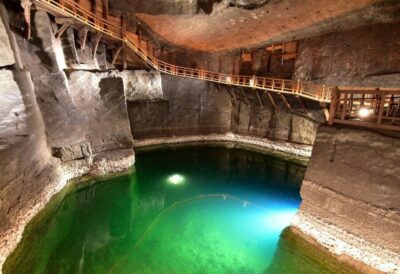
Wieliczka Salt Mine Tour & Skip the Line Ticket
Read our review →
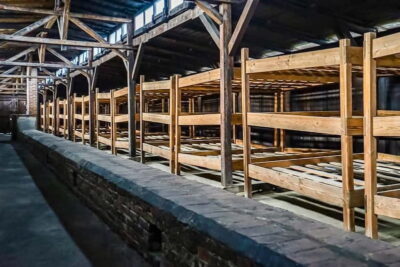
Auschwitz Birkenau Guided Tour/Skip The Line/PickUp/Guide ENG
Read our review →
Browse the lists this tour appears in