What makes this Warsaw experience interesting is how it connects big themes you read about in books to the actual streets you walk on. You move through communist-era planning, interwar architecture, and calmer neighborhood corners, all in one smooth 2-hour loop.
I love the mix of stops, especially the contrast between Nowy Świat 6/12 and the 1930s modernism of Pniewski House, then later the Socialist Realism of Plac Konstytucji. I also like that the tour keeps things personal with a maximum of 10 people, led by Łukasz, whose English is excellent and who actively shapes the walk around what you care about.
One thing to consider: the pace is fast by design, with short looks at each place. If you want long time in a single building or you tend to linger for photos, plan to come back on your own after the tour.
Key highlights worth your attention
- Small group (up to 10), which helps you actually ask questions and get straight answers.
- All stops listed with free admission tickets, so you are not constantly juggling entry fees.
- Architecture-first route, covering communist planning, interwar modernism, and 19th-century elite residences.
- Local everyday rhythm, including Jazdów, a wooden-house community area tied to regular cultural and lifestyle activities.
- Food finish at Hala Koszyki, a historic market building that is a great place to eat after your walk.
- A pastry stop on Wilcza, giving you a chance to try something local during the route.
A compact 2-hour route that still feels like Warsaw
This tour is built for people who want more than postcard sights. In about 2 hours, you get a guided “street-level” education: how Warsaw’s layers of power, design tastes, and day-to-day life show up in real buildings, courtyards, parks, and side streets.
The small group matters more than it sounds. With a maximum of 10 people, you’re not lost in a crowd. Łukasz can also respond to what you ask for, and the reviews spell out that his communication before the tour is easy, and his English is strong. If you’re arriving after travel, that same setup can help you get your bearings fast, and keep jetlag from stealing the day.
Practical note: the walk is short-stop, short-chat. Each site is roughly 10 minutes, which is great for variety, but it does mean you should expect quick photo angles and exterior focus more than slow museum-style wandering.
More to book in Warsaw:
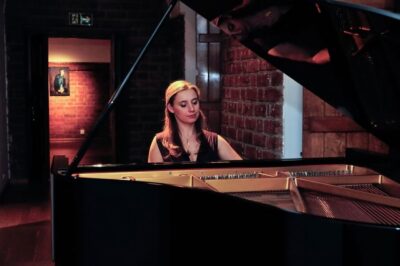
- Warsaw: Chopin Concert in the Old Town
★ 4.8 · 2,287 reviews - Warsaw: Traditional Galar Cruise on The Vistula River
★ 4.6 · 1,640 reviews - Warsaw: Old Town Highlights Walking Tour in English
★ 4.7 · 1,516 reviews
Meeting at Charles de Gaulle statue, finishing at Hala Koszyki
You start at the Charles de Gaulle statue, at Nowy Świat 12 (near public transportation). It’s a good meeting point because it’s not buried in a neighborhood maze, and it makes the start time, 1:00 pm, feel straightforward.
The tour ends at Hala Koszyki on Koszykowa 63. This is handy because it’s not just a random stop, it’s a natural place to keep going. If you want a proper lunch or a casual snack after the walking portion, you’re already at a very active food venue in a historic structure.
This also helps with timing. You can treat the tour like a first or second outing on your itinerary, then eat and reset right afterward instead of racing across town.
Nowy Świat 6/12 and Pniewski House, politics and modernism in plain sight
The first stop you hit is Nowy Świat 6/12, tied to the former headquarters of the communists. Even if you only take in what you can from outside, the point is to see how power leaves physical fingerprints. Warsaw under different regimes did not just change laws. It changed how people built, where they gathered, and what kind of architecture was considered acceptable.
From there, you shift into a very different mood at Pniewski House, described as one of the important modernist buildings from the 1930s. Modernism has its own logic: clean lines, a focus on function, and the idea that design can express a new way of living. I like pairing these two early in the walk because it stops the city from feeling like one big blur. You can feel the changes in taste and ideology quickly.
Potential drawback here is also simple. Because each stop is brief, you won’t be doing deep reading at a desk. Bring curiosity, not expectations of a long lecture inside a museum room.
Elizeum Park, Park Ujazdowski, and Ujazdów Avenue, where greenery meets planning
Next you walk along to Elizeum, a park situated along the Warsaw Escarpment. The escarpment detail matters because it explains why Warsaw developed the way it did over centuries. When a city grows around a natural edge, the geography shapes roads, districts, and how neighborhoods connect.
Then comes Park Ujazdowski, a 19th-century park with a traditional design approach. This break is useful. After the architectural and political themes, the park gives your eyes and brain a breather. It also gives you context for how parks were planned in the city, not just added later.
Finally, you reach Ujazdów Avenue, an elegant 19th-century venue associated with former residences of Warsaw’s elite. This is one of those streets where you can train your attention for “status signals” in architecture. Even without going inside, you can compare the scale, the façade style, and the overall feel.
If you’re traveling with someone who only wants big famous sites, this stretch is where you can win them over. It’s still visual, still interesting, but it shows a side of Warsaw that feels more human than monumental.
Another way through a Warsaw day:
- Warsaw Concert: Chopin – Painted by Candlelights with Wine
★ 4.8 · 1,442 reviews - Warsaw: City Sightseeing Hop-On Hop-Off Bus Tour
★ 3.6 · 1,415 reviews - Warsaw: Highline Warsaw Entry With 360° Views & Rooftop Bar
★ 4.4 · 1,297 reviews - Warsaw: POLIN Museum of the History of Polish Jews Ticket
★ 4.7 · 1,142 reviews
Jazdów and Mokotowska, the quieter blocks with real routines
At Jazdów, you enter a colony of wooden houses that hosts local activities such as lectures, concerts, urban gardening, and yoga classes. You won’t just see architecture. You get a sense of what happens when a city keeps space for community life.
This stop is one of my favorite types of tourism because it’s not staged. Even if you don’t catch a specific class in session, the idea is clear: these are buildings meant for people who live there, not just people who pass by.
Then the walk moves to Mokotowska, described as a street lined with elegant pre-war apartment buildings that survived World War II. That “survived” word is important. It turns the buildings from décor into evidence. You’re looking at what remained when a city was hit hard, and that changes how you experience the streets.
A consideration: if you prefer only major landmarks with easy recognition, Jazdów and Mokotowska may feel more subtle. But that’s the point of an off-the-beaten-path route, and it’s also why the walk tends to feel memorable after the bigger sights fade.
Plac Konstytucji and Politechnika, reading Socialist Realism and looking toward design education
The tour then hits Plac Konstytucji, a significant communist-era housing estate representing Socialist Realism, which was a mandatory architectural style in the 1950s. Socialist Realism can look heavy and rule-driven, and that’s exactly what you should pay attention to. This stop is where you connect design choices to the era that enforced them.
Next you visit Politechnika, the Faculty of Architecture of the Warsaw University of Technology. Even though this is not the same as touring a museum, it adds a smart layer. You see that architecture is not only something you inherit from history. It’s something people study, argue about, and shape for the future.
This combination can be a lot for the mind if you’re not expecting it. You go from ideology in buildings to education and professional training in one flow. I like it because it keeps Warsaw from turning into a set of disconnected “styles.”
Wilcza pastry stop and Hostel Witt, the Warsaw photo walk with a film twist
When the route reaches Wilcza, you get a local pastry stop. The listing frames it as a chance to taste something local, so think of it as a built-in excuse to pause, grab a sweet, and keep your energy for the last stretch. Even if you don’t buy anything fancy, this kind of stop makes the whole outing feel more like daily life.
Then comes Hostel Witt, described as the place where Roman Polanski filmed his famous The Pianist movie. If you enjoy film locations, this is the moment that turns the walk into a story you can recognize from popular culture. You are not just learning about architecture now, you are seeing how Warsaw became a backdrop for international cinema.
One practical tip: this part is where photos come naturally. If photography matters to you, you’re in luck. The walk is led in a way that pays attention to visual details, and the reviews mention Łukasz’s interest in architecture and photography, which helps people take better shots.
Hala Koszyki, why ending here is smarter than it looks
The tour ends at Hala Koszyki, a very popular local spot housed in a historical food market building built over 100 years ago. Ending here is a smart design choice, because the city’s story keeps going long after the guided portion ends.
It’s also a good reset zone. You can turn your guided walk into a personal meal plan. If you still have questions for your guide, this is often the easiest time to ask, since you’re not immediately preparing for another leg of walking.
If you’re the type who wants a “real meal” rather than a snack, Hala Koszyki is the kind of place where you can do that. If you want something quick, you can still keep it easy.
Price and value: what $41.40 buys you in the real world
At $41.40 per person, the tour is priced like a proper guided experience, not a budget-only stroll. The value comes from several practical pieces landing together.
First, the stops are listed with free admission tickets, which removes one common tourist headache. Second, you get a guide with strong English and a personality that shows up in how people communicate with him before the tour. Third, the route includes a local pastry stop and ends at a major food venue, so you are not stuck looking for food afterward.
The real bargain here is the time structure. Two hours is long enough to change your perspective on Warsaw, but short enough that it doesn’t hijack your day. If you plan your schedule around that, you get more done without getting worn out.
Who might feel it is expensive? If you only want major famous monuments and you plan to spend most of your time indoors, this format may feel like “quick looks.” But if you enjoy walking, asking questions, and reading the city through buildings and streets, you’re paying for a focused lens, and that’s exactly what you get.
Should you book this off-the-beaten-path Warsaw walk?
Book it if you want:
- A smarter first look at Warsaw neighborhoods, not just the headline sites.
- An architecture-driven walk that connects styles to the era that produced them.
- A small group experience led by Łukasz, who is praised for great English, personable communication, and tailoring the walk to your interests.
- A day structure that includes a pastry stop and ends with an easy meal at Hala Koszyki.
Skip it if:
- You need long indoor time at museums.
- You dislike moving quickly between short stops.
If you’re on your first day and you want to beat jetlag with a structured walk, this tour format fits that too. It’s brisk, guided, and gives you plenty to think about while still leaving the rest of the day open.
FAQ
What is the duration of this Warsaw tour?
It lasts about 2 hours.
How much does the tour cost?
The price is $41.40 per person.
Is the tour offered in English?
Yes, it is offered in English.
Where do I meet the group?
You meet at the Charles de Gaulle statue, at Nowy Świat 12, 00-496 Warszawa.
Where does the tour end?
The tour ends at Hala Koszyki, at Koszykowa 63, 00-667 Warszawa.
How big is the group?
This tour has a maximum of 10 travelers.
Are admission tickets required for the stops?
The stops listed include admission tickets free.
Can I cancel and get a refund?
Yes. You can cancel up to 24 hours in advance for a full refund.
Are service animals allowed?
Yes, service animals are allowed.
Fresh Warsaw reviews
- Warsaw: Wolf’s Lair & Swieta Lipka Small-Group Tour + Lunch★ 5.0 · 3 reviews
- World War II Warsaw Old Town, Military Cemetery Walking Tour★ 4.7 · 3 reviews
- Warsaw: Old Town Walking Tour, Hidden Gems & Hot Chocolate★ 4.3 · 3 reviews
- Warsaw: Explore the Vistula on Its Longest Speedboat Route★ 4.6 · 3 reviews
- 5-hour: Royal Castle, Old Town and POLIN Museum/inc.Pick-up/★ 5.0 · 3 reviews
- Majdanek – German camp from II World War – Private Tour – 1 DAY TRIP FROM WARSAW★ 5.0 · 3 reviews
- Museum of Modern Art in Warsaw★ 5.0 · 3 reviews
- Warsaw Outdoor Paintball with Transfers (all year round)★ 5.0 · 3 reviews
Warsaw Tours, compared.
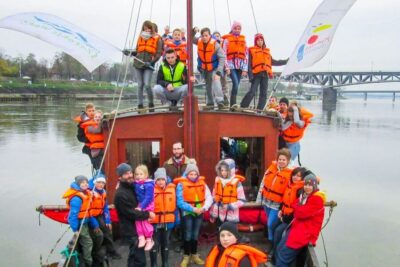
Traditional Galar Cruise on The Vistula River
Read our review →
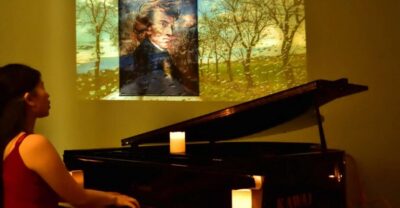
Warsaw Concert: Chopin – Painted by Candlelights with Wine
Read our review →
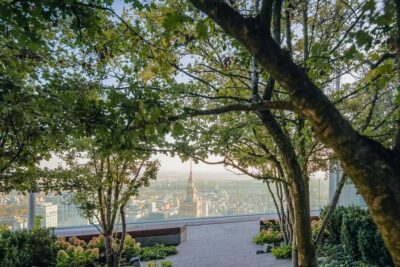
Highline Warsaw Entry With 360° Views & Rooftop Bar
Read our review →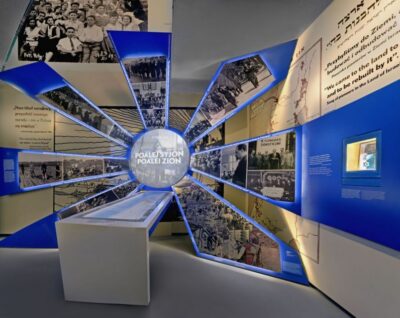
POLIN Museum of the History of Polish Jews Ticket
Read our review →