
Reviewed · CITY TOURS
Warsaw City Tour – PRIVATE (4h)
A private 4-hour Warsaw city tour is interesting because it gives you a guided storyline, not just a checklist. You move through places that explain why Warsaw looks the way it does today, from the rebuilt Old Town core to the monuments that still carry real weight.
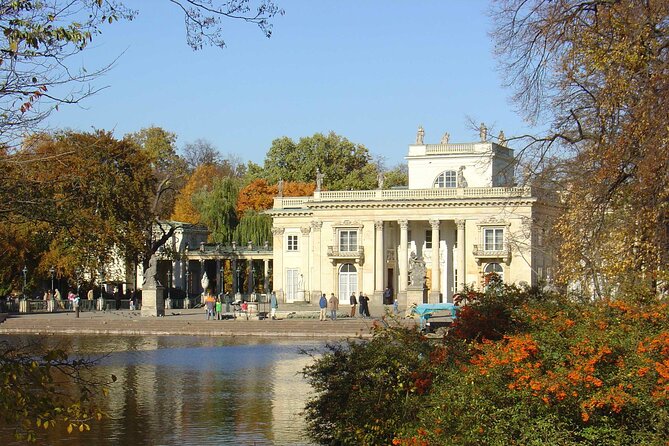
I especially like the time you spend in the Old Town area, including the UNESCO-listed streets and squares and the symbols that anchor the city’s identity. I also love the contrast with Lazienki Park, where you get palace and garden calm inside a living, modern city. One possible drawback: parts of central Warsaw can be hard for cars to access, so expect some mix of walking and vehicle hops, even on a private tour with pickup.
Key things you should know before you go
- Hotel pickup and drop-off so you start in your own neighborhood.
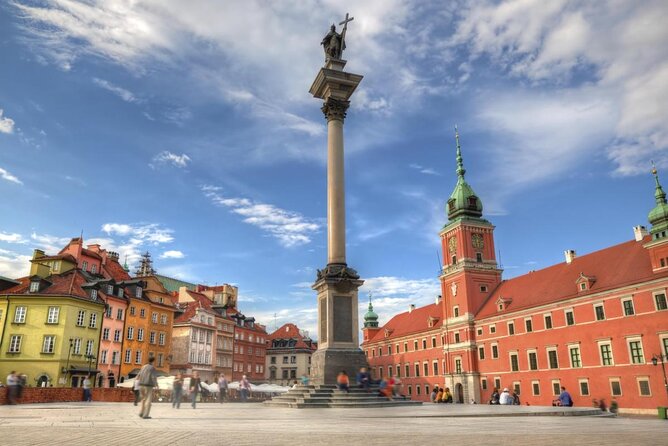
- Old Town UNESCO core with key symbols like King Sigismund’s Column and the Warsaw Mermaid square.
- Lazienki Royal Park plus classic music culture near Chopin’s monument and summer piano moments.
- Memory-heavy stops like the Warsaw Uprising Monument and the Tomb of the Unknown Soldier.
- A practical mix of sights including the Royal Route, royal-era churches, and modern Warsaw landmarks.
- One hands-on break at Copernicus Science Centre, with admission marked not included.
A 4-hour Warsaw sweep that actually tells you why the city changed
This is built as a half-day format, so you’ll cover a lot of ground without pretending you’ll do everything deeply. What makes it work is the way the stops connect: royal power, civic life, war and rebuilding, national remembrance, and then modern Warsaw.
You’ll start near one of the city’s main visual anchors, King Sigismund’s Column, and then slide into the Old Town zone. After that, the route keeps expanding outward, reaching the Royal Route area, then Lazienki, and finally the modern skyline landmarks and a science stop.
Because time is tight, you get short visits at most major points, often around 10 to 20 minutes. That’s enough to orient yourself, see what matters, and know what you want to come back for later.
More City Tours in Warsaw
- Warsaw: City Sightseeing Hop-On Hop-Off Bus Tour
★ 3.6 · 1,415 reviews - Private Tour: Warsaw City Sightseeing by Retro Fiat
★ 5.0 · 562 reviews - Warsaw: Afternoon Public City Tour with Pickup and Drop-off
★ 4.3 · 427 reviews
Pickup, vehicle, and car access in central Warsaw
The tour includes hotel pickup and drop-off and private transportation in an air-conditioned vehicle. You meet your guide at your hotel lobby with your name, and you should be ready on time.
Here’s the practical catch to plan for: parts of the historic center are constrained for vehicle access, and the UNESCO Old Town zone is specifically traffic-restricted. In plain terms, even on a private tour, you may have to walk small sections to connect between sights.
That is not a reason to skip the tour, but it is why this works best if you are comfortable with some walking and quick transitions. If you have mobility limits, it’s worth discussing your pace early with the guide so the route fits your needs without turning the day into a sprint.
King Sigismund’s Column, Old Town streets, and Warsaw’s “rebuilt twice” feeling
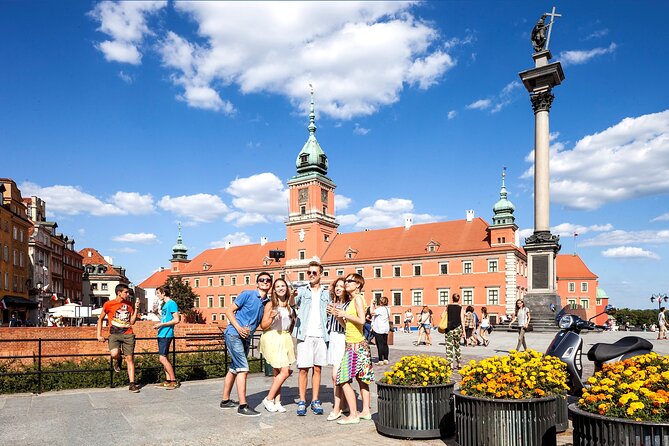
Your first stop is King Sigismund’s Column (Kolumna Zygmunta). This is the oldest public memorial in Warsaw, and it has been moved multiple times. It was brought down on September 2, 1944, by German troops, then reconstructed, with completion in 1949. There are also earlier columns shown nearby from the direction of the WZ route.
Even if you’ve seen photos of this kind of monument before, I like it here because it frames the rest of your day. Warsaw’s current landmarks are not just scenic. They are evidence of what was lost, what survived, and what had to be rebuilt.
From there you step into Old Town, a UNESCO World Heritage Site and the city’s symbolic center. The guide walks you through how the area formed on a trade route between the Baltic Sea and the Black Sea, with wealthier merchants and craftsmen settling along the river-connected geography.
What hits hardest is the war story: about 90 percent of the Old Town area was razed in 1944. Then the reconstruction took many years and ended with UNESCO recognition, which makes your stroll feel like more than strolling.
Old Town is also a good place to take in the city’s scale. You’ll see how the medieval street pattern and architectural style guide your sense of direction, even with modern crowds.
The Royal Castle zone and St. John the Baptist Cathedral’s national moments
One of the big historical stopovers is the Royal Castle. The castle gained royal residence status in the 16th century when Masovia became part of the Crown. It was destroyed repeatedly over centuries, then suffered severe damage during the start of World War II, with bombing followed by fire.
Some priceless works of art were moved in time, but remaining items were plundered. In 1944, the castle was blown up as retaliation for the Warsaw Uprising. Reconstruction began later, with a decision made in 1971, funded mostly through community support, and the site opened to visitors in 1984. It also became part of UNESCO recognition as a faithful reconstruction of a historic structure.
If you want to understand modern Warsaw identity, this stop is a strong anchor. You see how the city chose to rebuild, not just replant buildings.
Then you move to the Archcathedral Basilica of St. John the Baptist, one of Warsaw’s oldest churches. This is where the tour adds details that feel national and specific, not generic. The cathedral hosted major events like the Constitution of May 3 oath, described as the first of its kind in Europe.
You also get a look at the crypt and tombs of historical figures. One chapel-mausoleum that’s singled out is the Chapel-Mausoleum of the Primate of the Millennium. The tour time here is shorter, but it gives you a meaningful direction for future visits.
Another way through a Warsaw day:
- Warsaw: Chopin Concert in the Old Town
★ 4.8 · 2,287 reviews - Warsaw: Traditional Galar Cruise on The Vistula River
★ 4.6 · 1,640 reviews - Warsaw: Old Town Highlights Walking Tour in English
★ 4.7 · 1,516 reviews - Warsaw Concert: Chopin – Painted by Candlelights with Wine
★ 4.8 · 1,442 reviews
Rynek Starego Miasta, the Barbican, and the Old Town defense story
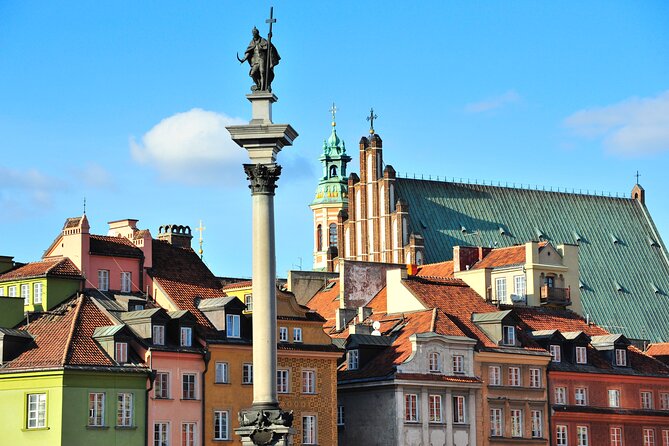
Rynek Starego Miasta is the Old Town Marketplace. It’s surrounded by tenement buildings now filled with restaurants, cafes, clubs, galleries, and museums, so it’s lively even when your visit is quick. The central square includes a statue of the Warsaw Mermaid, which is one of the city’s most recognizable symbols.
What I like about adding the Mermaid here is that it ties you to Poland’s capital identity while you’re still in the medieval urban core. It’s not just a random photo spot.
Next comes the Warsaw Barbican (Barbakan Warszawski). This structure was originally part of the city’s defensive system, built in 1548. The tour connects it to a larger idea: roughly 4,000 feet of defensive ramparts that once protected the city.
Inside the Barbican there can be exhibitions from May to October, including historical photos and models of defensive lines and towers that no longer exist. Even if you only get a quick look, you’ll come away with the mental picture of what the Old Town might have looked like without wartime destruction.
A bonus of this stop is atmosphere. The Barbican area is known for art and music in the present day, which makes it easier to absorb the defensive-history material without feeling stuck in a museum.
Warsaw Uprising Monument and the Tomb of the Unknown Soldier: remembrance you can’t speed past
The route shifts into heavier territory with the Warsaw Uprising Monument. It depicts groups of insurgents in battle. The uprising ended in defeat, with the deaths of 200,000 Poles. That makes it one of the most painful moments in modern Polish history, and it tends to change how you see the city around it.
Right nearby, the tour also places you in the orbit of Krasiński Palace (Palace of the Republic). This started as a residence for Jan Krasiński, Prefect of Warsaw, and today it hosts special collections for the National Library. The palace is described as Warsaw’s most enchanting Baroque structure, with many reliefs inspired by antique works. The park behind the palace is also framed as a good spot to slow down.
Then the tour moves to the Tomb of the Unknown Soldier, a symbolic place for those who died fighting for Poland’s freedom. The urns and ashes included here connect different wars, with ashes from a defender of Lvov and soil from World War I battlefields. The tomb is maintained with an eternal flame and watched over by a military honor guard, with the daily change at noon.
Even with limited time, this is the kind of stop where you feel grateful for a guide who can point out what you are looking at and what it means. It’s not scenery. It’s a national memory checkpoint.
Miodowa Street and Theatre Square: palaces, schools, and a face-to-face with the arts
After the memory stops, the day pivots back into city life with Miodowa Street. The street is narrow, busy with atmosphere, and lined with older, more luxurious residences.
There are several specific buildings highlighted:
- Number 24 housed Collegium Nobilium, described as the first school for young people of the ruling elite, and it now houses the Academy of Theatre.
- Number 17 is the residence of the Primate of Poland, the Palace of Warsaw’s Archbishops, built in the 18th century.
- Number 16 is Warsaw’s only Eastern Catholic Church.
- Pac Palace, linked to the Ministry of Health, appears nearby.
You can also peek at the Church of the Capuchins, including a detail about the heart of Jan III Sobieski appearing in the right side of the altar.
Then you reach Theatre Square. Here you’ll see major opera and theatre infrastructure, plus layered history. The late Baroque Blank Palace borders one side, and Jabłonowski Palace sits behind it. Jabłonowski Palace was once city hall before World War II, was razed during the war, and rebuilt in the 1990s with only the façade and clock tower remaining from the original design. The tour even notes walking through the gate under the tower to see foundations laid in the 19th century.
The Grand Theatre faces Jabłonowski Palace. It’s the seat of the National Opera and the National Theatre. The opera stage is described as one of the largest in Europe, and the interiors can be especially impressive if you attend a performance.
Even if you do not go inside today, Theatre Square makes sense because it shows how Warsaw invests in arts and civic culture, not just monuments.
Tomb-to-Route connection: from the Royal Route to a proper Lazienki break
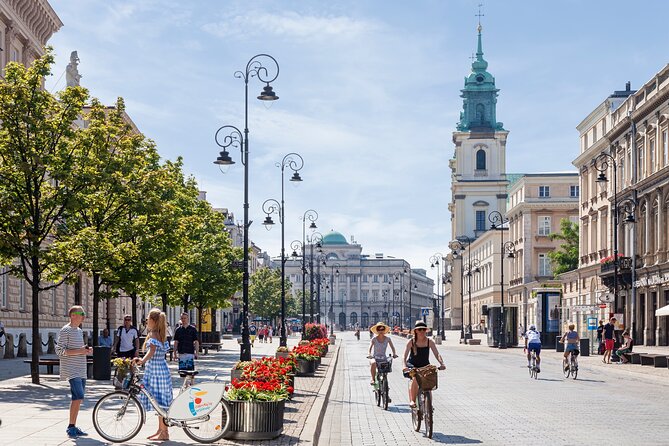
Next comes the Royal Route, described as stretching from Zamkowy Square to Trzech Krzyży Square. The tour highlights stops you can connect into a self-guided path later if you want to keep exploring.
Important points on this route include:
- St. Anne’s Church, plus the view from the church tower.
- Polonia House, tied to Maria Skłodowska-Curie’s work.
- Radziwiłł Palace, the current residence of the President of Poland.
- Warsaw University’s campus, including Kazimierzowski Palace.
- Czapski Palace, home to the Academy of Fine Arts.
- Elegant shopping and dining along Nowy Świat Street, described as an extension of Krakowskie Przedmieście Street.
This is one of those areas where you feel the city’s architecture work. When you see official buildings and universities in the same corridor, you understand how Warsaw’s present-day identity was built on old institutions.
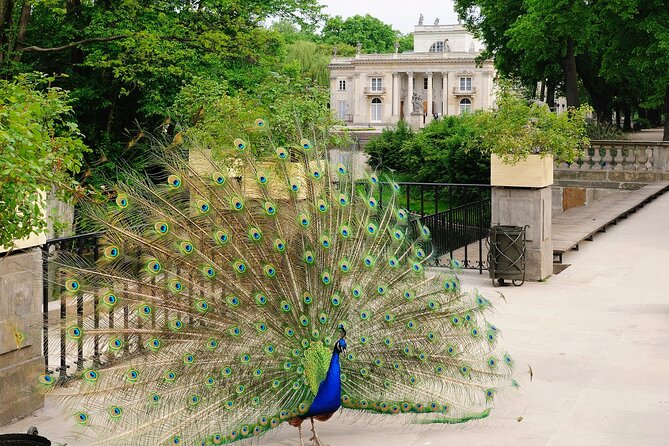
Then you reach the big decompression moment: Royal Łazienki Park, also spelled Lazienki Krolewskie. It’s described as one of the most beautiful palace and garden complexes in Europe, with historical monuments and a park in what used to be wild forest. The tour frames Łazienki as a museum-like place, with cultural, scientific, and entertainment events, and a great walking space.
One specific highlight you’ll want to remember is the tradition of free piano concerts held near Chopin’s monument on summer weekends for about 50 years. The tour notes crowds of tourists and classical music lovers gather for these.
If you have been rushing all morning, this is where your body and head catch up. Even with only around 30 minutes here, you get the feeling of Versailles-style planning without needing a formal visit ticket for everything.
Palace of Culture and Science, the stadium story, and Copernicus Science Centre
Your final stretch mixes modern Warsaw landmarks and an interactive stop.
First is the Palace of Culture and Science, built between 1952 and 1955 as a gift from the Soviet people to Poland. At 230.5 m, it is the tallest building in the country. The tour points out the key attraction: a large observation deck on the 30th floor, where you can get wide views.
The building is also described as a major complex with around 3,000 rooms, including offices, institutions, the Polish Academy of Sciences, a post office, cinema, swimming pool, museums, libraries, theatres, a café, and clubs.
Next is PGE Narodowy, the largest stadium built for the European Football Championship in 2012, located on the site of the historic Tenth Anniversary Stadium. The tour notes that from the mid-fifties onward, it hosted major sporting events, Polish cup finals, the Warsaw Derby, and even the Peace Race, along with huge propaganda rallies. After 1989, a gigantic Jarmark Europa market operated around the top and surrounding land.
Finally, the route ends with Copernicus Science Centre. This opened in November 2010 and is described as one of the most modern science attractions in Europe. It’s built to spark curiosity and support independent learning and dialogue on scientific issues, with hundreds of hands-on attractions, including an earthquake simulator and a magic carpet. There’s also a roof garden with observation decks for panoramas.
Copernicus admission is marked not included, so if you want to fully enjoy the interactive exhibits, budget for that on your own.
Value and price: is $195.18 per person worth your time?
At $195.18 per person for a private 4-hour tour, this is not cheap. But the price is not just for walking. You’re paying for a professional local guide, private transportation, and hotel pickup and drop-off, all in a tight half-day window.
The value becomes clearer when you look at what’s typically free or low-friction. Many stops are outdoor monuments, free-to-view churches, and street-level areas like Old Town squares and the Barbican exterior. Then you have one major ticketed exception within the route, Copernicus, where admission is explicitly not included.
So the real question is fit. If you want a guided orientation through symbols, war-and-rebuilding context, national memorials, and major architectural contrasts, private format is a big help. If you are the type who likes to wander slowly, take long museum visits, and sit for extended meals, you might find a half-day route feels compressed.
Also consider your group size and your mobility. Reviews you read online can hint that car access and walking levels can vary depending on where your pickup location sits in relation to traffic-restricted zones. If you want maximum comfort, discuss pace and access with your guide from the start.
Should you book this private Warsaw city tour?
Book it if you want a fast but guided introduction to Warsaw’s core layers: Old Town symbolism, royal and church anchors, the Uprising and national remembrance sites, and then a modern skyline finish with viewpoints and science.
Skip or consider a different option if you need long museum time at one site, or if walking is difficult for you. This route is built as a sequence of short stops, and central Warsaw car access can be limited in historic areas.
One last practical tip: when you meet your guide, tell them what you care about most. If your priorities are history, your day will be strongest at Old Town, Royal Castle, and the memorial stops. If you prefer scenery and parks, Lazienki will likely be the emotional highlight. If you love hands-on activities, plan your time and budget for Copernicus since admission is not included.
If you do book, arrive on time, wear comfortable shoes, and go in expecting a guided storyline, not a slow crawl. That’s when the tour feels most worth it.
FAQ
How long is the Warsaw City Tour private (4h)?
The tour is approximately 4 hours.
Is this tour private?
Yes. It is a private tour, and only your group participates.
Do I get hotel pickup and drop-off?
Yes. Hotel pickup and drop-off are included.
What language is the tour offered in?
The tour is offered in English.
Is an air-conditioned vehicle included?
Yes. Private transportation in an air-conditioned vehicle is included.
Are admission fees included?
Entry or admission fees are not included. Some sights are free, but admission fees are listed as optional where applicable.
Is Copernicus Science Centre admission included?
No. Admission to Copernicus Science Centre is listed as not included.
Do I receive a mobile ticket?
Yes. A mobile ticket is provided.
Is free cancellation available?
Yes. You can cancel up to 24 hours in advance for a full refund.
Fresh Warsaw reviews
- Warsaw: Wolf’s Lair & Swieta Lipka Small-Group Tour + Lunch★ 5.0 · 3 reviews
- World War II Warsaw Old Town, Military Cemetery Walking Tour★ 4.7 · 3 reviews
- Warsaw: Old Town Walking Tour, Hidden Gems & Hot Chocolate★ 4.3 · 3 reviews
- Warsaw: Explore the Vistula on Its Longest Speedboat Route★ 4.6 · 3 reviews
- 5-hour: Royal Castle, Old Town and POLIN Museum/inc.Pick-up/★ 5.0 · 3 reviews
- Majdanek – German camp from II World War – Private Tour – 1 DAY TRIP FROM WARSAW★ 5.0 · 3 reviews
- Museum of Modern Art in Warsaw★ 5.0 · 3 reviews
- Warsaw Outdoor Paintball with Transfers (all year round)★ 5.0 · 3 reviews
City Tours, compared.

Gdańsk City Sights & History Guided Walking Tour in English
Read our review →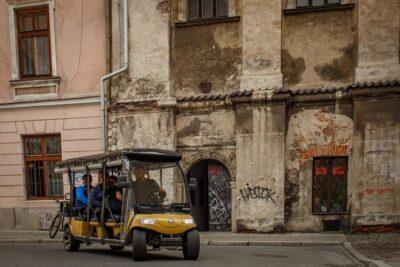
Extended City Sightseeing Tour – Eco Buggy Golf Cart
Read our review →
Shared or Private City Tour Sightseeing by Golf Cart
Read our review →
City Tour Live Guided by Golf Cart/Buggy Sightseeing
Read our review →Browse the lists this tour appears in