
Reviewed · WARSAW TOURS
Warsaw Behind the Scenes – small group tour with hotel pickup
This is interesting because you are not just ticking off landmarks. You are getting a guided walk through Warsaw’s layered story, from Nazi occupation and the Jewish ghetto to the long Soviet shadow and the shift in 1989. And the small-group size helps you actually ask questions, like what you are looking at and why it was built the way it was.
I especially like the mix of WWII-specific places and “how life changed” context. Second, I love the small-minibus format with hotel pickup, which makes it easy to fit into your first or second day without spending time figuring out routes.
One consideration: the tour uses historic-style minibuses that may not have air conditioning, so plan for the weather and wear comfy footwear.
Key highlights at a glance
- Hotel pickup and drop-off so you start the tour without hunting down a meeting point
- WWII focus in real neighborhoods like Muranów, Nowolipki, and the ghetto bridge area
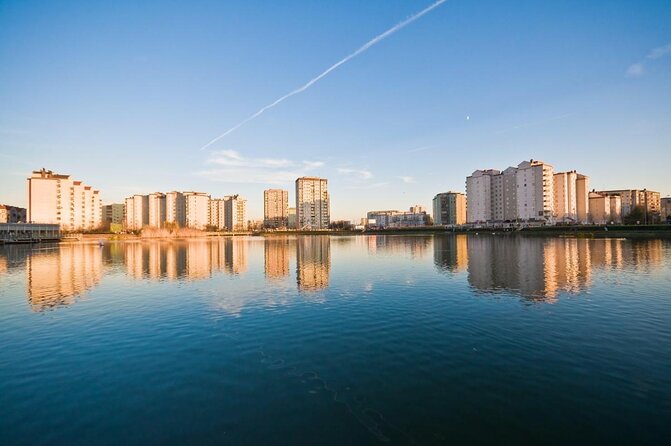
- Praga district crossing for a different side of Warsaw, closer to prewar vibes
- English-speaking guide with story-driven context and helpful visual aids
- Small-group feel with a maximum of 39 travelers, and walking at each stop
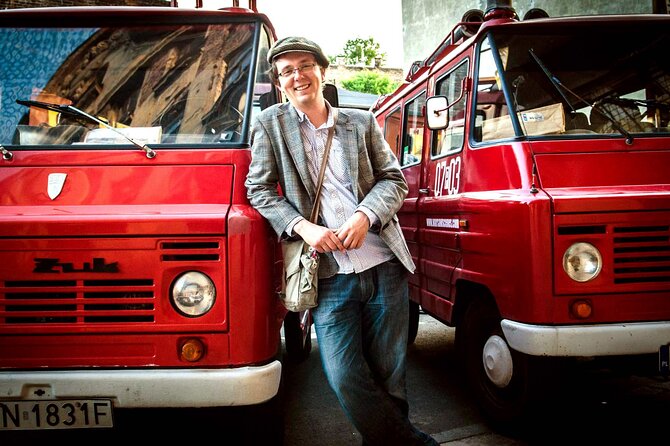
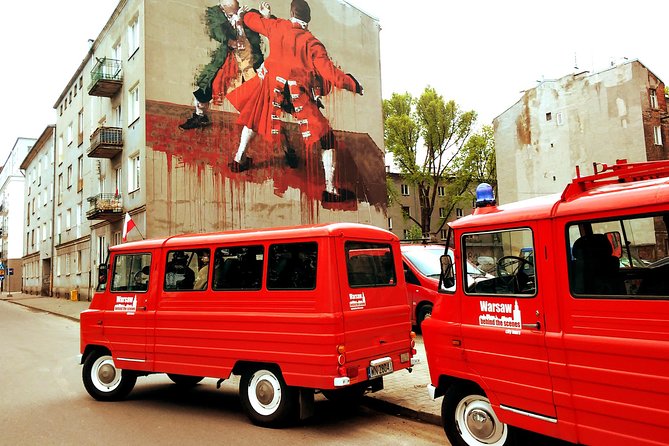
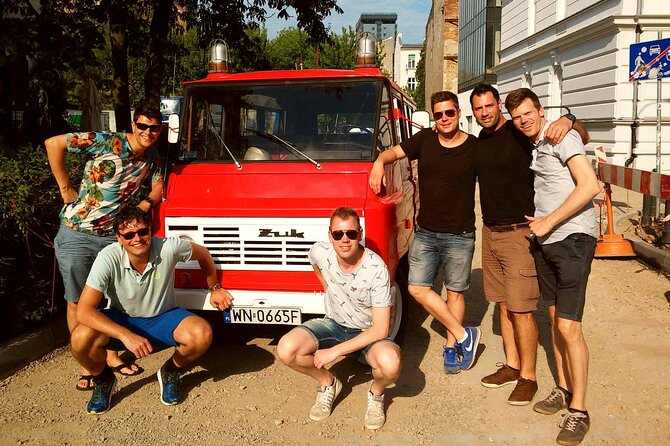
- Zuk-style vehicle experience that adds atmosphere on the drive between sites
Why this Warsaw tour feels different from the usual city walk
Warsaw can be a tricky city to read on your own. The streets look normal, then a moment later you are standing near an area tied to something enormous and terrible. This tour helps you make sense of that shift, because the guide keeps tying the present cityscape back to the events that shaped it.
You also get a practical benefit right away: hotel pickup and drop-off for listed hotels. That means less time dragging luggage around and more time walking, looking, and asking questions. Several guides reported flexibility and strong storytelling, including a guide named Tom, and others like Marcin, Karol, Mark, Lucas, Artur, and Jan. The recurring theme is the same, the guide explains the why, not only the what.
More to book in Warsaw:
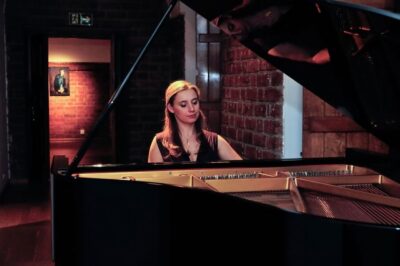
- Warsaw: Chopin Concert in the Old Town
★ 4.8 · 2,287 reviews - Warsaw: Traditional Galar Cruise on The Vistula River
★ 4.6 · 1,640 reviews - Warsaw: Old Town Highlights Walking Tour in English
★ 4.7 · 1,516 reviews
Price and logistics: is it good value?
At $133.08 per person for about 3 hours, it is not a budget “grab a tram and go” option. But you are paying for three things that add real value in Warsaw: hotel pickup, a targeted route to specific WWII and postwar sites, and a small-group pacing that keeps the story coherent.
Also, each stop lists free admission. So you are not paying extra at multiple points, which matters on a tour like this where most of the “ticket cost” is basically time and expert guidance.
The tour runs from 10:00 am. Vehicles are minibuses that handle transfers between locations, with walking segments at each stop. The max group size is capped at 39 travelers, and the fleet includes several minibuses. That typically keeps things manageable, especially if your guide is good at handling questions without rushing.
A weather reality check
The minibuses are described as classic and vintage in style for some vehicles, and some may not have seat belts. They also note heating for winter. Air conditioning is not guaranteed, so bring a layer in summer heat or winter cold depending on your dates. Comfortable clothing and suitable footwear matter because you are walking between and around key sites.
Stop-by-stop: what you see, what it means, and what to watch for
Another way through a Warsaw day:
- Warsaw Concert: Chopin – Painted by Candlelights with Wine
★ 4.8 · 1,442 reviews - Warsaw: City Sightseeing Hop-On Hop-Off Bus Tour
★ 3.6 · 1,415 reviews - Warsaw: Highline Warsaw Entry With 360° Views & Rooftop Bar
★ 4.4 · 1,297 reviews - Warsaw: POLIN Museum of the History of Polish Jews Ticket
★ 4.7 · 1,142 reviews
Stop 1, Warsaw orientation intro
After pickup, you meet your guide and start with a brief intro to the city and Poland. This matters more than it sounds. Warsaw’s history is not a straight line. It is a sequence of ruptures, rebuilding, and political pressure. A quick baseline helps you understand why later neighborhoods look the way they do.
What to expect here is short and setting-the-stage oriented. If you are visiting Warsaw for the first time, this kind of orientation is a big help, because it gives you a mental map before you start seeing the heavier sites.
Stop 2, Muranów and the site of the Jewish Ghetto
Muranów is where the tour turns serious fast. The district sits on the former site of the Jewish Ghetto established by Nazi Germany in 1940. It can look like typical postwar housing from the street, but the guide connects what you see now with what was forced onto people then.
This stop is about traces. Even when the built environment has changed, the area’s history stays layered in the landscape. The guide is also likely to use specifics and explanations about destruction and later reconstruction, helping you see why a neighborhood can look ordinary but hold extraordinary history.
One drawback to consider: if you arrive with zero background on Warsaw’s ghetto geography, you may want to listen closely, because this is where the tour assumes you will connect places and timelines. A helpful approach is to treat this stop as your main foundation, then let later stops build on it.
Stop 3, Chłodna and Żelazna, the ghetto bridge from The Pianist
Next comes one of those locations you might recognize from film and photos, the wooden ghetto bridge near the intersection of Chłodna and Żelazna Streets. The bridge is described as iconic from The Pianist, and historically it connected two sealed parts of the ghetto while allowing traffic underneath.
Your guide will use historical photographs to help you visualize how the bridge worked and how people would have moved through space under confinement. This part tends to land well because it turns an abstract story into something you can actually picture.
Practical tip: this is also a good moment to ask about what the guide means by sealed parts, because that concept is central to how the ghetto functioned.
Stop 4, Nowolipki and the 1943 uprising
At Nowolipki you shift from the ghetto structure to the final act. The tour explains the Warsaw Ghetto Uprising of 1943, when Jewish resistance fighters launched a last stand against deportation. The ghetto was later razed, and your guide connects that to how these events are remembered.
This stop is important because it adds human agency to a story that can otherwise feel only like victimhood and loss. Resistance, strategy, and courage show up in the guide’s narrative even though the outcome was tragic.
What to watch for: the tour compresses a lot into a short segment here. If you are the type who likes to take notes or ask a question, this stop is a good target. If you are more into slow sightseeing, you might still want to ask one clarification so the uprising story stays clear in your head.
Stop 5, Bielańska, Poland’s shifting control and the Warsaw Uprising of 1944
Bielańska continues the broader WWII and political storyline. Your guide covers agreements between Western Allies and Stalin that placed Poland under Soviet control. Then the tour moves to the Warsaw Uprising of 1944 as the city’s last major effort to change that outcome.
This part also highlights the scale of destruction. After the uprising collapsed, Nazi forces destroyed around 85 percent of Warsaw, and the Red Army entered the ruins in January 1945.
This is heavy material, and some guides handle it with a tone that is candid and empathetic. In past tour experiences, guides named Mark and Arturo, for example, stood out for handling the war and antisemitism topics with seriousness and clear explanations. That matters because you want facts without skimming, but you also want humanity, not a lecture.
A consideration: if you prefer a lighter first-day experience, you might find the WWII content emotionally intense. That said, for many people this is also the most memorable part for exactly that reason. The key is knowing what you are signing up for.
Stop 6, Praga Polnoc, crossing the Vistula for a different Warsaw
Now you cross the Vistula River to reach Praga, and the tone shifts. Praga Polnoc is described as a district that survived the war largely intact. You get views of the riverbank, and then you explore an area that still carries an atmosphere closer to prewar Warsaw, including Belle Époque buildings, traditional courtyards, and a strong local identity.
This is where you also get a sense of how Warsaw is not only history. Praga is described as more creative and less mass-tourism focused than central districts, and it has become more widely known as an up-and-coming area.
This stop is also a good break in walking intensity, because the river views and neighborhood feel give you a mental reset after WWII concentration points. If you like food and street life, Praga is often where your attention starts to wander in a good way.
Stop 7, Śródmieście and rebuilding under communist rules
Back in central Warsaw, the tour stops near the former Polish Communist Party headquarters. The guide explains how communist authorities faced the challenge of rebuilding a destroyed capital after 1945.
This stop is about compromises. Architects wanted a modern, functional city, but political ideology and Soviet expectations shaped what could realistically be built. The tour helps you see results of those pressures in the surrounding architecture and planning choices.
This is one of the “behind the scenes” themes, because it is not just about war damage. It is about what happens after the shooting stops, and how power influences everyday urban design.
Stop 8, the 1989 turning point and why it changed Warsaw again
The tour concludes with 1989, when the Solidarity movement and Pope John Paul II played major roles in ending communist rule in Poland. Then comes another transformation, Warsaw shifting into a new era of democracy and capitalism.
For many people, this is the final piece that makes the earlier stops click. You realize the city has been rebuilt multiple times, not once. History does not just sit in museums. It shows up in streets, buildings, and the pace of change.
The tour ends after a final segment near the central areas, and you are back on your way with a clearer sense of how the past and present keep connecting in Warsaw.
The guide matters, and this tour seems to deliver
The strongest pattern across the experiences is storytelling plus responsiveness. Names that came up repeatedly include Tom, Marcin, Karol, Mark, Lucas, Artur, Arturo, Jan, and Art. Many guides used visual aids like historical photographs, and several were praised for answering questions directly instead of glossing over tough topics.
I like tours where the guide can handle both emotion and fact. You do not want a sanitized route, but you also do not want a messy free-for-all. With this format, you get a clear route and the guide still leaves space for your questions.
If you care about war history, this tour also helps you see why certain sites are described as “iconic” without relying on film references alone. The guide ties the film image to the geography and the real-world function.
Transportation experience: mini-van, Zuk vibe, and what to expect
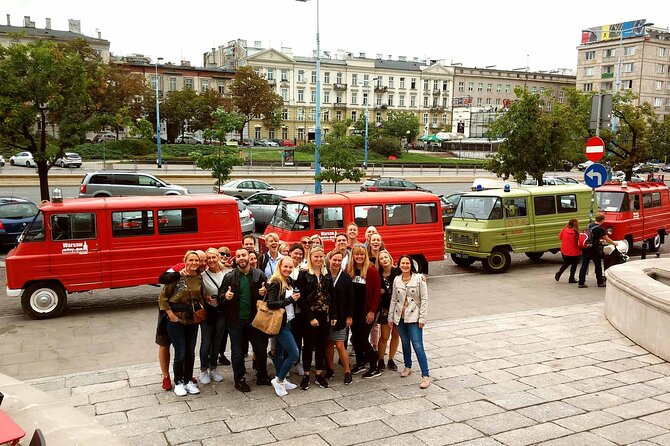
You are in a minibus for transfers, not a full bus tour. There is mention that guides often drive you in a Zuk vehicle, which is described as delightful and tied to the communist-era theme. It adds atmosphere, and it also makes the tour feel less like a standard checklist.
Because some vehicles do not have air conditioning and some may not have seat belts, think comfort first. Layer up, wear shoes that work for walking, and be ready for weather. Heating is included for winter season, which is a nice detail.
The tour is also capped, and vehicles can carry up to 8 passengers each, with a fleet available. That supports the small-group feel, especially when the guide is steering the story carefully.
What you might add to your Warsaw day plan
This tour is a great early stop, not because it covers everything, but because it gives you structure. If you do it on your first day, you can later wander with better instincts about what you are looking at.
If you plan to visit a major museum for WWII or Jewish history, you will probably find this tour helps you place ideas and names in the right spatial context. One person specifically noted that a later visit to the Polin museum made earlier introductions make more sense. That is a strong hint that this tour works as a good primer.
And since some versions include time for a local break, such as a Polish cafe and even a drink like cucumber vodka in at least one experience, you might plan your meals loosely. It is smart to keep your schedule flexible for a food stop that does not feel like a tourist trap.
Who this tour is best for
This fits best if you want:
- a guided route to major WWII and communist-era locations in a tight timeframe
- a guide who uses photos and place-based explanations
- a small group and easy hotel pickup
It is also a solid first-day tour for people who like history but do not want to plan logistics. If you are traveling with teens over 150 cm tall, the tour can be booked for them, and if you have a shorter child, the tour notes you should contact the operator about seat boosters, which are mandatory under Polish law.
If you are extremely sensitive to war-related content, consider whether you want your first half-day to be heavily WWII focused. You can still do it, but go in with clear expectations and take breaks if you need them.
Should you book it?
Yes, I would book it if your goal is to understand Warsaw instead of just photographing it. The value is in the route, the context, and the way the guide connects neighborhoods across time. For history-minded travelers, it is hard to beat for a half-day format, especially with hotel pickup that saves you time and stress.
I would think twice if you dislike emotional WWII narratives or you hate walking in all weather with a vehicle that may feel old-school. Also, because the sites are compact and the tour packs a lot into short stops, you should be ready to pay attention and maybe ask a few questions.
If you want a practical recommendation, treat this as your historical foundation day in Warsaw, then build the rest of your itinerary around where the guide points your curiosity.
FAQ
How long is the Warsaw Behind the Scenes tour?
It runs for about 3 hours.
Does the tour include hotel pickup and drop-off?
Yes, pickup and drop-off are available only for hotels listed by the operator. If your hotel is not listed, you can contact them to arrange the most comfortable pickup point.
Is the tour offered in English?
Yes, English is offered.
How many people are in the group?
The tour has a maximum of 39 travelers. The operator also notes there is flexibility with minibuses, and each minibus can accommodate up to 8 passengers.
What transportation is used during the tour?
You travel by minibus for transfers between locations, with walking segments at each stop. Some classic vintage vehicles are not equipped with air conditioning and some do not have seat belts.
Can children join the tour?
Adults and children over 150 cm (4 ft 9 in) can join. For children under 150 cm, seat boosters are mandatory under Polish law, so you must contact the operator in advance to check availability.
What is the cancellation policy?
Free cancellation is available up to 24 hours in advance for a full refund. If you cancel less than 24 hours before the experience starts, the amount paid is not refunded.
Fresh Warsaw reviews
- Warsaw Off The Beaten Path Self-Drive Tour★ 5.0 · 18 reviews
- Private Warsaw Chopin Airport One Way Transfer★ 5.0 · 18 reviews
- Zelazowa Wola: Frederic Chopin Half-Day Private Tour★ 4.7 · 18 reviews
- Warsaw: 2-Hour Chopin’s Life Walking Tour★ 5.0 · 19 reviews
- Warsaw: melt museum Entry Ticket★ 3.5 · 19 reviews
- Deluxe Polish Food Tour Experience in Warsaw★ 5.0 · 19 reviews
- FSO Gunrange, Shooting Package US ARMY★ 5.0 · 19 reviews
- Warsaw Old Town: Spy-Themed Walk & Game with Host★ 4.5 · 19 reviews
Warsaw Tours, compared.
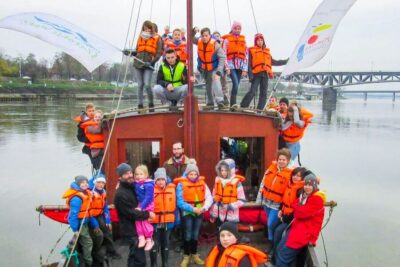
Traditional Galar Cruise on The Vistula River
Read our review →
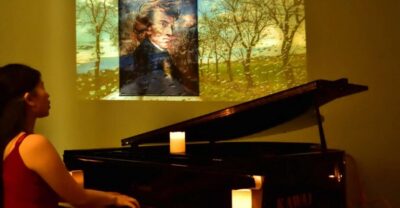
Warsaw Concert: Chopin – Painted by Candlelights with Wine
Read our review →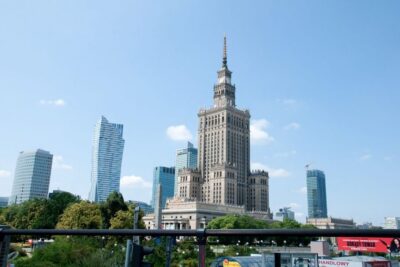
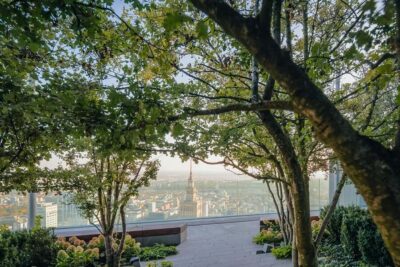
Highline Warsaw Entry With 360° Views & Rooftop Bar
Read our review →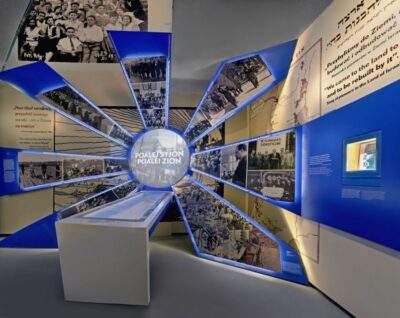
POLIN Museum of the History of Polish Jews Ticket
Read our review →
Browse the lists this tour appears in