
Reviewed · WALKING TOURS
Szczecin Walking Tour: Explore Top Sights & Hidden Gems
Szczecin has a lot going on, but it can take time to figure out where the city’s story is written in stone, glass, and river views. This walking tour gives you a tight route that hits the biggest landmarks without making you fight with a map.
I really like that the tour includes admission tickets for the main stops, so you can spend your time listening instead of hunting for ticket offices. One thing to consider: it’s about 2 hours and the pace is steady, so if you like long sittings and slow wandering, you may want extra time before or after.
Key highlights you will feel right away
- Small group size (max 15), which means you can actually ask questions instead of shouting over everyone
- Admissions included, so the stops are smooth and you do not lose time paying entry fees
- No map needed, the guide handles the route and keeps you oriented
- Modern + medieval in one walk, with a stop at the Karłowicz Philharmonic and a Gothic basilica from the 12th century
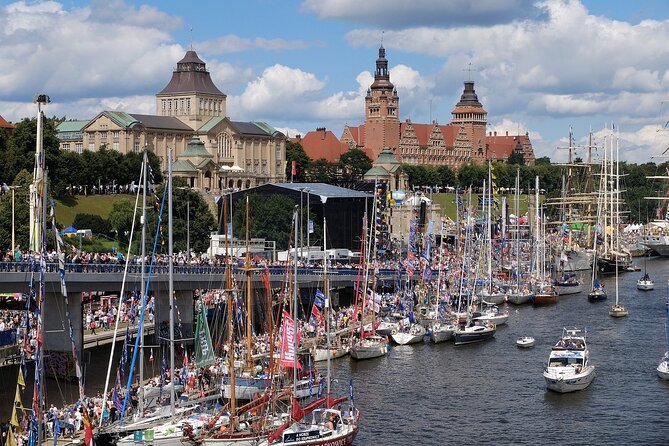
- Oder River atmosphere at Lastadia, with promenades and restored waterside warehouses
- A final landmark stop plus surprises, because there are a few extra moments built in to keep the walk fun
Why this Szczecin walking tour is a smart use of time
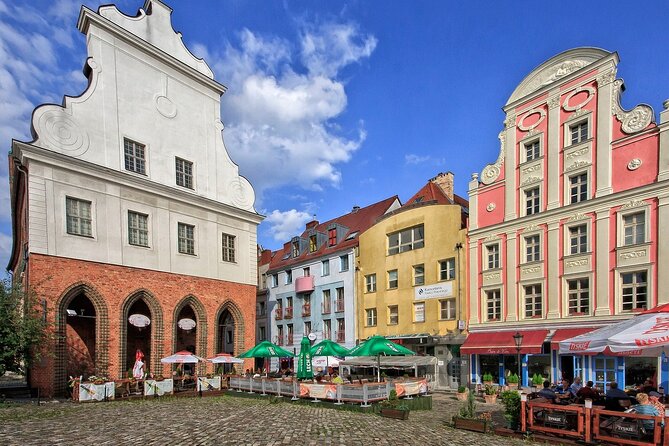
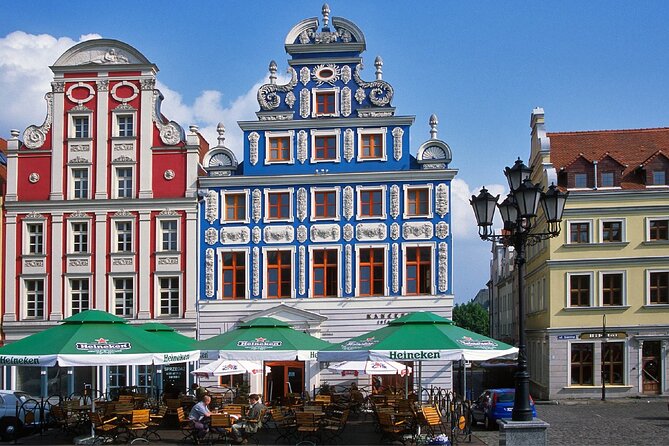
If you only have a short window in Szczecin, this format makes sense. A guided walk does two useful things at once: it points you to the best-looking places, and it explains how they connect. You are not just sightseeing, you are learning what the city values, from culture halls to church architecture to waterways.
I also like that the group stays small, up to 15 people. That keeps the experience from turning into a lecture where you just follow along. In one recent group, the walk even shrank to just two people, which meant lots of chances to ask real questions and get direct answers. That is the kind of difference small groups make.
Price is $32 per person, which is not cheap, but it is not a pure “guide fee” either. Admissions for the listed stops are included, and you get about 2 hours of guided time in English. If you were to visit several of these places on your own, the tickets would likely add up, and you would still have to find your way between them.
The main drawback is simple: you are walking and you are on the clock. Expect a rhythm of short stops, photos if you want them, and then moving on. Plan for comfortable shoes and a little stamina, especially if the weather is cold or wet.
More Walking Tours in Szczecin:
- Szczecin: Old Town Highlights Private Walking Tour
★ 4.7 · 76 reviews - Szczecin: Medieval Old Town Private Walking Tour
★ 4.7 · 17 reviews - Szczecin: Spy-Themed Walk & Game with Host
★ 4.7 · 16 reviews
Getting started at Kino Pionier and finding your rhythm
The tour meets at Kino Pionier, al. Wojska Polskiego 2 (70-471 Szczecin). It starts at 10:00 am, and it ends back at the meeting point. That loop is helpful. You can drop your bearings quickly at the start, then finish close to where you began.
Because the guide handles navigation, you can focus on the city instead of constantly checking your phone map. This is one of those underrated travel skills: when you are in a new place, learning the layout of neighborhoods saves you time later. You should leave with a sense of where the sights cluster, and where the river area fits into the city plan.
The tour is offered in English, and you will get a mobile ticket at booking. Confirmation is received when you book. It also notes that service animals are allowed and that most travelers can participate. Still, if you have mobility limitations, it is worth considering that this is a walking tour with multiple stops across the center area.
If you can, arrive a few minutes early. It makes it easier to meet the group and settle in before you start moving.
Stop 1: Karłowicz Philharmonic, modern architecture you can actually read
The first major stop is the Karłowicz Philharmonic. This is not a dusty old hall. It is a cultural institution right in the heart of Szczecin, named for Polish composer Mieczysław Karłowicz.
What I like here is the way the building signals “modern city energy” while still connecting you to deeper cultural roots. You will hear about the philharmonic’s reputation for world-class performances, with a repertoire that ranges from classical masterpieces to contemporary works. Even if you are not attending a concert, that context helps you understand why the place matters.
The architecture also gives you something concrete to look at. The building was designed by Spanish architect Alberto Veiga and Portuguese architect Fabrizio Barozzi. You do not need to be an architecture nerd to appreciate it, because the guide’s explanation turns the facade into a story you can follow.
Time on this stop is about 20 minutes, so you should be ready for a quick but meaningful first anchor for the tour. It is a nice way to set a tone early: culture here is not an afterthought, it is a headline.
Stop 2: Archcathedral Basilica of St. James the Apostle, Gothic details and stained glass
Next comes the Archcathedral Basilica of St. James the Apostle. This is a landmark with serious age behind it. The basilica dates back to the 12th century and is described as Gothic in style.
The big draw is the visual detail, especially the stained glass windows. Gothic architecture is often about height and light, and stained glass is where that idea becomes practical and emotional. You will get time to look, and you will also get the story that connects the building to spirituality and cultural heritage.
This stop is also scheduled for about 20 minutes. That is long enough to notice the main features without turning it into a long church visit where you lose the group. If you plan to take photos, aim to do it early in the stop, because groups sometimes start moving quickly once the guide finishes the key points.
Tip: church interiors can vary in temperature. If you are sensitive to cold or heat, bring a layer. You will appreciate it once you step inside.
Stop 3: Pomeranian Dukes’ Castle, from 14th-century power to today’s public space
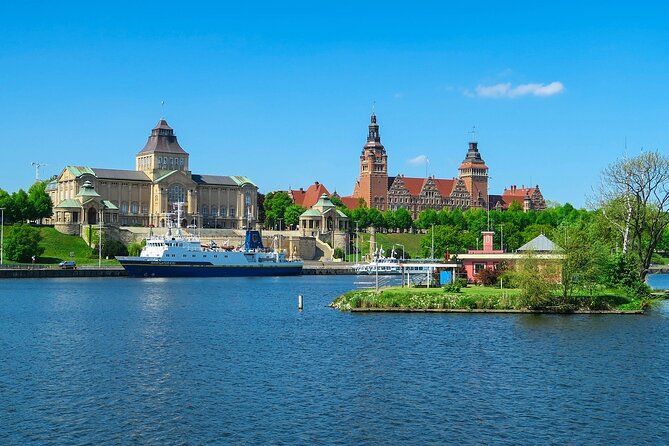
After the basilica, you head to the Pomeranian Dukes’ Castle. This is one of those places where time layers are obvious. The original structure dates to the 14th century, and you will hear how the castle has lived through centuries of royal intrigue and architectural change.
Today, it functions as a cultural hub. You will find museums, exhibitions, and events there, which means the castle is not just a preserved shell. It is a working venue where history gets used instead of locked away.
This stop is also about 20 minutes. That works well because you get to see the castle as a whole, then learn what parts of it are worth paying attention to. The guide’s job is to point your eyes in the right direction, so you can leave with a mental map of what you saw.
If you like history but do not want a full museum day, this castle stop is a good compromise. You get the core story on the walk, and you can always go back later for deeper museum time if you want.
Stop 4: Lastadia Łasztownia on the Oder, ships, warehouses, and a promenade
Now you shift to the river. Lastadia Łasztownia is described as a waterfront district with maritime charm, and it started life as a cargo handling and shipbuilding area. That matters because it explains why this part of Szczecin feels different from the castle-and-church axis.
You will walk along the promenade, and you will get panoramic views of the Oder River. The point is not just scenery. The scenery shows you how the city traded, worked, and grew. You can think of it as the practical engine of Szczecin’s past, now repurposed for leisure and culture.
A key detail is that restored warehouses now house restaurants, cafes, and art galleries. So you can picture the same structures that once supported shipping activity, now serving people who come to hang out, eat, and look at art.
Time here is about 30 minutes, so it is the longest stop besides the wheel. That extra time is useful, because it gives you a chance to slow down slightly. If you want photos, this is the best place to grab them during the tour.
If you come during cooler months, this area can feel windier because you are near water. Dress for that.
Stop 5: The Wheel of Szczecin, plus the surprise stops that keep it fun
The final listed stop is the Wheel of Szczecin. The tour description does not go into details about what to expect there, but as a landmark stop it typically functions as a memorable end point. Expect to spend about 30 minutes here.
One of the smartest parts of the experience is also the part you cannot plan perfectly. The tour notes that there are a few more stops along the way and keeps them as a surprise. That means you do not just repeat a checklist of famous buildings. You get some extra context and some flexibility depending on the day and pacing.
You may also notice how often the route touches places connected to churches, museums, and even seasonal activity like the Christmas market when it is running. If you are visiting at a time when that market is open, it can add energy to the walk without turning the tour into a shopping spree.
If you like asking questions, do not hold them all until the end. When the group is moving between points, this is when you can ask quick clarifying questions about what you just saw: why this style was chosen, how this district changed, and what to look for if you return on your own.
In a small group, guides can adapt on the fly. One guide named Glenn was noted for being motivated and for interacting well with the team, and that kind of energy makes the walk feel lighter and more personal.
Price and value: why $32 works better than it looks
At $32 per person for about 2 hours, you are paying for three things: a professional guide, admission access for the main stops, and a route that keeps you from wasting time.
The admission piece is the value anchor. The tour includes tickets for the listed sights, meaning you are not juggling separate entry fees during the walk. That makes the tour easier to follow, and it protects your schedule.
The timing also helps. The tour is on a set start time of 10:00 am, and it runs for about 2 hours, which is a manageable chunk of your day. Since it is booked about 15 days in advance on average, it is not a last-minute only option. If you are traveling during busy seasons or on weekends, book ahead so you get a seat.
One more value angle is the group size cap of 15 travelers. You are not paying the same price and then getting stuck behind dozens of people. Small groups mean better sight lines to the guide and more practical conversation.
Who this tour fits best (and who might want something else)
This is a great fit if you want an English-speaking guide, you like seeing both iconic and practical city details, and you want to cover a lot without turning your day into a scavenger hunt. It also works well for couples and solo travelers who appreciate meeting a small group and asking questions.
If you are the type who wants to linger in museums for hours, you might find the stops too short. This walk is designed for orientation plus storytelling, not for deep museum immersion. Still, the moment you finish, you will likely know what to return to.
You should also consider it if the weather is unpredictable. Walking tours do not ignore weather, but this one has defined stops with ticketed access, so you are not trapped in endless outdoor wandering.
Should you book this Szczecin walking tour?
I would book it if you want a focused Szczecin highlights route in English, with admissions included, and you like the idea of learning while you walk. It is especially appealing if you are arriving in the city and want to understand how the Philharmonic, the Gothic basilica, the castle, and the river district connect into one bigger story.
I would think twice if you hate fixed time plans. The tour is paced, and each main stop is relatively short. If your dream day is slow, quiet, and long, plan a self-guided day and only use the guide for a portion of it.
If you fall somewhere in the middle, this is a smart bet. You get a guided shortcut to what matters most, and you leave with a clearer sense of where to go next in Szczecin.
FAQ
How long is the Szczecin Walking Tour?
It runs for about 2 hours.
How much does the tour cost?
The price is $32.00 per person.
Is the tour offered in English?
Yes, it is offered in English.
What sites are included on the walking tour?
The tour includes stops at the Karłowicz Philharmonic, the Archcathedral Basilica of St. James the Apostle, the Pomeranian Dukes’ Castle, Lastadia Łasztownia, and the Wheel of Szczecin. There are also a few additional surprise stops along the way.
Where does the tour start and end?
It starts at Kino Pionier, al. Wojska Polskiego 2, 70-471 Szczecin, Poland, and it ends back at the meeting point.
Are admission tickets included?
Yes. Admission tickets are included for the stops on the tour.
What is the maximum group size?
The tour has a maximum of 15 travelers.
Is there free cancellation?
Yes, free cancellation is available up to 24 hours in advance for a full refund. Changes made less than 24 hours before the start time are not accepted.
Fresh Szczecin reviews
- Szczecin: Medieval Old Town Private Walking Tour★ 4.7 · 17 reviews
- Szczecin: Old Town Highlights Private Walking Tour★ 4.7 · 76 reviews
- Szczecin: Spy-Themed Walk & Game with Host★ 4.7 · 16 reviews
Walking Tours, compared.

Gdańsk City Sights & History Guided Walking Tour in English
Read our review →
Browse the lists this tour appears in