
Reviewed · SCHINDLER'S FACTORY TOURS
Kraków Oskar Schindler’s Enamel Factory Museum skip the line tour
This is interesting because you do not just study WWII from a distance. You visit the setting tied to Oskar Schindler, where he helped save over a thousand people, and the museum brings that story into sharper focus by connecting it to daily life in wartime Krakow. I like the licensed guide who explains what you are seeing in plain human terms, and I like the small group size of up to 10 that keeps the pacing from feeling rushed. The only real drawback is that the topic is emotionally intense, and the 1 hour 30 minute timing can feel like it moves fast if you want to process everything slowly.
If you get Paul, he is the kind of guide who tends to go beyond the labels, with context and extra details that make the exhibits click. You also get a practical win right up front, the museum ticket is included, and you use a skip-the-line entry so you are not stuck waiting.
Key details that make this tour worth your time
- Skip-the-line entry so you can get inside without the usual delays
- Licensed, professional guiding that frames Krakow’s Polish and Jewish wartime experience
- A focused 1 hour 30 minute visit with a clear, story-driven pace
- Oskar Schindler’s preserved office inside the administrative building
- The Ark of Survivors made from thousands of enamel pots matching what workers produced during the war
Why the Schindler Enamel Factory story hits you in person
The Fabryka Emalia Oskara Schindlera is one of those places where history stops being abstract. The museum is built around the wartime reality of Krakow, including what happened to its Polish and Jewish inhabitants during World War II, and it keeps returning to a painful contrast: everyday life, private life, and then the catastrophe that spread across the world.
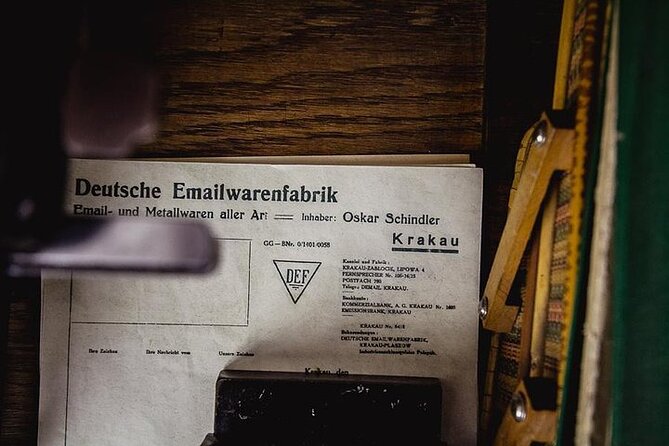
What I like about this guided format is that it treats the story as more than a single famous name. The museum ties the wartime history of Deutsche Emailwarenfabrik, often referred to as DEF, to the figure of Oskar Schindler, whose actions are also recalled in Steven Spielberg’s 1993 film Schindler’s List. That pop culture reference is there for context, but the point of the visit is what the factory itself represents.
And the experience is not only about information. It is about place. You are personally going to where Schindler saved over a thousand people, and that makes the exhibits feel less like a lecture and more like standing in the middle of a real-world story.
More Museums in Krakow
- Auschwitz-Birkenau Museum and Memorial Guided Tour from Krakow
★ 4.5 · 1,510 reviews - Krakow: Rynek Underground Museum Guided Tour
★ 4.6 · 1,122 reviews - Krakow: City Card with Public Transport and Museums
★ 3.9 · 675 reviews
Skip-the-line entry: what it changes before you even start
The ticket is listed as a skip-the-line tour, and that matters more than people think. Museums like this can get busy, and even if you are early, waiting can eat into your attention and your energy. With a mobile ticket, you can keep things simple. You do not need to juggle paper, and you can focus on meeting your guide and getting inside.
Because the group is capped at a maximum of 10 people, the flow also tends to stay smooth. You are not one of dozens trying to gather around the same doorway at the same time. The payoff is that you can spend your time looking, listening, and asking questions rather than standing around.
A practical note: the tour ends back at the meeting point, so you can plan your next meal or stop with less guesswork. Coffee and tea are not included, so if you want a break after, plan to grab it nearby on your own.
Where the tour starts: Lipowa 4 and a simple meet up
This experience meets at Lipowa 4 in Krakow. That is helpful because you are not trying to guess a starting location near the museum with a maze of streets. The activity also ends back at the meeting point, so your logistics stay tidy.
Another small plus is that it is near public transportation. If you are staying somewhere central, you likely will not need complicated planning to reach the start spot. Still, because the content is serious, I recommend giving yourself a little breathing room. Show up a bit early so you can get oriented before the guide starts telling the story.
The 90-minute guided loop: what you actually do during the visit
The experience is about 1 hour 30 minutes, focused and efficient. There is one main stop, the museum itself at Fabryka Emalia Oskara Schindlera. In other words, you are not bouncing around town all day, which is great if you want your time in Krakow to be meaningful rather than scattered.
Here is what the guide helps you do with that time.
You start with the bigger frame: the story of Krakow during World War II, including the fate of its Polish and Jewish inhabitants. The guide then connects that frame to the wartime reality of the factory and the owner at the center of this narrative. You hear how the great history of WWII intersects with everyday life, and how private life was torn apart by events that affected the entire world.
Then the museum itself fills in the details. The point is not to have you silently read exhibit text while your brain skips ahead. A good guide keeps walking you through the meaning of what you are looking at. In particular, the guide experience often aims to provide context rather than just repeating the text on display.
In a short visit like this, that approach matters. If you try to do this museum entirely on your own, you might get the facts, but you could miss the connections between the themes: work, survival, power, and the way a single person’s choices played out in a specific place.
More of Schindler's Factory and wartime Krakow:
- Krakow: Schindler’s Factory Ticket and Guided Tour Option
★ 4.3 · 4,306 reviews - Krakow: Schindler’s Factory Tour with Entrance Ticket
★ 4.5 · 3,182 reviews - Krakow: Schindler’s Factory Skip-the-Line Ticket
★ 4.4 · 3,105 reviews - Krakow: Schindler’s Factory Tour with Entrance Ticket
★ 4.6 · 1,737 reviews
Stop inside the factory complex: DEF, enamel work, and survival
The heart of the museum experience is the wartime factory setting tied to DEF. You learn how the factory operated during the war and how its story is inseparable from the human stories around it.
The museum also highlights how Schindler’s actions saved over a thousand people, and it presents those stories in the context of Krakow’s complicated war history. That phrase, complicated, is not just for atmosphere. Krakow’s wartime story includes multiple layers of identity and survival, and the museum format makes room for those layers instead of flattening them into one-note history.
What I find especially valuable here is the way the museum uses a factory to talk about life. A factory is not usually the setting people picture when they think of wartime tragedy, but it becomes the stage for real decisions and real consequences. That is what makes this museum different from something that is only about dates and documents.
Oskar Schindler’s preserved office and the Ark of Survivors
One of the most powerful elements is the office area preserved in the factory’s administrative building. You are not only seeing what the museum says, you are seeing the physical place where the story’s key decisions connect to the broader events around it.
In that office setting, the museum also includes a symbolic installation called the Ark of Survivors. It is made of thousands of pots resembling those produced by Schindler’s employees during the war. That detail matters because it turns an industrial object into a memorial image.
Try to take a moment here. Let the scale hit you. Thousands of enamel-like pieces, all pointing back to work that produced them, and all tied to the idea of survival and rescue. It is not just symbolism for symbolism’s sake. It gives your brain something concrete to hold while you absorb a story that otherwise can feel too large to manage emotionally.
If you are the type who likes to understand how a museum creates meaning, this is where you will likely feel it most. The story comes through not only in words, but in objects and their repetition.
What a licensed guide does to the experience (and why Paul stands out)
A licensed, professional guide is part of the value here, and the difference shows up in the way the story is told. The strongest guidance style is the one that helps you connect the dots between what you see in the exhibits and what it meant for people.
If your guide is Paul, you can expect a clear strength in storytelling. He is known for being knowledgeable and passionate in the way he explains things, but the bigger win is that his approach tends to focus on context, not just reciting labels. That extra framing can make the museum feel less overwhelming and more understandable.
Another detail that tends to make a positive impression is timing. Paul has been noted for arriving early and meeting outside, which helps the start feel organized instead of chaotic. He also allows time for photographs, so you can capture key visuals without feeling like you are sprinting through the space.
How to use that as a visitor: if you care about a specific part of the story, ask about it when the guide pauses. In a museum like this, a two-minute question can change what you notice in the next room.
Price and value: is $46.34 fair for this 1 hour 30 visit?
At $46.34 per person, this is not a cheap add-on. But in return, the admission ticket to the museum is included, so you are not paying that entry fee separately. That inclusion is important for value because admission alone can push a guided tour from reasonable to pricey.
Then you are adding three other concrete things that justify the cost for the right person:
- A licensed guide who explains the story in a structured way
- Skip-the-line access, which saves time and reduces friction
- A small group of up to 10, which usually means more flexibility and less herd behavior
The duration being about 1 hour 30 minutes also shapes the value. You are paying for focus, not all-day wandering. If you want WWII history in a concentrated, emotionally guided format, this tends to fit.
One more factor: it is often booked around 33 days in advance on average. That suggests demand is real. If you want a specific day and time, booking ahead makes more sense than gambling on last-minute availability.
Logistics that can affect your comfort
A few practical details matter for how smooth your visit feels.
The tour uses a mobile ticket. That is great if you like to travel light and keep everything in one place. The meeting point is clear at Lipowa 4, and the activity is near public transportation. On most days, this makes it easier to fit the museum into a Krakow sightseeing plan.
Coffee and tea are not included, so if you want a break, plan for it before or after. Also, because the content is heavy and the visit is fairly short, I would not plan a second high-stakes museum right after. Give yourself a little time to decompress with a walk or a meal.
Who should book this guided visit, and who might want to go solo
This tour is a strong fit if you want a guided explanation of a WWII story tied directly to Krakow and to the role of Oskar Schindler. If you prefer hearing what matters and why it matters, a licensed guide is a real advantage.
It is also a good match if you want to avoid wasting time waiting outside. The skip-the-line approach helps you get into the museum faster, which keeps your attention where it belongs.
On the other hand, if you are the type who wants complete control, slow reading, and long stops without any structure, then the time limit might feel restrictive. Also, the emotional weight can make you want a more private pace. In that case, you might choose a self-guided visit instead, where you can set the tempo.
One more fit note: most people can participate, and it is organized as a small group tour. Still, if you are traveling with someone who struggles with intense historical topics, it is worth considering how they handle emotionally difficult material.
Should you book the Kraków Oskar Schindler’s Enamel Factory Museum skip-the-line tour?
I’d book it if your goal is to understand the museum in context, quickly and respectfully. Paying $46.34 makes sense when you remember that museum admission is included and you are buying a licensed guide who can connect the exhibits to the human story.
You should also book if you value time management. Skip-the-line entry plus a small group format can turn a potentially stressful visit into something smooth. And if you care about story quality, the fact that guides like Paul are noted for adding context, arriving early, and leaving room for photographs is a reassuring sign.
Skip it or consider an alternative if you want an unstructured visit where you can read everything at your own pace. The subject matter is intense, and the 90-minute format is not designed for leisurely contemplation.
If you do decide to go, plan your day so you do not rush out at the end. After seeing the preserved office and the Ark of Survivors made from thousands of enamel pots, you will likely need a few minutes of space to let the message settle.
FAQ
How long is the Schindler Enamel Factory Museum skip-the-line tour?
It runs for about 1 hour 30 minutes.
Is the museum admission included in the tour price?
Yes, the museum ticket is included in the tour price.
What is the meeting point for the tour?
The tour starts at Lipowa 4, 32-051 Kraków, Poland, and it ends back at the meeting point.
Do I get a mobile ticket?
Yes, the tour includes a mobile ticket.
What group size is this tour limited to?
The tour has a maximum of 10 travelers.
Is this tour near public transportation?
Yes, it is near public transportation.
Who provides the tour?
A professional, licensed guide leads the visit.
Can I cancel for a full refund?
Yes. You can cancel up to 24 hours in advance for a full refund.
Fresh Krakow reviews
- Krakow Zakopane Cable Car Vodka Cheese and Hot Springs Tour★ 3.5 · 3 reviews
- Krakow Skip The Line Wawel Castle & Old Town Guided Tour★ 5.0 · 3 reviews
- Krakow: Zakopane and Thermal Pools Tour with Hotel Pickup★ 5.0 · 3 reviews
- Museo Czartorisky : Visita in Lingua Italiana salta fila…★ 3.5 · 3 reviews
- Half-Day John Paul II Route Tour from Krakow★ 5.0 · 3 reviews
- Krakow: John Paul II Home & Black Madonna Sanctuary – Guided Tour★ 5.0 · 3 reviews
- 1-Hour Tour to Krakow’s Old Town by Electric Golf Cart★ 5.0 · 3 reviews
- Auschwitz and Birkenau WITHOUT GUIDE private transport from Kraków★ 5.0 · 3 reviews
Schindler's Factory Tours, compared.
Schindler’s Factory Ticket and Guided Tour Option
Read our review →
Krakow Schindler’s Factory Guided Tour with Admission Ticket
Read our review →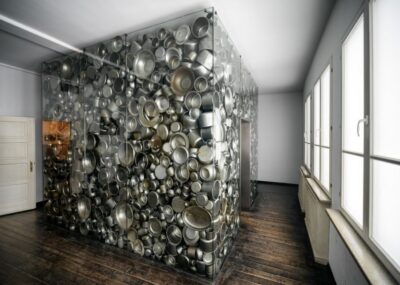
Kazimierz, Schindler’s Factory & Ghetto Guided Tour
Read our review →Browse the lists this tour appears in