Reviewed · GUIDED
Guided Tour in Kraków-Płaszów Former Concentration Camp
What makes this experience interesting is that you get Holocaust history in Kraków itself, not just as a day trip. I like how the guide connects the dots between today’s streets and what happened here during the Nazi period, and you walk away with a clearer sense of how Kraków worked during that time. You’ll also spend real time on the Płaszów camp grounds, with guided explanations that make the place easier to understand.
I also love the first memorial stop at Plac Bohaterów Getta, where the design controversy matters as much as the message. In one recent English tour, the guide Olga did the kind of practical thing that makes a difference on the ground, helping the group figure out tram tickets so the day keeps moving.
One drawback to consider is that the camp area today is not a polished, even museum floor. Plan for a respectful, slower pace and wear supportive shoes, because you’ll be navigating uneven ground.
Quick hits before you go
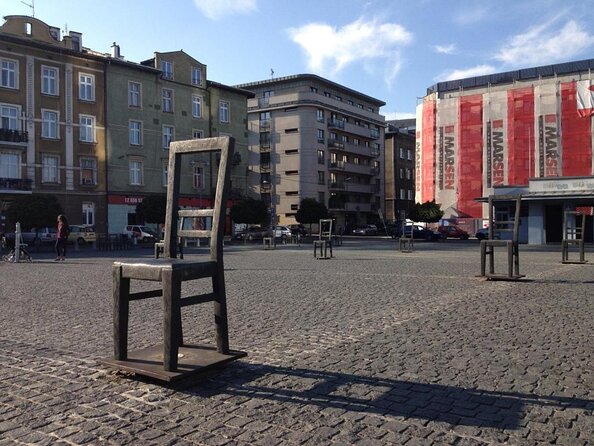
- Ghetto Heroes Square (Plac Bohaterów Getta) is where memory meets awkward public design, including 70 metal chairs meant to symbolize departure and later absence
- Płaszów camp in Kraków is surprisingly close to major shopping and road arteries, so the past can feel startlingly near
- English guidance with a cap of 25 people, and sometimes smaller groups depending on booking
- Camp entry is listed as free for the guided visit portion, so your money goes to interpretation, not extra fees
- A 12-metre fragment of the original ghetto wall ends the tour with a concrete, marked place you can’t ignore
Why Płaszów feels so close to home in Kraków
Most people associate Nazi concentration camps in Poland with famous names and big distances. This tour flips that expectation. You stay in Kraków, walking in the Podgórze area and visiting the former German Nazi concentration camp in Płaszów, known in German as Konzentrationslager Plaszow bei Krakau.
What I appreciate is that the experience doesn’t treat the history like a distant lesson. You see how the camp sits inside the modern city fabric, near major routes and not far from everyday spots. That contrast is exactly what you need. It helps you understand why remembrance work here still matters, even when the ground looks like it belongs to a normal neighborhood.
The tour is also built around interpretation, not just sight-seeing. A guide points out what you’re looking at and puts it into plain context. That is where the value lives.
More to book in Krakow:
- From Krakow: Auschwitz-Birkenau Guided Tour & Hotel Pickup
★ 4.5 · 33,358 reviews - From Krakow: Auschwitz-Birkenau Guided Tour & Hotel Pickup
★ 4.5 · 29,340 reviews - Krakow: Auschwitz Guided Tour with Optional Hotel Pickup
★ 4.5 · 15,280 reviews
Ghetto Heroes Square, Plac Bohaterów Getta, and why the design still sparks debate
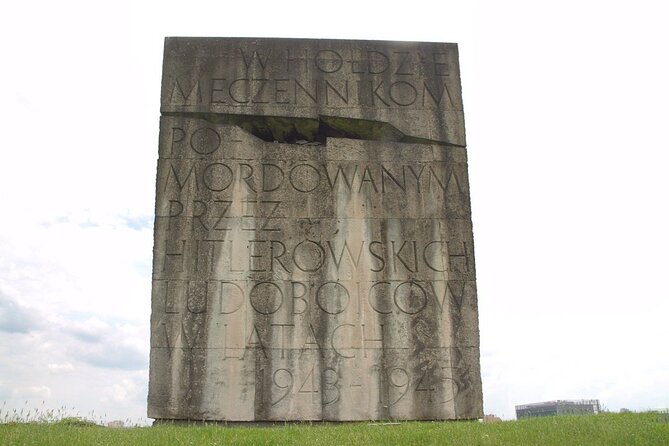
The tour starts with a walk by Ghetto Heroes Square, Plac Bohaterów Getta, across the river in the Podgórze suburb. This matters because the square’s post-war story is part of Kraków’s moral story.
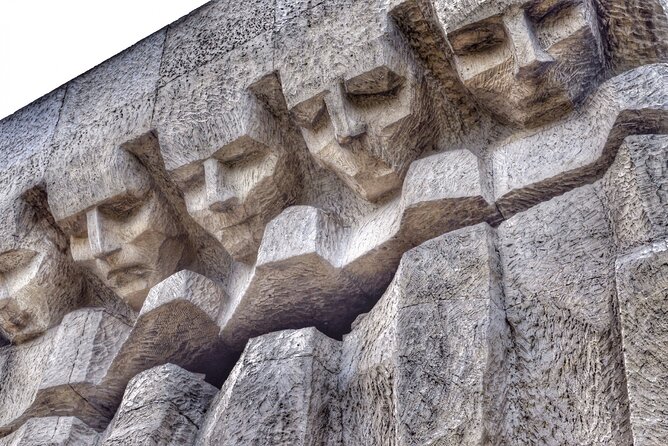
After the war, the space’s name changed from Plac Zgody to Plac Bohaterów Getta, and a small monument appeared. But for decades, the area also served as a public toilet or parking lot. In other words, it carried layers of neglect and survival, not just remembrance.
Then in 2005, the square was renovated, and that is where things became controversial. The layout uses 70 large metal chairs, spaced well apart. The idea is symbolic, meant to represent departure and subsequent absence. Whether you love the concept or struggle with it, you’ll understand why people argue. It is a memorial, but it also feels like an odd public space, especially if you expect memorials to behave like traditional monuments.
As an opening stop, it does a smart job: it sets your expectations for the day. You’re not just going to see tragedy. You’re going to see how societies try, and sometimes fail, to keep the truth visible.
Walking to Płaszów: from modern Kraków to the camp’s real setting
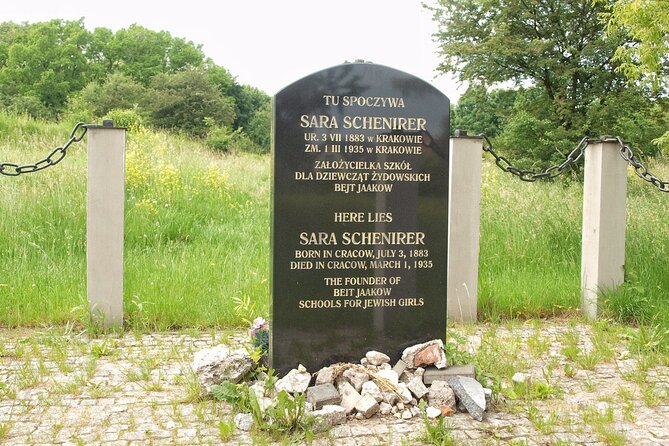
After the first stop, you head to Płaszów. The area is large and, today, it can look like an undeveloped patch. That’s part of the shock. The former camp sits in a part of Kraków that is actually desirable for living and business, on a major communication artery, Wielicka Street, opposite the Bonarka shopping center. It’s also not far from the Krakus Mound.
Until recently, the grounds did not clearly announce their wartime purpose. A wild, uneven space of land can hide its own past. That is why guided direction helps so much. Left alone, it’s easy to wander and miss the meaning.
The tour timing keeps things focused. The camp visit is about one hour within the roughly two-hour overall experience. That’s long enough for context and key points, without dragging you through every corner. You’ll get to see the place and understand what you’re seeing, instead of just checking a box.
One practical detail: the camp portion lists admission ticket free, so you are not paying extra on top of the guide. Your ticket price is really going to interpretation and on-the-ground storytelling.
Inside the camp grounds: what a good guide should help you see
At Płaszów, the guided visit is your main event. The approach here is straightforward. Your guide shows you around and gives you the information you need to make sense of what happened here.
I like this structure because it prevents two common problems on dark-history tours. One is wandering without a frame. The other is racing ahead like you’re on a casual walking route. With a guide, you can slow down at the right moments and understand why certain areas matter.
The camp is tied to Kraków’s Holocaust story, and the tour is designed to explain that history in a way that feels connected to the city itself. You’ll learn how the Nazi system operated in this place and how Kraków’s local reality fed into the larger machinery of persecution and deportation.
You should also know what the physical experience can be like. The grounds today are uneven, so it’s smart to dress for walking and plan for a respectful pace. If you go in expecting a smooth, landscaped museum route, you’ll be disappointed. If you go in understanding that you’re walking where history happened, your expectations will fit reality.
More Krakow bookings to weigh
- Krakow: Auschwitz-Birkenau Guided Tour with Pickup & Lunch
★ 4.5 · 9,800 reviews - Krakow: Auschwitz-Birkenau and Salt Mine Guided Tour
★ 4.7 · 9,020 reviews - Krakow to Auschwitz Birkenau Guided Tour with Transfer and Ticket
★ 5.0 · 8,197 reviews - Krakow: Wieliczka Salt Mine Fast-Track Ticket & Guided Tour
★ 4.5 · 5,872 reviews
The ghetto wall fragment stop: a small piece that carries a lot
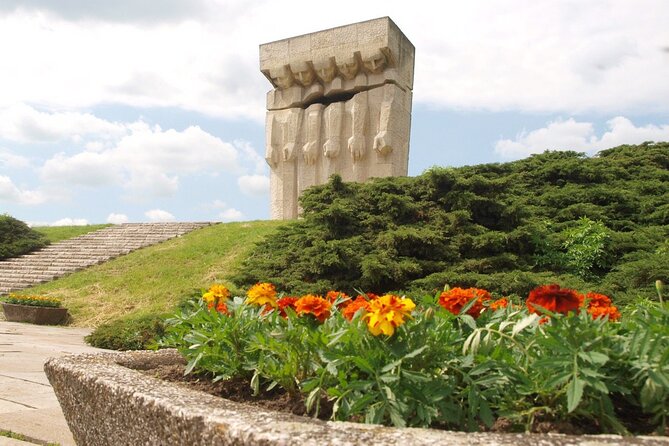
After the camp portion, you pass by one of Kraków’s most powerful landmark reminders of the ghetto: the Fragment of Ghetto Wall. It’s a 12-metre stretch of the original ghetto wall.
What makes this stop work is that it’s concrete. You’re not relying only on explanations you heard earlier. You can stand in the presence of a physical remnant and read what it communicates.
In 1983, a commemorative plaque was raised with text in Hebrew and Polish. It says in essence: Here they lived, suffered, and died at the hands of German torturers. From here they began their final journey to the death camps. That wording is direct. It gives you a painful timeline and reminds you that walls were not just boundaries. They were tools of confinement, control, and destruction.
Also, it’s a smart pairing with Płaszów. The camp shows a broader system of imprisonment and terror. The ghetto wall fragment gives you a slice of the city’s local geography during the Holocaust.
Logistics that actually matter: start point, route, and how long you’ll be out
This tour is offered in English and uses a mobile ticket. You get confirmation at the time of booking, and the tour is near public transportation, so it’s easier to plug into a day than experiences that depend on complicated logistics.
The meeting point is at Apteka pod Orłem, Plac Bohaterów Getta 18, 33-332 Kraków, Poland. The tour ends near Henryka Kamieńskiego 57, 30-644 Kraków, Poland, by a bus stop on Kamienskiego street.
Group size is capped at 25 travelers. In practice, the smaller-group feel can be very noticeable. One highlight from an English visit included a group of only three, which made the tour feel personal and kept questions flowing. Even if your group ends up larger, the cap helps prevent the experience from turning into a rushed stampede.
Time-wise, plan on about two hours total. It’s a good length for a day when you also want to see other Kraków sights without burning an entire afternoon.
Price and value: what $30.01 buys you here
The price is $30.01 per person. That’s not cheap in the way a basic city walking tour might be cheap. But it is fair value for what you’re paying for.
Here’s the trade. You’re not paying for a long, multi-day itinerary. You’re paying for a guide to interpret an emotionally heavy site in a way that connects Kraków’s geography to the Holocaust story. The camp portion also lists admission ticket free, which keeps the budget from ballooning.
Where this tour becomes worth it is the difference between reading a sign and hearing the story explained. The guide helps you understand why the square design is controversial, what the chairs symbolize, and why a 12-metre wall fragment still matters decades later. That’s hard to do on your own without risking misunderstandings.
Who should book this Kraków-Płaszów guided tour
This tour fits best if you want Holocaust history grounded in real Kraków spaces, and you like having someone else organize the meaning for you.
You’ll likely enjoy it if:
- You’ve already started making time for Kraków’s WWII sites and want something in the city proper
- You want a guided explanation that links Płaszów, the ghetto, and the physical remnants you can still see
- You prefer smaller group energy, or at least you appreciate that the cap is 25
You might think twice if you want a casual photo walk. This experience has serious subject matter and you’ll get the most out of it when you slow down and pay attention. Also, the grounds are uneven, so comfortable shoes are not optional.
Should you book this guided tour of Kraków-Płaszów?
My take is simple: if you care about understanding what happened here in Kraków, not just visiting a famous distant camp, book it. This tour gives you a focused, guided route through the parts of the story you can actually stand in and see, starting with the controversial memorial square and ending with a preserved wall fragment.
Book it ahead if you can, since it is commonly reserved around a month in advance. And when you do, go in with the right mindset: you’re not here for a quick checklist. You’re here to learn how memory and history overlap in Kraków, right down to the chairs in a public square and the uneven ground of a former camp.
If you want a Kraków experience that feels honest, local, and guided, this is a strong choice.
FAQ
Where does the tour start?
The tour starts at Apteka pod Orłem, Plac Bohaterów Getta 18, 33-332 Kraków, Poland.
How long is the guided tour?
The duration is about 2 hours.
Is the tour offered in English?
Yes, the tour is offered in English.
How much does it cost?
The price is $30.01 per person.
Is there an admission fee for the Płaszów camp portion?
The camp portion is listed as having admission ticket free.
How big are the groups?
The tour has a maximum of 25 travelers.
Do I get a mobile ticket?
Yes, the tour includes a mobile ticket.
Where does the tour end?
The tour ends at Henryka Kamieńskiego 57, 30-644 Kraków, Poland, near a bus stop on Kamienskiego street.
Can I cancel for a full refund?
Yes, you can cancel up to 24 hours in advance for a full refund.
Fresh Krakow reviews
- Czestochowa Black Madonna Private Day Tour from Krakow★ 5.0 · 18 reviews
- Zakopane PRIVATE TOUR from Krakow★ 5.0 · 18 reviews
- Krakow City Pass – Museums, Atractions & City Transport★ 4.0 · 18 reviews
- Chopin Candlelight Concert with Wine in Krakow★ 5.0 · 18 reviews
- Krakow: Garden of Lights Pinocchio Entry Ticket★ 4.7 · 18 reviews
- Half-Day Wieliczka Salt Mine Tour from Krakow★ 5.0 · 18 reviews
- Krakow: Schindler’s Factory & Ghetto Guided Tour★ 5.0 · 18 reviews
- Auschwitz Birkenau Memorial and Museum group tour from Krakow★ 5.0 · 18 reviews
Guided, compared.
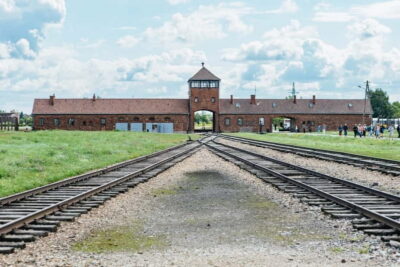
Auschwitz-Birkenau Guided Tour & Hotel Pickup
Read our review →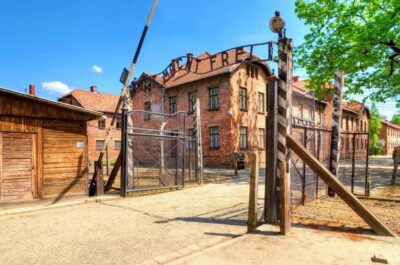
Auschwitz Guided Tour with Optional Hotel Pickup
Read our review →

Krakow to Auschwitz Birkenau Guided Tour with Transfer and Ticket
Read our review →
Wieliczka Salt Mine Fast-Track Ticket & Guided Tour
Read our review →
Schindler’s Factory Ticket and Guided Tour Option
Read our review →