

Reviewed · WALKING TOURS
Private Walking Tour of Gdansk Old Town
This private Old Town walk is interesting because Gdansk tells its story in layers, and you see those layers on foot, street by street. With only your group, you get time to ask questions and actually connect the architecture to what happened here. I especially like the way the walk mixes big city landmarks with tighter, human-scale streets near the waterfront, so you never feel like you are just checking boxes. private walking tour
Two things I really love: first, you spend time outdoors while moving through the Royal Way corridor and key church and civic buildings without getting stuck in long museum lines. Second, the guide puts names and symbols in context, so places like St. Mary’s Church feel far more specific than a quick photo stop. I have seen guides like Martin, Olga Libura, Michael Maj, and Agnieszka Syroka bring that history to life in a clear, sometimes funny way, depending on who is leading your group. English guide
One drawback to consider is simple: this is a moderate walking tour outdoors. If you have mobility issues or you get tired fast, you will need to plan for pauses and a slower pace.
What Makes This Gdansk Old Town Walk Worth the Time?
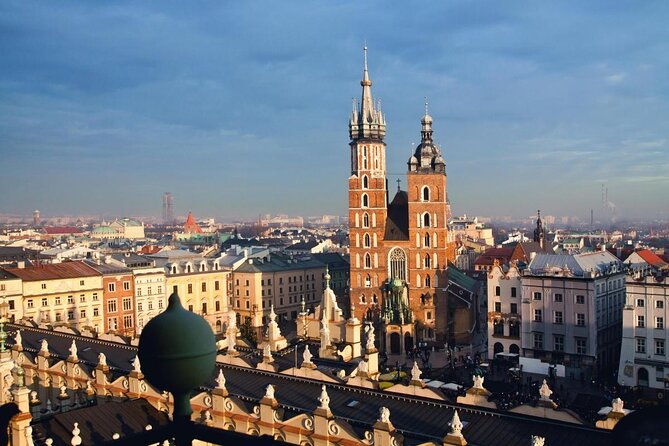
Here are the highlights that explain why this works so well, especially if you only have a short visit to Gdansk.
- Private group, up to 15 people, so you are not squeezed into a crowd shuffle
- A focused 2-hour format, covering major Old Town sights and the port-related highlights
- Free admission listed for each stop, which helps you spend on experiences instead of tickets
- Outdoor walking through areas you cannot reach by car or bus, so you get the real Old Town feel
- St. Mary’s Church context, including the role it played during Solidarity-era martial law
Starting at Highland Gate, Then Getting Your Bearings Fast
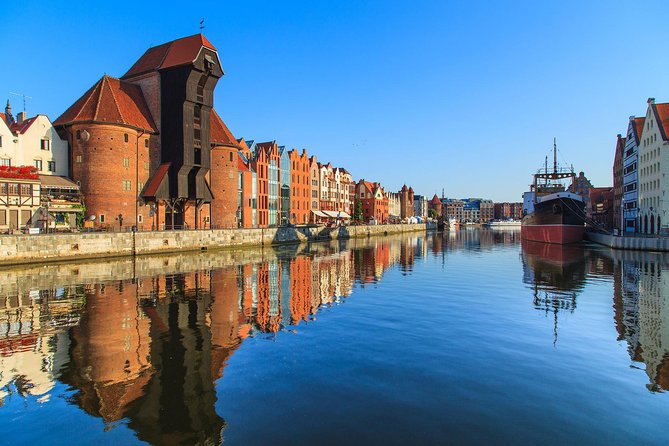
The tour begins at Highland Gate (Wały Jagiellońskie 2A), which is a good move. You start with an obvious landmark, then walk into the Old Town core with a guide who can point out what matters and what is just decoration.
From the start, you are not meant to feel hurried. The route is designed as a steady stroll, with short time blocks that let you look, listen, and orient yourself. If you have ever arrived in a historic city and spent the first hour just trying to figure out where everything is, this kind of guided start is a big help.
More Walking Tours in Gdansk
- Gdańsk City Sights & History Guided Walking Tour in English
★ 4.8 · 876 reviews - Main Town Gdańsk Walking Tour
★ 5.0 · 644 reviews - Discover Gdansk Walking Tour
★ 5.0 · 495 reviews
Langgasser Tor, also Called the Golden Gate
One of the first stops is Langgasser Tor (Goldenes Tor), and this is where the tour’s approach starts to pay off. The guide does not treat it like a pretty gate. You get the story behind it.
This building is tied to the architect Abraham van den Block and was built by entrepreneur Hans Strakowski. The point, though, is not only who designed it. It is what the building is trying to say. There are inscriptions and allegorical sculptures that reflect the city’s aspirations and the attitudes expected of its citizens.
Practical tip: take a few extra seconds to look for symbolic details instead of just the overall shape. Gates like this usually have multiple layers of meaning, and the guide can help you read them.
The Great Armoury and the Look of Dutch Renaissance in Poland
Next comes the Great Armoury (Wielka Zbrojownia), a standout example of Dutch Renaissance style in Poland. It is also described as a spectacular finishing touch along Piwna street, which helps you understand why it belongs in the Old Town walk.
You will likely notice how the building feels like a “designed moment” in the street, not just a standalone structure. That is exactly what a good guide helps you see, since you are walking and noticing architecture as you go rather than only looking at one building at a time.
Practical tip: if you like architectural styles, this stop is a good place to slow down. It is quick, but it sets up how the rest of the city’s buildings communicate power, trade, and identity.
Walking the Royal Way, Where Kings Paraded
Then you step onto the Royal Way, the traditional route used when Polish kings visited periodically. This is one of those places where the street itself becomes the attraction.
Even if you have seen photos of Gdansk’s Old Town, “Royal Way” is the kind of label that adds meaning fast. The guide helps you picture the processions and explains how the city’s main route connected civic life to royal power.
Practical tip: treat this stretch like a living route. Look at how the street guides you, and listen for the “why here” reasons, not just the “what is it” descriptions.
Another way through a Gdansk day:
- Gdansk: City Cruise on Historical Polish Boat
★ 4.8 · 2,913 reviews - Gdańsk: Sunset Cruise on a Historic Polish Boat
★ 4.9 · 977 reviews - Gdansk: Firearm Shooting Experience with Instructor
★ 4.8 · 866 reviews - Gdansk: Guided Round-Trip Cruise to Westerplatte
★ 4.3 · 865 reviews
St. Mary’s Church: More Than a Pretty Brick Cathedral
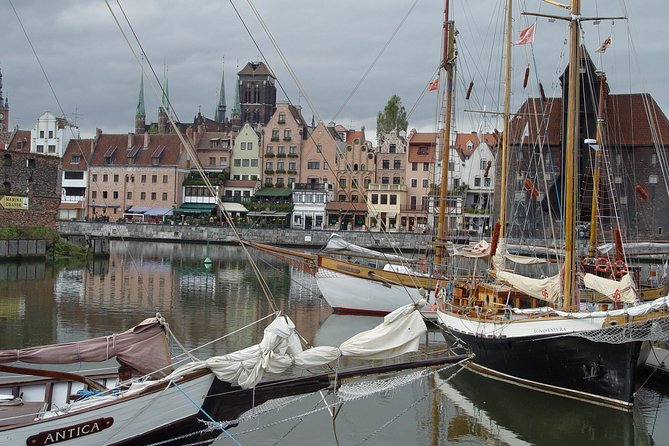
St. Mary’s Church (St. Mary’s Basilica) is the biggest emotional and historical stop on the walk. It is believed to be the largest brick church in the world, and the numbers alone make it hard to ignore: 37 windows, over 300 tombstones, 31 chapels, and a capacity up to 25,000 people.
But the guide’s strongest value is turning those facts into a story you can actually picture. St. Mary’s became a refuge during the period of martial law between 1981 and 1983, when members of the Solidarity movement sought safety here.
Practical tip: this is a stop where your posture matters. If you look up and spend time inside, you will get more out of it. If you are sensitive to crowds or long standing, ask your guide for a comfortable viewing spot and pace yourself.
Neptune’s Fountain on Long Market
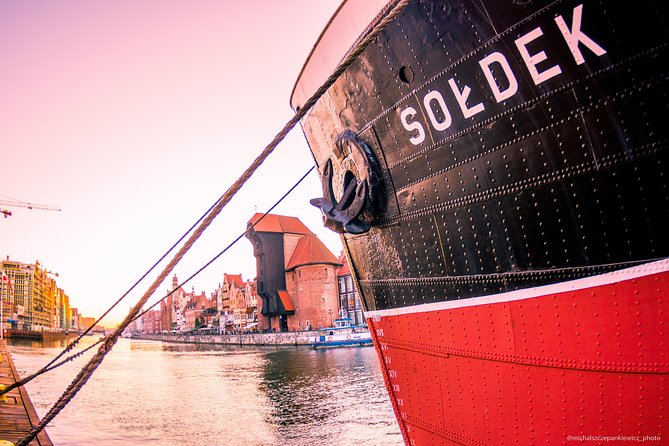
After the church focus, the walk shifts to the civic and artistic heart of the Old Town with Neptune’s Fountain (Fontanna Neptuna). It sits on the Long Market, in front of Artus Manor, in one of the most representative locations in Gdańsk.
You will learn that its creation started with Mayor Bartłomiej Schachmann and the city council in 1633. That date gives you a nice anchor point, because you can then connect the fountain to the long-standing wealth and pride of the city.
Practical tip: Neptune’s Fountain is a classic photo stop. If you want your photos to look better, stand slightly to the side and include reflections from nearby surfaces. The guide can point out where the angles usually work best.
Main Town Hall and the Museum of Gdańsk
Next is the Main Town Hall (Museum of Gdańsk), and this is where you see how Gdańsk presented itself as a major trading city. The building is the seat of city authorities, so it is tied to governance, not just decoration.
You will also hear about its multicultural references. The building’s form and decorative elements are said to resemble the Hanseatic House (Osterlinghaus) in Bruges. That comparison helps you understand something important about this part of Europe: cities shared styles, ideas, and trade links across borders, even when they were politically separate.
Practical tip: if you like symbolism, this is a good place to ask your guide what details to watch for. This stop can be visually dense, and spending your attention wisely makes it much more rewarding.
The Crane, Gdańsk’s Maritime Symbol
Then the walk turns strongly toward the port story with the Crane. It is a former port crane, and it is one of the most famous symbols of Gdańsk. If you care about how coastal cities built their power, this stop gives you that maritime backbone.
The idea here is simple: the guide helps you connect the crane to exhibitions and to the wider theme of port activity. The crane is not just a relic. It is a physical reminder of work, shipping, and the city’s place in long-distance commerce.
Practical tip: spend a moment looking at the crane’s position and what it would have commanded in daily harbor life. When you understand the setting, you stop seeing it as just a single object and start seeing it as part of an operating system.
Motława River Embankment, the Harbour Backstory in One Spot
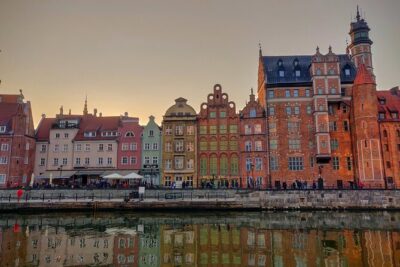
The last highlight on the walk is the Motława River Embankment (Długie Pobrzeże), the historical harbor of Gdańsk. This stop is especially memorable if you like when a city’s history is not only about politics, but about how people lived day to day.
You learn that the harbor was active in the early period, and that in the 7th century up to 300 ships could be moored every day. That is a huge number, and it helps you frame Gdańsk as a real engine of movement, not just a beautiful place to visit.
Practical tip: if the weather is kind, linger a bit. Waterfront light changes fast, and your guide’s maritime context makes the view feel more meaningful.
Price and Value: $159.70 Per Group for Up to 15
At $159.70 per group (up to 15 people), this tour is priced for groups, not per person. That is how it becomes good value.
If you are traveling as a pair or a small family, the “per group” model can still work well because the private format means you get a guide tailored to your pace. If you are with a group of friends, it becomes especially efficient because you are splitting the cost across people while still staying in a private bubble.
The value angle that matters most to me is this: the itinerary hits major architectural icons plus port context, and the tour format uses multiple outdoor stops with free admission listed for the stops you visit. That helps you avoid the common problem of paying for a guided tour and then getting hit with extra ticket costs at each landmark.
Guides and the One Thing That Really Shows: How They Explain
The common thread across strong guided walks is not just the facts. It is how the guide turns facts into mental pictures.
I saw this in how guides like Martin and Michael Maj can connect building features to the city’s mindset and streets to wider history. I also noticed the humor and warmth in Olga Libura and Agnieszka Syroka style of guiding, which matters because Old Town walking is easy to do on your own, but much harder to do with depth unless someone is shaping the experience.
A practical takeaway: come with 1 to 3 questions you want answered, about trade, religion, war, or how the city rebuilt itself. With a private group, your guide can actually respond instead of spending the time keeping a big group together.
Timing, Pacing, and What 2 Hours Feels Like
The tour runs about 2 hours. Each major stop is allotted around 10 to 20 minutes, which means you get a quick but meaningful “look and learn” window.
This format works well if you want to cover the essential anchors of Old Town without feeling exhausted. It is also ideal when you have a day with other plans and you need to place Gdańsk’s story in your head before you wander on your own.
Consideration: you will be outside for much of it. If you are visiting in colder or wetter months, wear layers and bring something for rain. The tour description calls for moderate physical fitness, so build in a little flexibility.
Who This Tour Suits Best
I think this is a strong choice if you:
- want a private guide in English
- care about architecture and how it connects to history
- like walking through places that cars and buses cannot reach easily
- are visiting with family or friends who want a paced tour rather than a sprint
It can also work well if you are on a cruise day and need to make the most of limited time, since the route is designed around Old Town highlights and the harbor story without long detours.
If you are traveling with children, remember that children must be accompanied by an adult. The walking time is short enough for many families, but you should still plan for breaks.
Should You Book This Private Gdansk Old Town Walk?
Book it if you want your time in Gdańsk to feel structured without feeling robotic. The private setup, the mix of landmark architecture and maritime context, and the way guides explain the symbols and stories make this more than a photo walk.
Skip it or adjust expectations if you dislike walking outdoors or you need long indoor museum time. This is a highlight walk by design, not an all-day deep museum pass.
If you are even slightly curious about how Gdańsk went from a powerful trading hub to a city shaped by modern history, this tour gives you the map in your mind. And once you have that, the rest of the Old Town becomes a lot easier to understand.
FAQ
How long is the Private Walking Tour of Gdansk Old Town?
The tour lasts about 2 hours.
Is this tour private?
Yes. It is a private tour, and only your group participates.
What language is the tour offered in?
The tour is offered in English.
How many people are included in a group?
The price is per group for up to 15 people.
Where does the tour start and end?
It starts at Highland Gate, Wały Jagiellońskie 2A, Gdańsk, Poland, and ends back at the meeting point.
Do I need to buy tickets for the stops?
The tour information lists admission tickets for the stops as free.
Is the tour suitable for children?
Children must be accompanied by an adult.
What is the cancellation window?
You can cancel for a full refund if you cancel up to 24 hours in advance of the experience start time.
Fresh Gdansk reviews
- Gdansk: Hansa Electric Golf Cart City Tour with Local Guide★ 5.0 · 3 reviews
- Aiport Gdansk Transfer to Malbork Castle or Stutthof★ 5.0 · 3 reviews
- 6 Hours Teutonic Castle Tour in Malbork★ 3.5 · 3 reviews
- Sopot Sunset Cruise with Welcome Drink★ 3.5 · 3 reviews
- Slowinski National Park Private Tour★ 5.0 · 3 reviews
- Lions & Unicorns of Gdańsk: Self-Guided Fantasy Puzzle Walk★ 3.5 · 3 reviews
- Segway Tour Gdańsk: Shipyard Tour – 1,5-Hour of Magic!★ 5.0 · 3 reviews
- Culinary Cruises Pierogi Tasting Motława★ 5.0 · 3 reviews
Walking Tours, compared.




Gdańsk City Sights & History Guided Walking Tour in English
Read our review →
Browse the lists this tour appears in