
Reviewed · 1-HOUR EXPERIENCES
Gdansk 1 Hour Guided Tour through the Heart of the Old Town
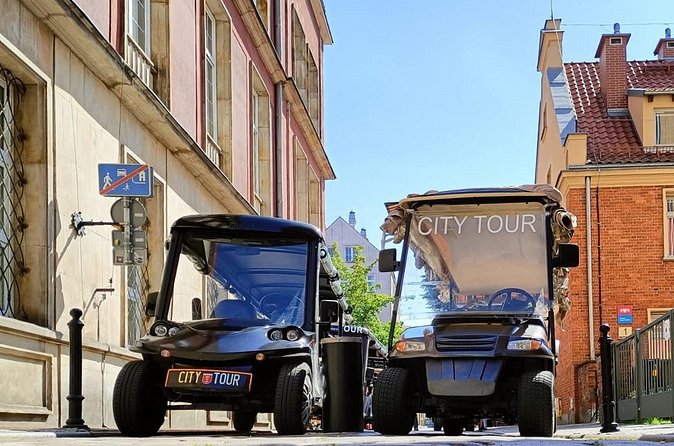
Gdansk’s Old Town can feel like a maze, so I like any tour that pairs smart stops with an easy pace. This one strings together the big hitters fast, from the gates and torture-chamber sites to the waterfront cranes and memorial areas, without asking you to walk every step.
Two things I especially like: the warm, comfortable ride that makes a short visit feel complete, and the mix of medieval defenses plus port-era landmarks that helps you understand how the city worked. One possible drawback is that most sights are quick photo pauses, and admission is not included for many of them, so you’ll need to decide on the spot what you want to pay to enter.
Quick take: what makes this Old Town circuit work
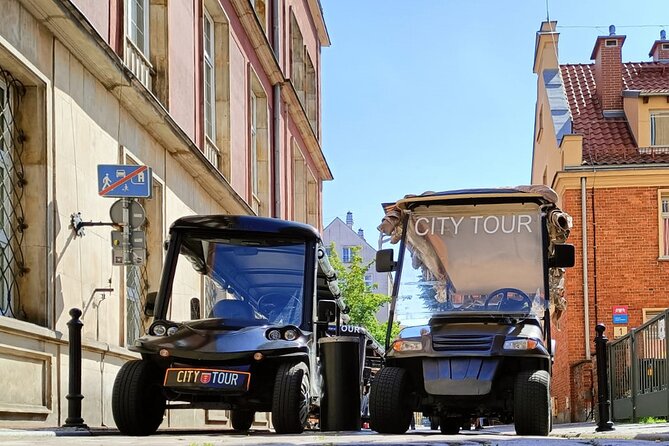
- Electric melex comfort for a 1- to 1.25-hour overview without exhausting legwork
- Main gates and fortification stops like Brama Wyżynna and the Golden Gate on the Royal Route
- Długa Street prison area context with stops at Prison Tower and Katownia (Torture Chamber)
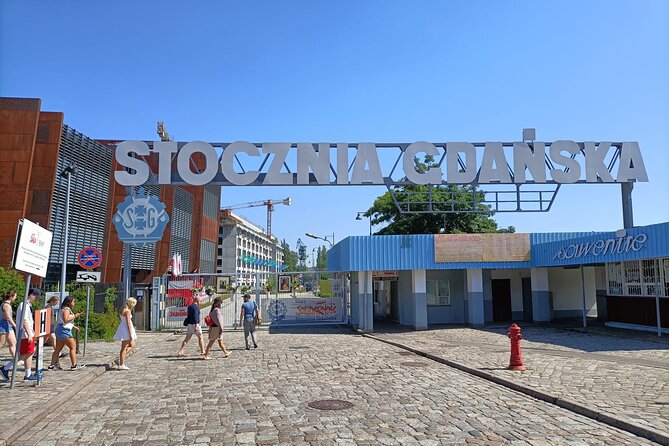
- Port and war memory moments from the Motława embankment to the Shipyard Gate area and Bunkier
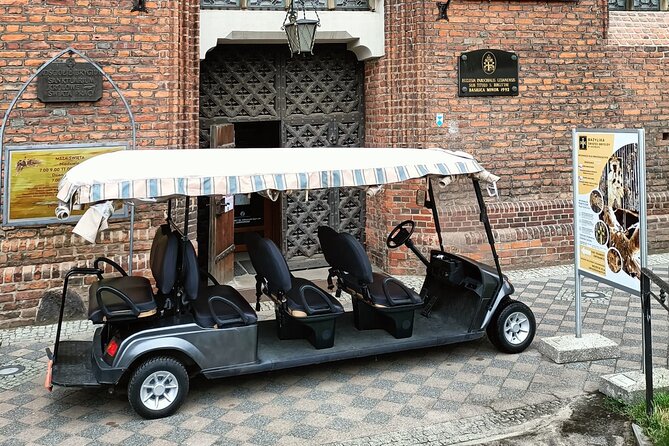
- One included church visit: St. Bridget’s Church (you get in)
Starting at Długi Targ, then easing into the Royal Route
Most starts in Gdansk are surrounded by history, but Długi Targ has a special pull. You begin at Długi Targ 1, right where the Old Town’s ceremonial and trading energy shows up in the streetscape.
From there, the tour moves in a loop style, designed for quick orientation. If you only have a day or you’re traveling with kids, tired feet, or winter weather in mind, this kind of “see a lot, learn the map” plan is exactly what you want.
More Gdansk bookings to weigh
- Gdańsk: City Sightseeing Tour by Buggy/Golf Cart LIVE GUIDED 1H
★ 5.0 · 208 reviews - Gdańsk: 1-Hour Escape Room Challenge for Teams
★ 4.0 · 4 reviews - Gdańsk: 1-Hour Private Party Bus with Vodka Package
★ 5.0 · 3 reviews
Shakespeare Theatre and the city’s theatrical past, without slowing down
The route begins with a modern landmark tied to an older theatrical story, the Gdansk Shakespeare Theatre. The building sits on the site of a 17th-century theatre called the Fencing School, where English Renaissance travelling players performed plays for a foreign crowd.
This stop is short, but it works because it frames Gdansk as a city that welcomed outsiders and ideas early on. Even if you do not go inside, you get a sense of how layered the place is, old and new sharing the same footprint.
Brama Wyżynna and the Golden Gate: how Gdansk controlled entry
Next up is Brama Wyżynna, also called the Highland Gate. It once served as a main entrance to the city and had ceremonial weight too, including the welcome of Polish kings and the handing over of city keys within its walls.
A little later you pass the Langgasser Tor, the Golden Gate. This Renaissance gate dates from 1612 to 1614, and it sits on the Royal Route end of Ulica Długa, tying together the pedestrian spine you’ll keep hearing about in Gdansk sightseeing.
Practical tip: these gates are best enjoyed by standing back and looking up for details. The quick pace means you will not have time to do deep reading, so focus on structure and location first, then decide if you want to return later.
Długa Street’s prison complex: Prison Tower and Katownia
If you want one stretch that feels very “Gdansk,” it is the Długa Street defenses and justice sites. The Prison Tower and Katownia area come from medieval fortification logic, with buildings acting as gatehouses for the city’s Main Town.
Katownia, often described as the Torture Chamber, adds the darker layer. Built in the second half of the 14th century, it later became a court, prison, and place of execution after fortifications were modernized, and it was rebuilt around 1593 to 1604 with rich sculptural decoration.
I like that this tour does not pretend the city was only pretty. In a short time, you learn how gates were security tools, and how control of who entered was tied to how the city handled punishment and authority.
More to book in Gdansk:
- Gdansk: City Cruise on Historical Polish Boat
★ 4.8 · 2,913 reviews - Gdańsk: Sunset Cruise on a Historic Polish Boat
★ 4.9 · 977 reviews - Gdańsk City Sights & History Guided Walking Tour in English
★ 4.8 · 876 reviews - Gdansk: Firearm Shooting Experience with Instructor
★ 4.8 · 866 reviews
Stopping at towers and walls: Baszta Slomiana and the fortification logic
You also pass Baszta Slomiana, the Strohturm, an octagonal brick tower that helped protect western medieval fortifications. Its name is thought to come from an earlier thatched roof, later replaced with tiles, and the structure’s current shape was set in the first half of the 15th century.
These “infrastructure stops” can feel like filler if you just want landmarks. But here, the value is that you start connecting the dots: gates, towers, and wall-side buildings all point to one system that shaped everyday movement through Old Town streets.
Great Armoury and the Jan III Sobieski Monument: war readiness made visible
The Great Armoury (Wielka Zbrojownia) is one of the city’s standout secular buildings. Built from 1602 to 1605, it was created because Gdansk needed a special warehouse for weapons and war equipment as threats rose, including fears tied to Sweden.
Right nearby is the Jan III Sobieski Monument, unveiled in 1898. The bronze sculpture shows the king in traditional national dress, jumping over a destroyed Turkish cannon, which gives you a very direct view of how public monuments teach a city’s values.
If you are the type who likes to understand why a building looks the way it does, this is one of the more rewarding segments. A lot of Old Town sites are “pretty by accident,” but here you get a reason.
St. Mary’s Church area and quick context for a city of faith shifts
The route includes St. Mary’s Church, a major landmark in the Main Town. This is an important stop even if you do not go inside, because it helps you anchor where the biggest power centers stood.
You also later get into church history with St. Catherine’s Church and St. Bridget’s Church. So seeing St. Mary’s early is like setting the baseline before the tour spends time on how religious control and politics changed over centuries.
Zuraw miniatura and the Motława waterfront: port work in bronze and brick
When the tour reaches Zuraw miniatura, you are moving from “city defense” to “city economy.” The crane at the heart of the attraction had two brick towers with a wooden hoisting mechanism used to lift masts and reload goods.
The crane was destroyed in 1945 and rebuilt after the war, and since 2003 tourists can enter the lifting mechanism. The included detail here matters for your planning: you get at least one place where the port story is not just a sight line, it is something you can experience.
Then you roll along the Motława River embankment on Długie Pobrzeże. This waterfront promenade connects you to the Royal Route’s working side, where the harbor activity dates back to the 14th century and loading platforms were eventually linked into a pier.
Neptune’s Fountain and the calmer street rhythm near the center
The Neptune Fountain (Fontanna Neptuna) is one of the Old Town images you will see on postcards, and the tour uses it as a mental reset. It was cast in bronze for Neptune in 1612 and was only put into operation in 1633 after delays tied to reconstruction work and technical issues.
This is a good place to pause, breathe, and get your bearings. After you have absorbed gates, defenses, and port logistics, the fountain becomes a marker for the “social face” of the city.
Stopping for the Fish Market area and Ołowianka’s strategic role
The route includes the Fish Market area, tied to market traditions and the Motława river edge. It also passes sites connected to how the Teutonic Knights controlled trade priorities, which helps explain why city gates and markets sat so close together.
You also get Ołowianka, an island in the Motława River and Stępka Canal. The tour’s quick explanation matters: the island became an important strategic area during the Teutonic Knights era, connected to Zamczysko by bridge and ferry before it became an island after the Stępka Canal was dug in 1576.
If you often struggle to understand where “old” and “new” parts of a city actually sit, these stops give you a clear mental map fast.
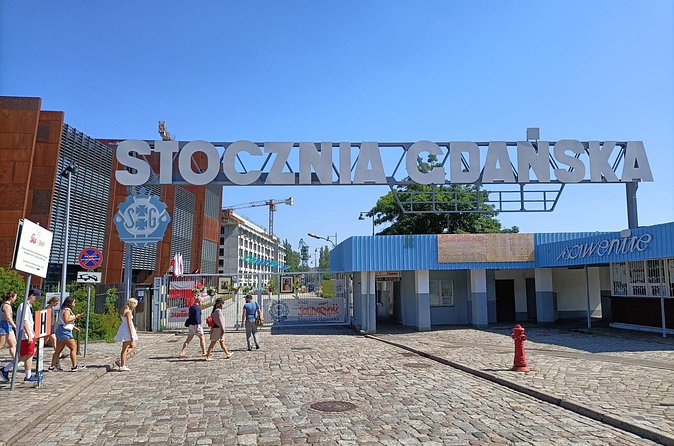
Gdańsk Shipyard Gate No. 2: when history is not abstract
The shipyard stop is longer, and it is heavy in the best way. Gate No. 2 was considered the main entrance due to its location near management buildings and the connection to the city center and railway station.
On December 16, 1970, shipyard workers leaving the plant were fired upon by army troops, with two killed and eleven wounded. This stop anchors modern history in a physical place, and it is the kind of moment that makes the whole Old Town tour feel more grounded.
The Polish Post Office museum stop: an everyday institution with political weight
You also stop at the Museum of the Polish Post Office in Gdansk. This is not just about letters and stamps. Under the Treaty of Versailles, the Polish post office buildings were treated as extraterritorial Polish property, which is a very specific kind of power.
The building connected to the Polish post office in 1930 had a direct telephone line to Poland, which tells you that communication technology was part of political infrastructure. Admission is listed as free here, so it is the kind of stop where you can squeeze in a meaningful break without paying extra.
Bunkier Luftschutz Hochbunker: a tough stop that teaches scale
Another memory stop is Bunkier, the Luftschutz Hochbunker built between 1942 and 1943. The structure is a multi-storey above-ground air-raid shelter with one storey underground, designed with reinforced concrete, steel reinforcement, and thick walls.
The details you get are the point: the building covers about 1,000 square metres, with external walls around 120 cm thick and internal walls up to 60 cm thick. That is a big clue to how seriously the city prepared, and it helps you feel how physical fear can be.
If you prefer lighter topics, you might find this one intense. But it is also one of the most important stops on a tour that otherwise balances medieval gates and charming streets.
St. Catherine’s Church and the House of Three Preachers: how the city rewrites itself
Next comes St. Catherine’s Church, with construction beginning in 1227 and expansion in the 14th and 15th centuries. The tower was completed and crowned in Baroque style in 1634, and the interior was equipped with a carillon in 1738.
Right around here the tour also points out the House of Three Preachers, a Mannerist tenement house where pastors from St. Catherine’s Church lived. The building survived World War II with its façade intact and was reconstructed by 1970.
This pairing is useful because it connects worship space and everyday living space. In a short visit, it is easy to think of churches as standalone objects, but this tour shows they were tied to local routines.
St. Bridget’s Church: the one included interior you should not skip
St. Bridget’s Church is the highlight that you actually enter, because entrance is included. The church began in 1227-era roots and then grew when the Order of St. Bridget arrived in the late 14th century, with the first single-nave temple completed in 1396 to 1397.
The tower’s timeline is long, culminating with a 1738 carillon setup, and the church played a role in Poland’s modern history. The tour’s time allocation here is longer than most stops, about 15 minutes, which is exactly how you should treat the one included interior.
Practical tip: if you are going to bring one thing to this stop, bring patience. Churches reward slower looking, and 15 minutes feels short only if you rush.
Most Chlebowy and Heweliusz Monument: clever details you can see in seconds
As you move back toward the center, the tour reaches Most Chlebowy, the Bread Bridge. It was built between 1338 and 1356 over the Radunia Canal and is named for the bakers who sold bread from special stalls called bread benches starting in the 14th century.
Then you pass the Heweliusz Monument, commemorating Johannes Hevelius, the astronomer, mathematician, inventor, and brewer. The monument stands opposite the Old Town Hall and marks the site where Hevelius ran his astronomical observatory in the 17th century.
These are “quick win” stops. You learn something surprising, and the information is tied to an object you can photograph right away.
Millers’ Guild Hall and the story of making and trading
The route also includes the Millers’ Guild Hall, erected in 1831 as the seat of the millers’ guild and facility for the nearby Great Mill. It uses half-timbered architecture, and it was originally located on a small island formed by the Radunia Canal’s arms.
Even if you only catch it from outside, it helps you remember that Gdansk was not only a military and shipping city. It also depended on skilled production and the trades that kept food and materials flowing.
Worth your $40.14? How I judge the value
For $40.14 per person and about one hour to one hour and 15 minutes, this is priced like a comfort-focused orientation tour. The ride element matters, because you are covering a lot of ground and a lot of different city themes in a short window.
Where it feels like good value is the balance: you get medieval defenses, Renaissance gates, religious landmarks, port infrastructure, and 20th-century memory sites. Most “Old Town highlights” tours either stick to postcard views or they wander too long on foot. This one builds a tight route, and the pacing is designed so you can actually process what you see.
Where it might feel less worth it is if your goal is deep museum time. Museum entry is not included at many stops, like the Museum of the Second World War, and admission is explicitly not included for many of the sights along the way.
Who should book this tour
This tour suits you if you want an Old Town overview that makes the city make sense quickly. It is a great fit for couples, families, and anyone who wants a relaxed tour day, especially in colder months when long walks can drain your energy.
It is also smart for first-time visitors who plan to return later for deeper visits. Use this tour to learn the map, then come back on your own time for the places you care about most.
Should you book the Gdansk 1 Hour Guided Tour
I would book it if you want a cozy, efficient introduction to Gdansk that hits both the pretty postcard stops and the more serious historical sites. You get one included interior at St. Bridget’s Church, plus the kind of fortification and port context that is hard to piece together alone.
I would skip it only if you want museums as the main event and you already have a strong plan for ticketed entrances. Otherwise, for a short visit, this route is a practical way to leave Gdansk with a real sense of how the city functioned, not just what it looks like.
FAQ
How long is the Gdansk 1 Hour Guided Tour?
The tour lasts about 1 hour to 1 hour 15 minutes.
What is the price per person?
It costs $40.14 per person.
Is the tour offered in English?
Yes, it is offered in English.
Is this tour private?
Yes, it is a private tour/activity, so only your group participates.
Where does the tour start and end?
It starts at Długi Targ 1, 80-828 Gdańsk, Poland and ends back at the meeting point.
Is St. Bridget’s Church included in the price?
Yes, entrance to St. Bridget’s Church is included.
Do I need separate tickets for other stops?
The tour lists admission ticket not included for many stops, so you may need to pay separately if you choose to enter.
Can I cancel for a full refund?
Yes. Free cancellation is available if you cancel up to 24 hours in advance for a full refund.
Fresh Gdansk reviews
- Gdansk: Hansa Electric Golf Cart City Tour with Local Guide★ 5.0 · 3 reviews
- Aiport Gdansk Transfer to Malbork Castle or Stutthof★ 5.0 · 3 reviews
- 6 Hours Teutonic Castle Tour in Malbork★ 3.5 · 3 reviews
- Sopot Sunset Cruise with Welcome Drink★ 3.5 · 3 reviews
- Slowinski National Park Private Tour★ 5.0 · 3 reviews
- Lions & Unicorns of Gdańsk: Self-Guided Fantasy Puzzle Walk★ 3.5 · 3 reviews
- Segway Tour Gdańsk: Shipyard Tour – 1,5-Hour of Magic!★ 5.0 · 3 reviews
- Culinary Cruises Pierogi Tasting Motława★ 5.0 · 3 reviews
1-Hour Experiences, compared.


#1 Pub Crawl Warsaw with Optional Premium 1 Hour Open Bar
Read our review →
Pub Crawl with 1 Hour of Unlimited Alcoholic Drinks
Read our review →
Krakow by night 60 minutes cruise The Vistula River Krakow
Read our review →
City Sightseeing Tour by Buggy/Golf Cart LIVE GUIDED 1H
Read our review →

1 Hour of Open Bar Pub Crawl + Karaoke + VIP Entry to Best Clubs
Read our review →Browse the lists this tour appears in