
Reviewed · WALKING TOURS
Life Behind the Iron Curtain Warsaw Walking Tour
This walking tour is interesting because it treats Warsaw’s Cold War cityscape like a set of clues, not just sightseeing. I especially like how you read the socialist realism facades for what they meant, and how censorship and espionage show up in real places you can point at.
One consideration: the route is about 3 km on foot over roughly 150 minutes, so if long walking is an issue, you’ll want to think twice.
Key points to look for
- Constitution Square to show the plan: see where the new city center was meant to happen, and why that mattered.
- Marszałkowska Street as propaganda stage: a wide boulevard designed for marches, parades, and public control.
- Free Speech Memorial and what it stands for: a stop built around censorship and how surveillance shaped daily life.
- Socialist realism that people disagreed with: learn why some architecture looks nice to you, yet felt wrong to many locals.
- Everyday absurdity, explained plainly: empty stores, odd workarounds, and the jokes that helped people cope.
- Finish close to Emilii Plater: you end in a practical area for continuing your own exploring.
Warsaw Under Communism, Read Like a Citywide Clue
Warsaw is a photogenic city, but this tour asks you to look past the postcard angles. The core idea is simple: the Cold War wasn’t only tanks and treaties. It showed up in buildings, street width, paperwork, rationing logic, and even in what people dared to say out loud.
What I like is the balance between hard reality and everyday absurdity. You’ll hear how Poles handled nearly 40 years of communist oppression with ingenuity and humor, not just suffering. The guide also keeps the story grounded in physical locations, so it feels less like history class and more like walking through the evidence.
The other thing I appreciate is the way the tour connects politics to the street-level experience. You don’t just get facts about the system. You get the whys behind them, like why the state tried to control travel and how censorship created a spy mindset.
Price and What You Truly Get for $32
At $32 per person for about 150 minutes, this is good value if your goal is interpretation, not just photos. You’re paying for an English live guide plus a structured walk through key Warsaw sites, with visual aids and an info pack that helps you keep the story straight.
A small but important detail: you get recommendations for what to do next in Warsaw. That matters more than it sounds, because this tour teaches you how to read the city, then helps you pick places that match your new perspective.
Not included is the entry fee for the viewing terrace at the Palace of Culture and Science. If you’re the type who likes to add a viewpoint, budget a bit extra. If not, you can still enjoy the stop for the symbolism and context.
More Walking Tours in Warsaw
- Warsaw: Old Town Highlights Walking Tour in English
★ 4.7 · 1,516 reviews - Warsaw: Old Town Guided Walking Tour
★ 4.9 · 599 reviews - Half-Day Polish Food Walking Tour with Guide and Dinner
★ 4.5 · 381 reviews
Getting Started at Constitution Square with the Right Pace
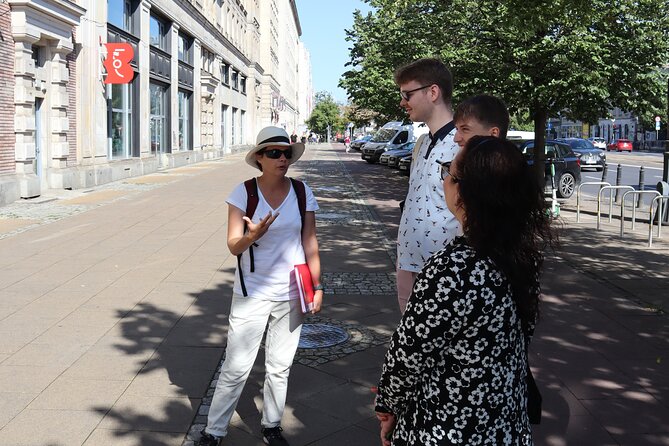
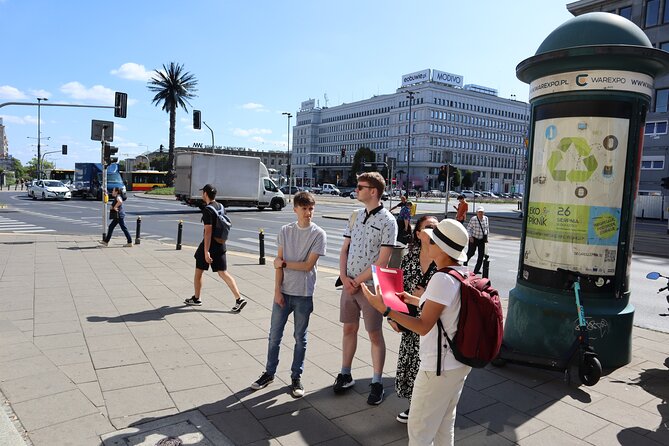
You meet your guide at Constitution Square. Look for the guide holding a white and green umbrella. That’s one of those tiny details that saves time, because Warsaw streets are easy to get turned around in if you’re rushing at the start.
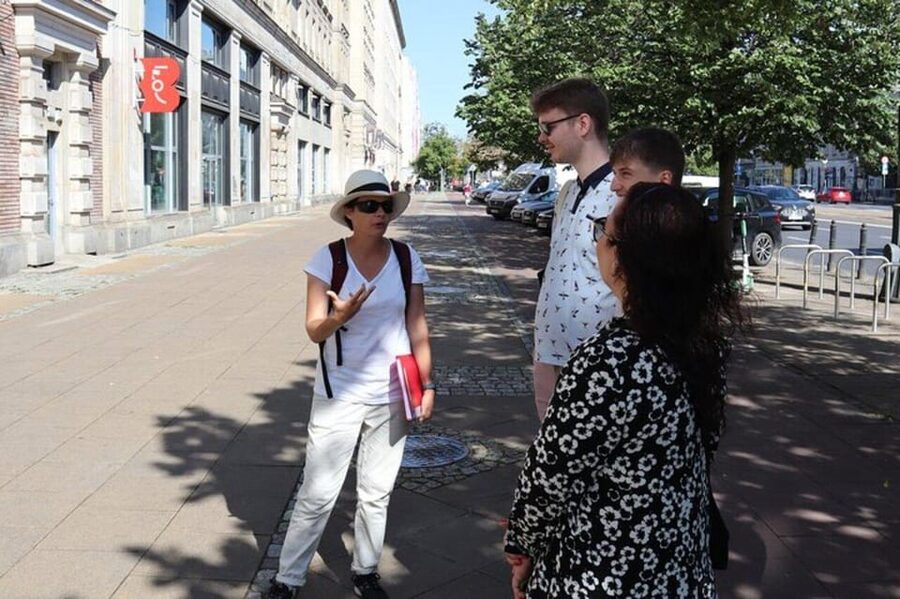
The tour runs in English, and it works well as a private or small group format. That format tends to matter on a story like this, because the best part is the Q and A. I like that you can ask follow-up questions as you go instead of saving them for the end.
The walking time is about 150 minutes over around 3 km. The pace feels designed for a typical city sightseeing rhythm, not a speed-walk. You’ll also get periodic guided stops that give you time to absorb what you’re seeing and why it was built that way.
One more practical note: the activity is listed as wheelchair accessible. At the same time, it’s noted as not recommended if you have problems with walking long distances. If your mobility needs are on the sensitive side, it’s worth deciding based on your comfort level with a 3 km urban walk.
Constitution Square, Where the New Center Was Promised
The tour begins at Constitution Square, and this is where you start learning the language of power. You’re shown the square that was meant to be the new city center of Warsaw. That’s not just urban design. It’s politics in stone and asphalt.
As you stand there, the story clicks: when regimes want to remake society, they often start by remaking the map. Changing the “center” changes who belongs there, who gets to gather, and what daily movement looks like. It also reshapes how people feel about their own city.
This stop sets up the tour’s tone. Instead of treating communism as a distant ideology, you’ll see how it turned into plans, construction choices, and visible statements. The guide also highlights the idea of absurdity, which becomes a thread across the whole walk.
Marszałkowska Street, the Parade Boulevard and Its Purpose
Next you move to Marszałkowska, a wide avenue built for spectacle. This is one of those places where the street width itself tells you what the state wanted. The tour explains how it was used for parades and marches, meaning public space became a stage for controlled emotion.
I love this part because it’s easy to understand without needing a history degree. If a regime can choose where crowds move and how they gather, it can influence what people see as normal. The guide ties the physical design to the human behavior it encouraged.
You’ll also hear how the system worked through performance and pressure. Even when life felt ordinary at street level, the city layout still carried the weight of political choreography.
A practical tip: Marszałkowska can feel long and open. If you’re heat-sensitive, plan for sun and plan for short breaks. In past tours with this guide style, pacing and shade awareness have come up, so it’s worth expecting the guide to manage comfort.
Another way through a Warsaw day:
- Warsaw: Chopin Concert in the Old Town
★ 4.8 · 2,287 reviews - Warsaw: Traditional Galar Cruise on The Vistula River
★ 4.6 · 1,640 reviews - Warsaw Concert: Chopin – Painted by Candlelights with Wine
★ 4.8 · 1,442 reviews - Warsaw: City Sightseeing Hop-On Hop-Off Bus Tour
★ 3.6 · 1,415 reviews
The Free Speech Memorial, Censorship Made Visible
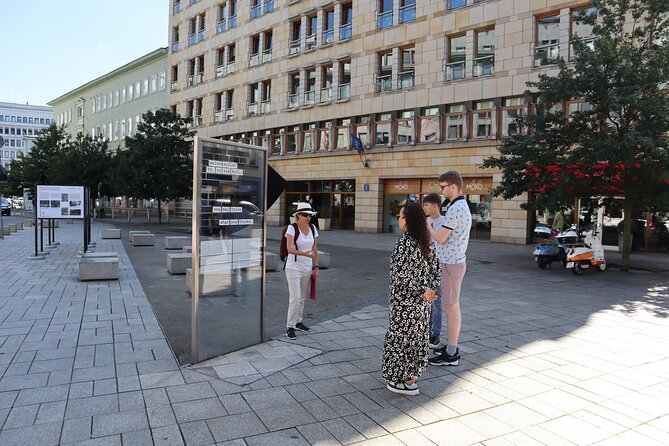
At the Memoriał Wolnego Słowa, the tour shifts from architecture to behavior. This stop is built around free speech, censorship, and the fear that comes with knowing someone might be listening.
What I find effective here is the way the guide links these ideas to how daily life changes when censorship is real. It’s not only about what was banned. It’s about self-censorship, caution, and the atmosphere of doubt that can settle over a community.
The memorial also gives you a clear entry point to the tour’s discussion of espionage. You’ll talk about how the system tried to reach into private life, and how people developed habits to survive. It’s heavy material, but it’s explained in a grounded way that doesn’t require you to guess what it must have felt like.
If you like tours that make you pause and think, this stop is one of the best moments of the walk. Take your time, read the context, and let the guide’s story connect what you see to what people endured.
Communist-Era Power in Buildings: Bankowo, Cedet, and Party HQ
The middle of the walk is where the city’s communist-era “machine room” starts showing. You pass by the Centrum Bankowo Finansowe area and you also stop at the Central Department Store Cedet. These are the kind of places that, on the surface, look like normal city institutions.
That’s why this section works. The tour uses these locations to explain how the state shaped buying and selling, and how access to goods could be distorted. You’ll hear about situations where people dealt with empty stores and how daily shopping could become a kind of performance, full of weird rules and strange jokes.
Cedet is also a strong anchor for understanding the socialist retail experience. The guide points out how the state controlled supply and information, and how shortages were tied to the broader system. You may not see “cracks” in the building today, but the tour helps you read the mismatch between appearances and reality.
The tour also includes a stop where you see where the Communist Party HQ was located. That is the part that snaps everything into focus. It reminds you that shopping, offices, and public spaces weren’t separate from politics. They were all parts of the same control network.
Socialist Realism, When Nice Looks Feel Wrong
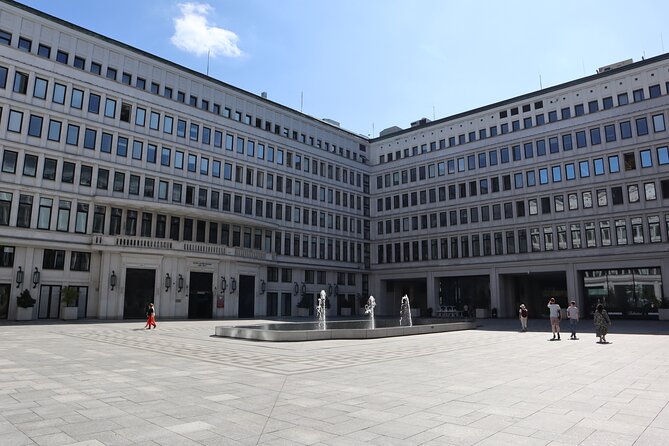
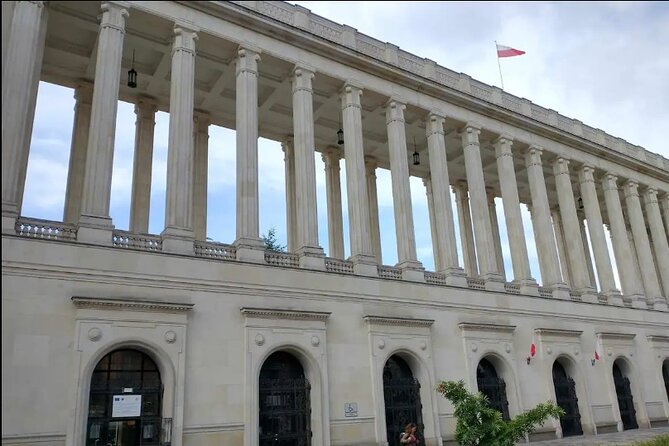
One of the tour’s main themes is socialist realism. You’ll look at perfect examples of it during the walk and talk about why you might think it looks nice, while Poles may not agree.
This stop is about interpretation, not taste. Socialist realism wasn’t only an artistic style. It was a message system. The guide explains how the style was used to shape what people believed was admirable, modern, and official.
What makes this section worth your time is the contrast. You’re not asked to memorize dates. You’re asked to notice how the design tries to steer emotion. Then the guide shows how locals experienced the same design as something heavier and more uncomfortable than outsiders might assume.
You’ll also hear the tour’s recurring humor thread, including the idea of how people made jokes out of scarcity and awkward public language. One famous example the guide uses is the phrase what can I get you?, treated at the time like a joke because stores often did not actually deliver.
Dworzec Centralny to the Palace of Culture and Science
From the retail and party-power theme, you move toward two landmarks that help explain the state’s reach and its obsession with visibility.
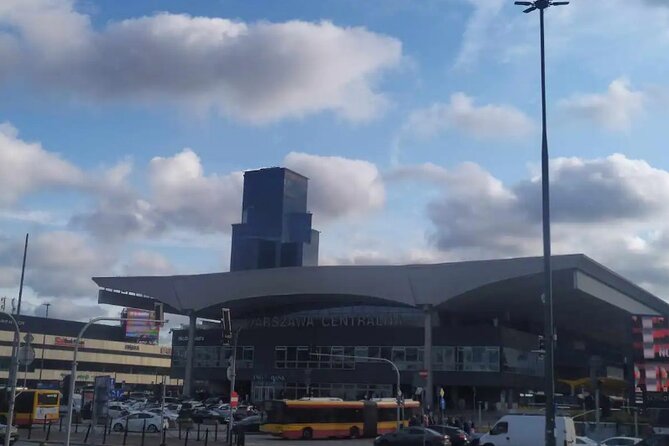
You pass by Dworzec Centralny Warszawa. The guide uses the rail hub context to talk about movement and the limits placed on travel. Even when people wanted to go somewhere new, the state made sure travel was not too easy or too far. That turns a transit spot into a symbol.
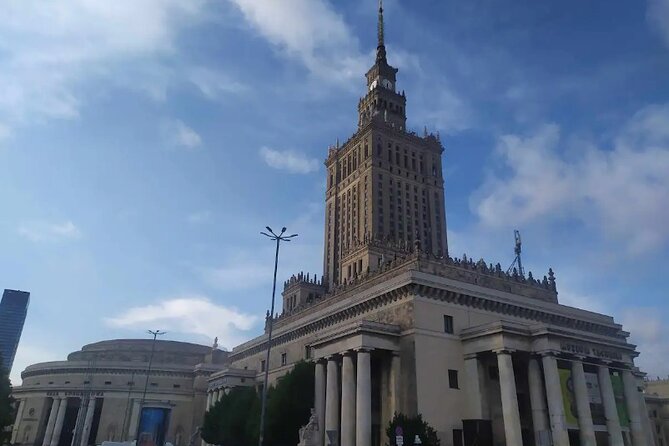
Then comes the Palace of Culture and Science, one of Warsaw’s most controversial buildings. The tour talks about it for more than one reason, and it’s clearly a highlight stop even if you’ve seen photos already.
You’ll get the deeper story behind the structure and why it landed the way it did. If you’re the type who likes a view, there is a viewing terrace option, but the entry fee is not included. I’d treat this as a choose-your-own-adventure moment. The building’s symbolism is the main point, and the terrace just adds another layer if your budget and time allow.
Wrapping Up at Emilii Plater 54, Then Continue Your Own Walk
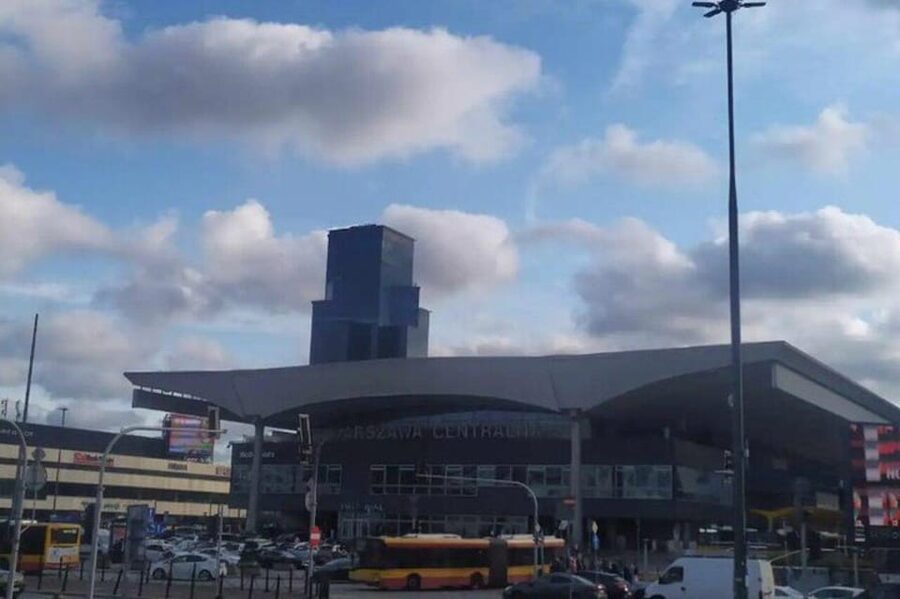
The tour finishes at Emilii Plater 54. This matters because you’re not dropped into some far edge with no options. After 150 minutes of heavy context, I like finishing somewhere that still gives you normal-city choices for food or browsing.
At the end, you’re also in a better position to explore independently. You now know what to look for: how propaganda style appears on facades, how public space is shaped for control, and how censorship turns into something people navigate day to day.
If you still have energy, use what you learned to spot the city’s bigger patterns. Even short self-guided wandering afterward feels more meaningful when you’ve just seen the logic behind the streets.
Who This Tour Is Best For
This is a great fit if you want more than dates and names. You’ll enjoy it if you like walking tours that explain how everyday life worked, including rationing pressures, censorship behavior, and the small coping strategies people used.
It’s also a strong choice if you’re the kind of traveler who asks questions. The guide style described in past sessions tends to include family and personal threads, which makes the story feel lived-in. Guides like Olivia and Agnieszka are named in prior tours, and they’re praised for humor, adaptability, and answering lots of questions.
Who should be cautious: if you have problems with walking long distances, this one may not be comfortable. The route is not extreme, but it is still a real city walk.
My Final Call: Should You Book It?
Book it if you want a clear, guided way to understand how communist rule shaped Warsaw beyond politics. For $32, you get a focused 2.5-hour route, English narration, an info pack with visual help, and a story that connects buildings to daily life.
Skip it or reconsider if you want a light and purely scenic walk. This tour is designed for meaning, and it covers censorship and espionage, plus the frustration and absurdity of life under the system.
If you like the idea of looking at Warsaw like a clue trail, this is the walk that makes the city start talking back.
Fresh Warsaw reviews
- Warsaw Off The Beaten Path Self-Drive Tour★ 5.0 · 18 reviews
- Private Warsaw Chopin Airport One Way Transfer★ 5.0 · 18 reviews
- Zelazowa Wola: Frederic Chopin Half-Day Private Tour★ 4.7 · 18 reviews
- Warsaw: 2-Hour Chopin’s Life Walking Tour★ 5.0 · 19 reviews
- Warsaw: melt museum Entry Ticket★ 3.5 · 19 reviews
- Deluxe Polish Food Tour Experience in Warsaw★ 5.0 · 19 reviews
- FSO Gunrange, Shooting Package US ARMY★ 5.0 · 19 reviews
- Gdansk and Malbork Castle Small Group Tour from Warsaw with Lunch★ 4.5 · 20 reviews
Walking Tours, compared.
Gdańsk City Sights & History Guided Walking Tour in English
Read our review →
Browse the lists this tour appears in