
This is interesting because you start right under Krakow’s Main Market Square, then shift above ground to hear the city’s darker side, crime, punishment, and superstition included. I especially like the way the underground museum uses reconstructions and artifacts to make the Middle Ages feel concrete, not vague. I also like the pacing that connects what you see underground to what you hear on the streets afterward, so the old city feels linked rather than separated.
One thing to think about first: this tour leans into horror. If torture and execution stories make you squirm, this is not a gentle stroll, and the group can move quickly with a guide who talks fast.
Quick hits
- Nearly 4,000 square meters underground: merchants, paths, and archaeological remains under the Rynek.
- Museum reconstructions you can picture: including 11th-century burials and traces of ancient streets.
- Tech-based medieval storytelling: holograms, touchscreens, and films that recreate everyday life.
- Above-ground Dark Krakow route: Main Square and lanes like Szpitalna and Floriańska tied to specific crimes.
- A monastery stop with preserved mummies plus the Death Bell story.
Meeting at Rynek Underground Museum, and what you’re paying for
I like tours that tell you exactly what the time is used for. This one is 3 hours, and the plan is built around two distinct worlds: the underground Rynek Underground Museum area first, then a walking portion above ground focused on punishments and legends.
At the start, you meet near the entrance to the Rynek Underground Museum, and your guide holds an excursions.city sign. That matters in a place like Krakow where sightlines can get confusing fast, especially if you are arriving close to departure time. Plan to arrive about 10 minutes early. If the group leaves, latecomers cannot join and tickets cannot be refunded, so do yourself a favor and be early.
Now, about the $51 per person price. You are paying for a licensed English live guide plus skip-the-line admission to the underground museum. The value comes from the guide doing the heavy lifting, especially for the “dark” part, where context is everything. Without a guide, you might see buildings and exhibits, but you’d miss the story chain that ties the underground and street legends together. That said, you are not paying for a long list of separate paid entrances. It’s one museum admission plus guided storytelling at specific surface spots.
More Museums in Krakow
- Auschwitz-Birkenau Museum and Memorial Guided Tour from Krakow
★ 4.5 · 1,510 reviews - Krakow: Rynek Underground Museum Guided Tour
★ 4.6 · 1,122 reviews - Krakow: City Card with Public Transport and Museums
★ 3.9 · 675 reviews
Descending under Main Market Square: what the underground section actually feels like
The most practical way to describe this experience is that you walk into a different Krakow. The tour takes you beneath Krakow’s Main Market Square to the Rynek Underground Museum, where you explore nearly 4,000 square meters of underground paths, merchant stalls, and archaeological remains.
This is where the tour earns its “terrifying dark” label, without turning into pure shock value. You get reconstructions and artifacts that help you picture daily life under the city, including how trade shaped the place. You do not just look at objects behind glass. You follow paths that feel like you are moving through a medieval city footprint.
Expect a guided walkthrough of things like:
- reconstructions of medieval burials (including 11th-century burials)
- traces of ancient streets and spaces
- artifacts tied to Krakow’s role as a trade hub
If you like history that has physical layout, this portion is strong. If you prefer modern museums with lots of explanation text, you might rely more on the guide’s speed and clarity, because the underground experience is largely experiential and guide-led.
Multimedia medieval Krakow: holograms, touchscreens, and why they work
Krakow Underground is not just “walk and read.” The tour includes multimedia installations such as holograms, touchscreens, and films. These recreations aim to show the movement of medieval life, from merchants’ calls to the way the city functioned.
Here’s why that matters for you: underground spaces can be hard to orient. Multimedia helps you understand where you are in the story, and it reduces the guesswork. You also get the feeling that the space was built for viewing, not just for storage of artifacts.
From a practical standpoint, this is also where tour pace can matter. One review noted that the guide spoke quickly, sometimes hard to follow when information came nonstop. That’s not unusual on history tours, but it’s worth flagging. If you are sensitive to fast speech, focus on taking notes lightly and keep your eyes on the guide when the group is moving, because the museum installations are only useful if you catch the context.
The surface shift: St. Mary’s Basilica and the old cemetery site
After the underground portion, you come back up and the Main Square starts to look different, because you now have the underground context in your head. St. Mary’s Basilica dominates the skyline, and the tour uses that change in perspective to set up the next theme: punishment and how the city treated wrongdoers.
You stand on the site of an old cemetery and learn how medieval Krakow handled punishment. That shift is smart. It reframes what you might otherwise treat as postcard scenery into a place that held real consequences.
If you are the kind of traveler who likes your stops connected, this works well. The underground section shows life, commerce, and physical traces. The surface section talks about how communities enforced rules, sometimes brutally, and how those decisions shaped public memory.
Another way through a Krakow day:
- From Krakow: Auschwitz-Birkenau Guided Tour & Hotel Pickup
★ 4.5 · 33,358 reviews - From Krakow: Auschwitz-Birkenau Guided Tour & Hotel Pickup
★ 4.5 · 29,340 reviews - Krakow: Auschwitz Guided Tour with Optional Hotel Pickup
★ 4.5 · 15,280 reviews - Krakow: Wieliczka Salt Mine Tour with Entry Ticket
★ 4.6 · 10,927 reviews
Walking Szpitalna and Floriańska: crimes that connect to real streets
Then the tour leans fully into the dark side with a street walk through areas once ruled by crime, executioners, and superstition. Two streets in particular show up in the story line: Szpitalna and Floriańska.
This portion is built around chilling tales of murder, betrayal, and mystery. The key point is that you are not simply hearing one spooky story at a time. You’re walking through a chain of locations, and the guide links each stop to a crime or a justice-related theme. That makes the stories feel grounded, because you can look at the street shape and imagine the same place when it was crowded with medieval life.
One practical drawback to note: this kind of walking tour gives you atmosphere more than it gives you entry doors. If you strongly want to step inside lots of different sites during the 3 hours, you might feel you wish there were more stops you could enter. That sentiment came up in a review, with someone saying they wanted to access more locations.
The Reformed Monastery segment: mummies and the Death Bell
Next up is the Reformed Monastery area. This stop is particularly “Krakow weird,” in the best way, because it includes stories tied to preserved mummies and the Death Bell, a detail that makes the past feel physical and specific.
You also hear about hidden undergrounds associated with the monastery. That connects nicely to the Underground Museum theme, because again you are dealing with a Krakow layered beneath Krakow. If you liked the Rynek Underground Museum for its physicality, this is the surface version of the same idea: the city kept secrets, and some of them survived.
Tone matters here. The tour mixes history with humor and horror, according to the experience description. In real life, that balance depends on the guide. In one review, Poline was praised for being well informed about murder and executioner stories, so if you are offered her (or a similarly strong storyteller), you can expect sharper detail and smoother delivery. If the guide is less organized, the story chain can feel like it races forward.
Haunted palaces and alchemists’ curses: where folklore becomes part of the tour
The tour continues with a trail linked to Krakow’s legendary alchemists and haunted townhouses and palaces. You hear ghostly legends passed through generations, with claims that the spirits of experiments might still linger.
I recommend treating these parts as folklore you can evaluate, not as “proof.” What makes the stop valuable is the way the guide uses the legends to explain how people once explained the world. In a city where history is crowded into tight spaces, stories like these can feel like a local language. Even if you keep a rational mindset, it gives you a sense of how residents talked about fear, science, and the unknown.
If you like dark legends but hate when they get too dramatic, you might appreciate that this tour still keeps one foot in documented history by anchoring stories to identifiable urban locations.
Executioners and torture instruments in Main Square: the finale that reframes everything
The final act is set in the heart of Krakow’s Main Square, where you hear the truth about executioners and the tools of torment used on prisoners. Public justice was part of the city’s spectacle, and you end where so many people already come for architecture and photo stops.
Why this ending works: by this point, you already visited the underground layers of the city and the story layers on the surface. Hearing about executioners and torture at the Main Square makes the square feel like a stage with history attached, not just a pretty open space.
Also, it helps you process what you saw earlier. The underground tour gives you the “how life functioned” angle, trade routes and everyday remains. The dark walk gives you the “how order was enforced, and what happened when it broke” angle. Together, you get a more complete mental map.
Just keep your expectations realistic. This is not a calm museum lecture. It is a guided story experience that can get graphic in topic. If you’re easily rattled, decide ahead of time whether you want to lean into the spooky details.
Practical tips: timing, clothing, and how to get the most out of a fast guide
A few practical things will make your experience smoother.
Arrive early and stay with the group. The tour asks for 10 minutes early arrival, and latecomers cannot join after departure. This is not a drop-in museum time slot.
Dress for temperature swings. One review specifically mentioned the cold, and underground spaces are often cooler than you expect. Bring a layer you’ll actually wear, and consider gloves if you get cold hands.
If you struggle with fast speech, focus your attention. One guide communication note from a review: the guide spoke reasonably English but sometimes talked so quickly that it was hard to follow. You can counter that by watching the guide’s pointing moments and taking quick notes on key names or locations.
Use the skip-the-line advantage wisely. Skip-the-line matters most when the museum queue exists. Once inside, you’ll get your real value from the guide’s storytelling, so don’t arrive flustered.
Not for kids under 12. The tour isn’t suitable for children under 12, which tells you the tone. Consider this carefully if you’re traveling with younger family members.
Should you book this terrifying dark tour?
Book it if you want a guided Krakow that connects streets to stories and underground remains to real themes like trade, punishment, and public justice. You’ll likely enjoy it most if you like history that has atmosphere, and if you are okay with dark topics presented as part of medieval city life.
Skip it, or at least choose a different style tour, if you want a lot of separate site entries in 3 hours, or if graphic subjects are a hard no for you. Based on what I know from the experience details, the underground section is the main “hands-on” part, while the rest is a story walk around key landmarks.
If you do book, I’d make one move to protect your enjoyment: show up early, wear warm layers, and decide in your head that you’re here for a guided narrative, not a slow independent museum tour. That mindset turns the fast pace from a frustration into part of the thrill.
FAQ
How long is the Krakow Underground Museum and Old Town dark tour?
The tour duration is 3 hours.
Where do I meet the guide?
Meet near the entrance to the Rynek Underground Museum. The guide holds an excursions.city sign.
Is the tour in English?
Yes. The live tour guide is English, and the group tours only run in one language.
What’s included in the price?
The tour includes a licensed expert guide and skip-the-line admission to the Rynek Underground Museum.
Is transportation included?
No, transportation to or from the attractions is not included.
Is this tour suitable for children?
It is not suitable for children under 12.
Fresh Krakow reviews
- Krakow Zakopane Cable Car Vodka Cheese and Hot Springs Tour★ 3.5 · 3 reviews
- Krakow Skip The Line Wawel Castle & Old Town Guided Tour★ 5.0 · 3 reviews
- Krakow: Zakopane and Thermal Pools Tour with Hotel Pickup★ 5.0 · 3 reviews
- Museo Czartorisky : Visita in Lingua Italiana salta fila…★ 3.5 · 3 reviews
- Half-Day John Paul II Route Tour from Krakow★ 5.0 · 3 reviews
- Krakow: John Paul II Home & Black Madonna Sanctuary – Guided Tour★ 5.0 · 3 reviews
- 1-Hour Tour to Krakow’s Old Town by Electric Golf Cart★ 5.0 · 3 reviews
- Auschwitz and Birkenau WITHOUT GUIDE private transport from Kraków★ 5.0 · 3 reviews
Museums in Krakow, compared.
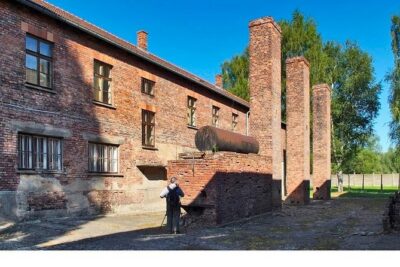
Auschwitz-Birkenau Museum and Memorial Guided Tour from Krakow
Read our review →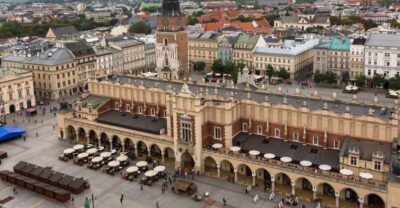

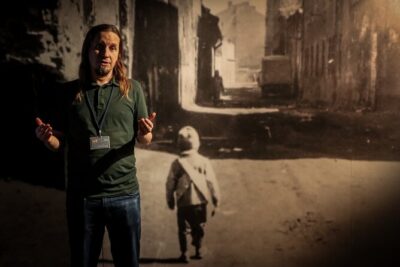
Krakow Schindler’s Factory Museum Guided Tour in English
Read our review →

Browse the lists this tour appears in