
Reviewed · SCHINDLER'S FACTORY TOURS
Krakow: Schindler’s Factory Tour & Skip-the-Line Entry
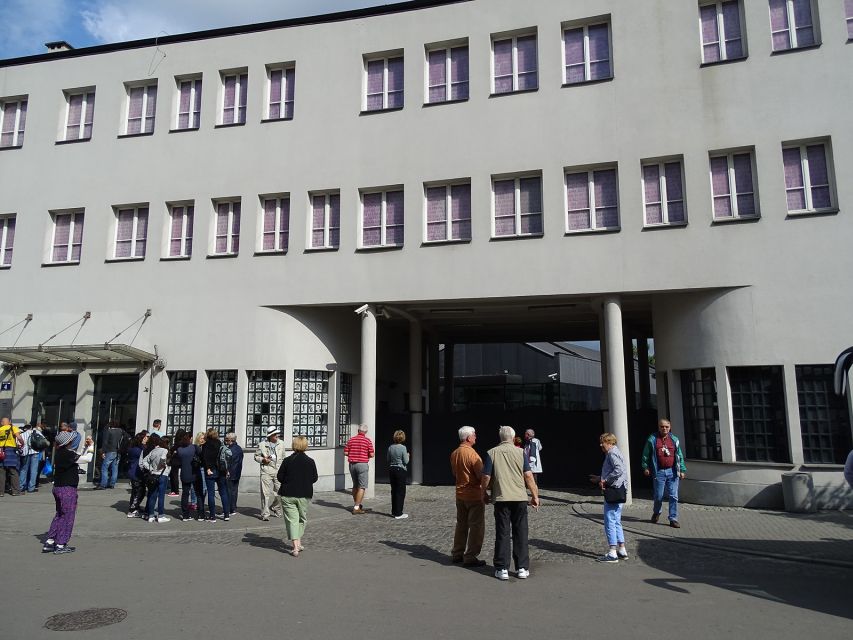
Schindler’s Factory is interesting because it’s one of the few Krakow stops that feels both cinematic and painfully grounded. You step into the former enamel factory tied to the story made famous by Schindler’s List, but the heart of the visit is the lived reality of WWII.
I love two things about this experience. First, the skip-the-line entry and tight 90-minute structure protect your time, so you can focus on the exhibits instead of waiting. Second, the museum staging and objects, like the preserved spaces and the recreated city moments, make the history easier to follow without feeling watered down.
One possible drawback is that this is a heavy subject, and the timed format does not give you tons of breathing room for rereading plaques at your own pace. If you tend to want slow museum wandering, plan to arrive ready to focus and move with the group.
Key things that make this tour worth your time
- Skip-the-line entry so you lose less time at the door and more time inside the story.
- Former enamel factory setting, including Oscar Schindler’s preserved office in the administrative building.
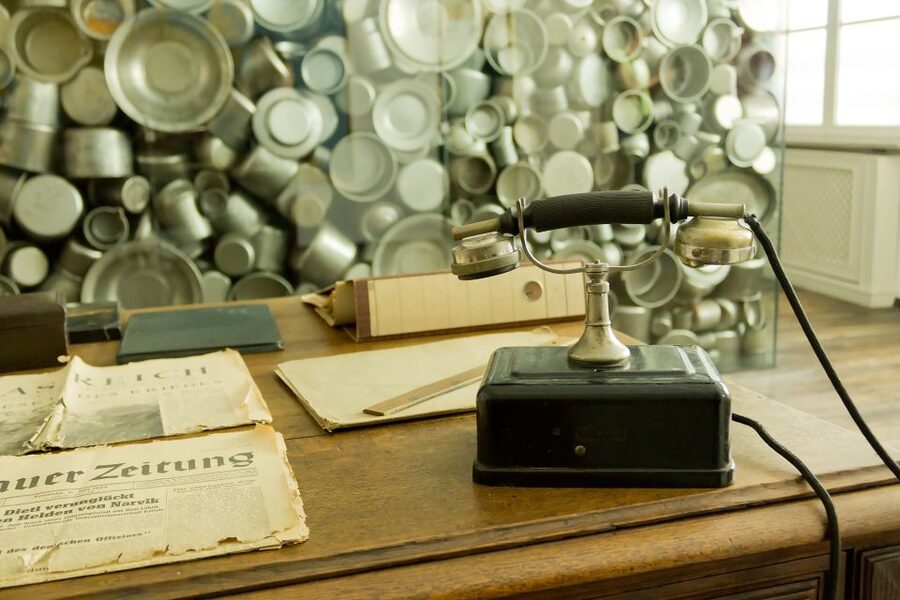
- Survivor’s Ark, thousands of enamel pots arranged as a powerful, physical memory of factory life.
- Theatrical museum storytelling with multimedia, documentary images, and staged Krakow spaces.
- Real ethical pressure in the Hall of Choices, built as a sculptural prompt for what people faced.
- Guides in multiple languages (Spanish, Italian, French, English, German), which matters for understanding details.
Schindler’s Factory in Krakow: what you’re actually walking into
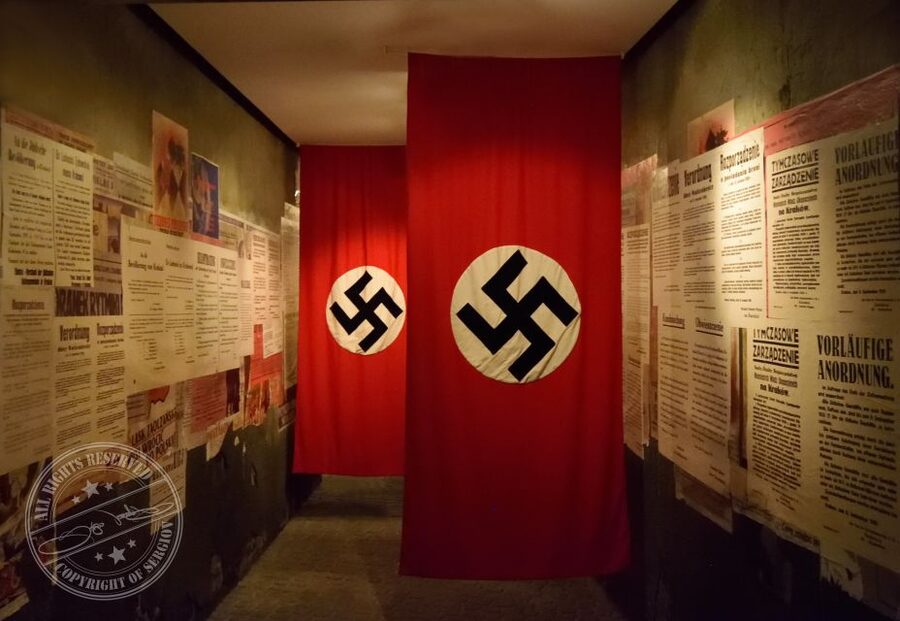
This tour centers on a guided visit to Schindler’s Factory, housed in a former enamel factory associated with Oscar Schindler. The museum focuses on everyday life in Krakow under Nazi occupation from 1939 to 1945, and it includes the perspectives of Poles and Jews, along with the occupiers who violently shattered long-standing Polish-Jewish relations.
It can be tempting to treat this place like a “Schindler only” stop because of Schindler’s List. But what you get here is broader. You are led through a narrative of the city itself, not just one man’s wartime role, with staged city scenes that help you picture how ordinary life was disrupted.
Expect a museum experience that uses film, photographs, eyewitness accounts, multimedia presentations, and theatrical reconstructions. The visit lasts 1.5 hours with a live professional guide, so you get structure and pacing without feeling rushed through the whole museum.
More of Schindler's Factory and wartime Krakow:
- Krakow: Schindler’s Factory Ticket and Guided Tour Option
★ 4.3 · 4,306 reviews - Krakow: Schindler’s Factory Tour with Entrance Ticket
★ 4.5 · 3,182 reviews - Krakow: Schindler’s Factory Skip-the-Line Ticket
★ 4.4 · 3,105 reviews
Getting there and meeting on Lipowa 4 without stress
The meeting point is Lipowa 4, 33-332 Kraków. Plan to arrive a few minutes early and wait at the front of the main entrance of the museum.
Your guide will be holding an excursion.city sign. That small detail matters because entry here is ticket-specific, and you want to start cleanly with your group rather than fumbling around outside.
Since the tour includes a professional guide and entrance fees, you’re not trying to coordinate multiple vendors on your own. You’re essentially purchasing interpretation plus priority entry in one package.
Skip-the-line entry, but don’t treat it like extra time
You get skip-the-ticket line access, which is a practical win in a museum that can get crowded. The value is not just convenience, it’s the chance to spend your energy on the exhibits, especially in sections that depend on attention rather than speed.
The tour is designed around a 90-minute window. That means you will move through major spaces with the guide, and you’ll be guided to the most meaningful installations like the Hall of Choices and key recreated environments.
If you’re the type who likes to stand back and take everything in at your own pace, you’ll want to do that selectively. Think of the guided portion as your map, then save any extra lingering for what still feels unfinished afterward.
Oscar Schindler’s office: preserved rooms with real tension
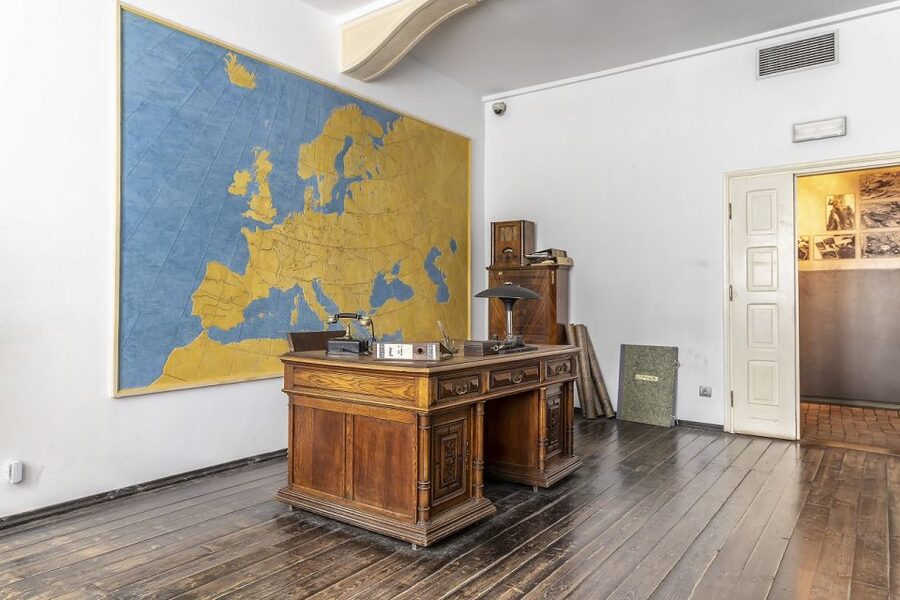
One of the most specific moments you’ll see is Schindler’s office, preserved inside the factory’s administrative building. This is the sort of stop that turns a famous wartime name into something tangible.
The guide experience helps here because the museum is not simply showing artifacts. It’s trying to connect people, decisions, and conditions in Krakow to what happened in and around the factory.
If you want to understand why Schindler’s story became so well known, this room is one of the best anchors. You can place it inside the bigger wartime machine instead of treating it like a standalone legend.
More to book in Krakow:
- From Krakow: Auschwitz-Birkenau Guided Tour & Hotel Pickup
★ 4.5 · 33,358 reviews - From Krakow: Auschwitz-Birkenau Guided Tour & Hotel Pickup
★ 4.5 · 29,340 reviews - Krakow: Auschwitz Guided Tour with Optional Hotel Pickup
★ 4.5 · 15,280 reviews - Krakow: Wieliczka Salt Mine Tour with Entry Ticket
★ 4.6 · 10,927 reviews
The Survivor’s Ark: thousands of enamel pots, not just symbolism
The museum features the Survivor’s Ark, made of thousands of enamel pots similar to the ones produced at the factory. This installation works because it is visual and physical, and it’s easy to grasp even if you are not a museum person.
Here’s what I like for practical understanding: you can look at the forms and immediately recognize the factory connection. Then, the guide connects that factory output to what it meant for the people caught in the war’s machinery.
This is also where the emotional weight starts to land. If you’re sensitive to WWII material, give yourself a moment here before you barrel forward. The museum uses these design elements to pace your reactions, and it helps to go along with that rhythm rather than fight it.
Krakow under Nazi occupation, 1939 to 1945: the city as the main character
The tour’s throughline is life in Krakow during Nazi occupation, with explanations that cover 1939 to 1945. The museum’s story is not only about survival narratives; it also frames how daily routines, social structures, and power shifted under violent control.
You’ll see documentary photography, eyewitness accounts, film documentaries, and multimedia presentations. The aim is to show you cause and effect, not just dates and locations.
A key detail that makes this work is the way the museum treats Krakow as a lived place. You’re guided through a theatrical recreation of historical city space, so the story feels like it’s happening around you, not trapped in a timeline.
If you’ve seen lots of WWII sites before, you might expect the museum to focus tightly on one thread. Instead, you’ll likely leave with a clearer sense of how the city’s Polish and Jewish communities were pulled apart, step by step.
Tram scenes and a typical Jewish apartment: recreations that teach
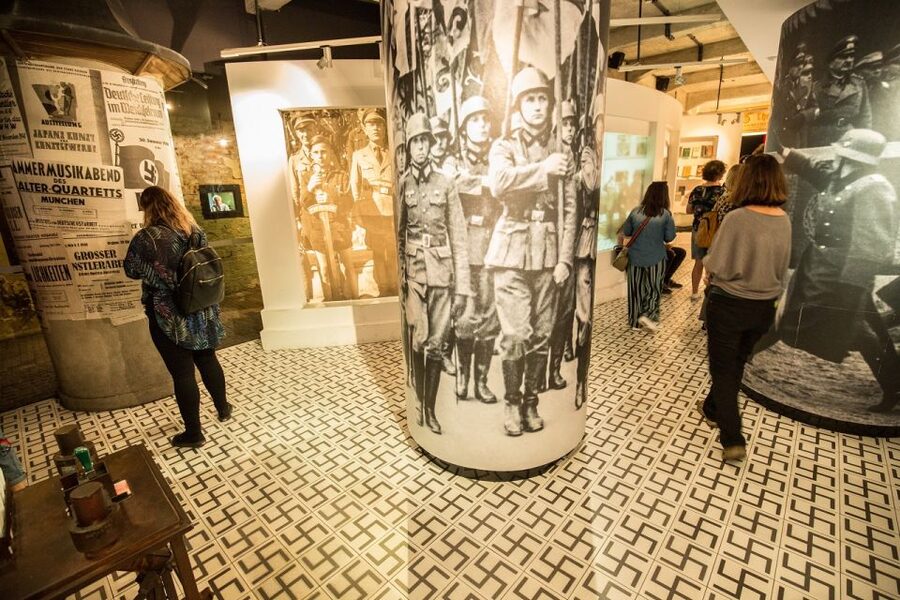
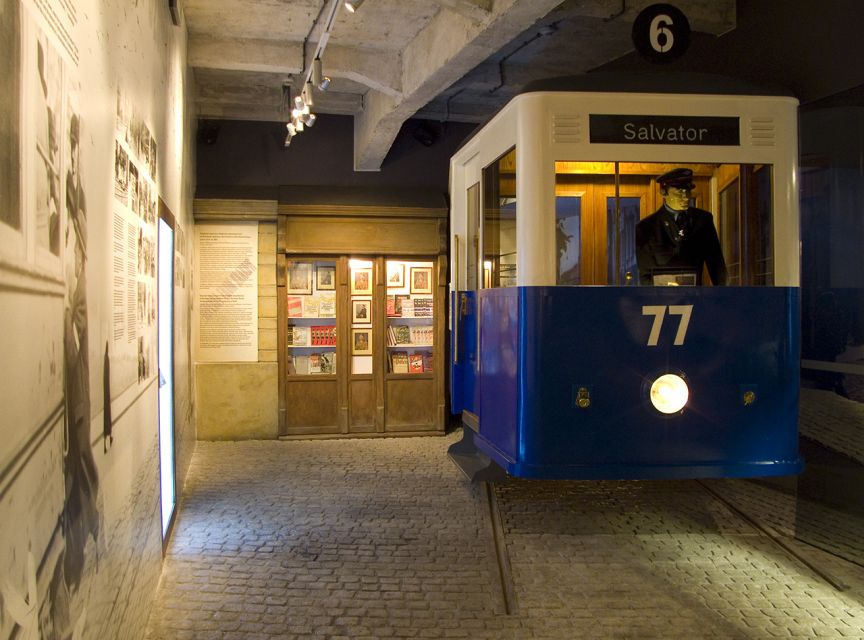
One of the most memorable parts is the theatrical experience that includes boarding a tram and watching a documentary portraying everyday life in the city. It’s a museum technique that can feel a little unusual until you realize what it’s doing. It turns “information” into “placement,” so you understand where people were and how movement and routines changed.
You’ll also visit a typical Jewish apartment recreation. For many people, this is where history becomes intimate. You are looking at how families lived, what rooms contained, and how ordinary space could become fragile under occupation.
These recreations are not just set dressing. The guide helps connect them to the larger wartime story you’ve been building in earlier rooms, so you don’t feel like you’re watching staged scenes without explanation.
And yes, there are artifacts tied to Plaszow camp. That section can be tough, but it matters because it keeps the museum from staying in the realm of atmosphere. It pulls the story back into what happened to people.
The Hall of Choices: the installation that forces you to think
The route ends up at the Hall of Choices, a sculptural installation designed to symbolize the ethical dilemmas people faced. This is one of those museum moments that goes beyond facts, because it asks you to consider how impossible decisions can be shaped by fear, survival, and pressure.
Even if you know the broad storyline already, this space can make you pause. You might find yourself reflecting on how “choices” under occupation were never equal, never free, and rarely clean.
The guide’s narration plays an important role here. It helps you interpret what the installation is trying to represent rather than treating it as a dramatic art stop.
If you’re visiting with someone who wants “action” history, this may feel slower. But if you want meaning, this is one of the best places to slow down and let the questions land.
Who this tour suits best, and what to watch for
This is a strong fit if you want a guided structure through a museum that uses a lot of media and staging. With a live guide, you get help connecting artifacts, installations, and recreated spaces into a single story.
It also suits you if you care about how the museum explains not only Nazi actions, but how Krakow’s Polish and Jewish communities were affected. The story here is built around relationships being disrupted, not just battlefield headlines.
Two watch-outs to keep in mind:
1) This is not a quick “Schindler highlights” tour. It’s more about Krakow through the war years, even though Schindler’s name is the gateway.
2) Times can shift slightly depending on museum scheduling, so check your message updates the day of your tour.
One more practical note: the museum is ticketed by participant name. That means last-minute substitutions are a pain, so get names right when you book and carry what you’re asked to carry for entry.
Price and value: what $49 buys you
At $49 per person for a 90-minute guided experience, you are paying for three things: entrance fees, a professional guide, and skip-the-line entry. In practice, that tends to be a good value when a museum is designed to be interpreted rather than merely looked at.
If you were going in on your own, you could save money. But you’d likely lose time and understanding, since this museum uses staged scenes and multimedia that reward context.
For me, the best value angle is the pacing. 90 minutes is long enough to hit the major installations like Schindler’s office, the enamel installation, the recreated spaces, and the Hall of Choices. It’s short enough that you can keep the day moving after you leave, without feeling like you spent your entire afternoon inside.
Language and pace: how the guide experience affects your day
Tours run with live guides in Spanish, Italian, French, English, or German. If you care about clarity, it’s worth choosing the language you understand best, since the museum includes testimony style materials and ethical framing that are easier when you catch every nuance.
Pace is part of the design. The group moves through key stops, and the guide narration shapes what you see and why you should care. In some cases, groups can be small, which can make the visit feel more comfortable and less crowded.
If your walking speed is limited, you can still make this work. The key is to communicate that early and let the guide know you might need a slower rhythm. The museum itself has a lot happening, so slowing down in the right spots can make the experience better, not worse.
Final call: should you book this Schindler’s Factory tour?
If you want one Krakow museum that connects WWII history to a real location, this is a strong booking. The skip-the-line access and guided interpretation are practical advantages, and the museum’s built-in staging helps you understand the story without having to do heavy homework first.
You might skip it only if you are looking for a light, casual visit, or if you prefer totally unguided time to wander without structure. The subject is intense, and the 1.5-hour guided format is designed to move at a particular pace.
If you do book, show up with your passport or ID ready, keep food and large bags out of the plan, and choose the tour language that lets you follow every part of the story.
FAQ
Where do I meet for the tour?
Meet at Lipowa 4, 33-332 Kraków, at the front of the museum’s main entrance. Your guide will be holding an excursion.city sign.
How long is the guided tour?
The guided tour lasts 1.5 hours, or about 90 minutes.
Does the price include museum entry and a guide?
Yes. Entrance fees and a professional guide are included in the price.
Are skip-the-line tickets included?
Yes. The activity includes skip-the-ticket line entry.
What languages are available for the live guide?
Guides are offered in Spanish, Italian, French, English, and German.
Do I need to bring a passport or ID?
Yes. You must bring a passport or ID for entry to Schindler’s Factory Museum, and your full names must match the reservation.
Are food and drinks allowed during the tour?
No. Food and drinks are not allowed.
Can I bring luggage or large bags?
No. Luggage or large bags are not allowed.
What is the cancellation policy?
You can cancel up to 24 hours in advance for a full refund.
Fresh Krakow reviews
- Czestochowa Black Madonna Private Day Tour from Krakow★ 5.0 · 18 reviews
- Zakopane PRIVATE TOUR from Krakow★ 5.0 · 18 reviews
- Krakow City Pass – Museums, Atractions & City Transport★ 4.0 · 18 reviews
- Chopin Candlelight Concert with Wine in Krakow★ 5.0 · 18 reviews
- Krakow: Garden of Lights Pinocchio Entry Ticket★ 4.7 · 18 reviews
- Auschwitz Birkenau Memorial and Museum group tour from Krakow★ 5.0 · 18 reviews
- Krakow: Schindler’s Factory & Ghetto Guided Tour★ 5.0 · 18 reviews
- Half-Day Wieliczka Salt Mine Tour from Krakow★ 5.0 · 18 reviews
Schindler's Factory Tours, compared.
Schindler’s Factory Ticket and Guided Tour Option
Read our review →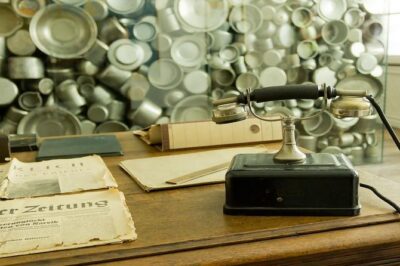
Krakow Schindler’s Factory Guided Tour with Admission Ticket
Read our review →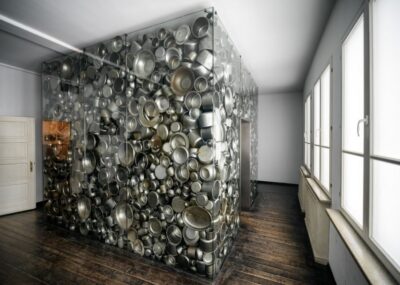
Kazimierz, Schindler’s Factory & Ghetto Guided Tour
Read our review →Browse the lists this tour appears in