
This tour is interesting because it uses the real Schindler’s Factory Museum, plus nearby streets, to show how Krakow changed under German occupation. It is a short, focused experience in a small group format, not a long, wandering history lecture.
I love that you get museum admission and a live guide for the full 90 minutes. I also love how the story centers on Oskar Schindler and the effort to save more than 1,200 Jews, with guides like Alicja Wrobel and Anna praised for making the connections feel human and clear.
One possible drawback is that it covers three museum levels in about 1.5 hours, so it moves at a steady pace. If you want to linger for a long time at exhibits, you may feel a bit rushed.
Key things to know before you go
- Schindler’s Factory Museum access plus a guide so you can focus on understanding, not ticket logistics
- A street walk that frames the 1939-to-1945 change in everyday life under occupation
- Groups capped at 14 people, which usually means more direct attention and less waiting
- English or German live guiding, helpful if you want accurate details in your own language
- A narrative focus on people, not slogans, including how daily life was systematically devalued
- A museum layout across three levels, so plan for stairs and close, focused viewing
Entering occupied Krakow through Schindler’s Factory, not just a museum visit
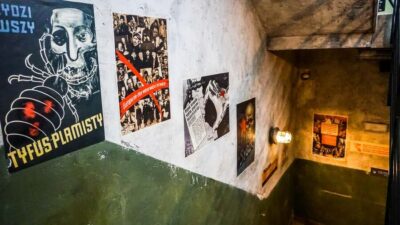
This is the kind of tour where the setting does half the work. You start at Oskar Schindler’s factory administrative building, which is now part of the Schindler’s Factory Museum. From the first steps, the tour keeps you grounded in place, not floating in general history.
What I like is that the time spent here is practical. In 90 minutes you get the big storyline, plus enough human detail to help you understand why Schindler’s actions mattered. The guide’s job is not to shock you for shock’s sake. It is to explain how the occupation reshaped daily life, and how one man’s choices became extraordinary.
You should also know this is not a light topic. Expect the material to be serious and heavy. If you are sensitive to Holocaust-era content, plan to mentally slow down and take breaks if you need them while you’re inside.
More Museums in Krakow
- Auschwitz-Birkenau Museum and Memorial Guided Tour from Krakow
★ 4.5 · 1,510 reviews - Krakow: Rynek Underground Museum Guided Tour
★ 4.6 · 1,122 reviews - Krakow: City Card with Public Transport and Museums
★ 3.9 · 675 reviews
Meeting point inside the factory area, and how to avoid start-time confusion
The meeting point is right before entering the museum, and the key detail is the sign. Look for a person holding a sign that reads: GoGuide – Schindler’s Factory guided tour, plus the starting time you booked.
Why this matters: on short tours, even a few minutes of miscommunication can throw off your whole schedule. If you arrive early, you give yourself time to find the right guide and get settled before the group starts.
Once you’re with the correct guide, you benefit from the tour’s built-in efficiency. Admission is included, and you skip the ticket line, which helps you spend more time learning and less time queueing.
The 90-minute flow, what you’ll actually do from start to finish
This is a compact tour by design. You spend about 1.5 hours walking and visiting exhibits, and the museum experience is spread across three levels. That means you get a full overview without turning it into an all-day commitment.
The rhythm usually looks like this:
- First, your guide sets the scene, explaining what life in Krakow was like when the German occupation began.
- Then you move through the museum, where the exhibits and stories connect to that timeline.
- You also walk through parts of Krakow to see how things shifted between 1939 and 1945, so the museum does not feel trapped in one room.
Because the tour is timed, I recommend you come with two things in mind. One, you want understanding over perfect memorization. Two, you are okay with moving at a steady pace between levels and stops.
Schindler’s Factory Museum across three levels, and why the layout helps
You do not just walk into one static exhibit area. The museum visit is organized across three levels, which changes how you absorb the story.
When a museum is layered like that, it often means the guide can build a clearer sequence. You start by understanding the broader conditions, then you move into more specific human accounts, and you end with the kind of reflection that sticks. Even if you do not remember every detail, the structure helps your brain make sense of a complicated period.
Practical tip: wear comfortable shoes. You are walking through the factory-museum space and moving between floors. Also, give your eyes time to adjust to exhibit lighting and text. In 90 minutes, the goal is to catch meaning, not read every line.
More of Schindler's Factory and wartime Krakow:
- Krakow: Schindler’s Factory Ticket and Guided Tour Option
★ 4.3 · 4,306 reviews - Krakow: Schindler’s Factory Tour with Entrance Ticket
★ 4.5 · 3,182 reviews - Krakow: Schindler’s Factory Skip-the-Line Ticket
★ 4.4 · 3,105 reviews - Krakow: Schindler’s Factory Tour with Entrance Ticket
★ 4.6 · 1,737 reviews
The story focus: Schindler’s choices and the people shaped by occupation
The heart of this tour is the story of Oskar Schindler and the effort to save over 1,200 Jews. That number is big, but the tour’s value is how it tries to make it feel personal.
Instead of presenting Schindler as a myth, the guide aims to explain the system around him: how persecution functioned and how people’s identities were targeted. One review highlights that the emphasis was not on politics as ideology or hatred as resentment. It was about the systematic attempt to devalue people who were different, had a mind of their own, or were born into a particular religion or way of life.
That approach matters. You come away with a sharper understanding of how oppression works, step by step, in daily life. You also understand why the actions of individuals like Schindler were so significant inside that machinery.
When guides connect the real story to Schindler’s List, it helps the details stick
A standout element from the reviews is how some guides connect the story to the film Schindler’s List, and then back it up with real people and real events. That kind of connection can be useful because many visitors arrive with some prior story memory from movies or books.
It is not about watching the film during your tour. It is about using a familiar reference point to help you understand what you are seeing in the museum. And when a guide is clear, you can connect the dots faster.
In particular, Alicja Wrobel is praised for this kind of clear storytelling, and Anna is praised for leaving no question unanswered. You might not get the same guide every time, but the lesson is consistent: this tour rewards you if your guide explains, not just recites.
Walking the streets of Krakow, seeing 1939-1945 change on foot
The museum alone can feel like a controlled indoor experience. The street walk is what brings the story back into the real geography.
The tour specifically includes walking through Krakow to see how life changed between 1939 and 1945. That means you are not only looking at artifacts. You are also looking at a city where people once had to navigate danger, shifting rules, and constant uncertainty.
Even if you are not a big “photo” person, this part helps you get orientation fast. You start noticing how the city feels like a place where life still happens, even though the events you’re learning about were so dark.
One more reason I like the street portion: it prevents the tour from becoming purely academic. You feel the timeline more. 1939 is not a year on a page. It becomes a starting point for what you are seeing around you.
Small group size, English or German, and why this format matters
This tour is capped at 14 people. That is an important value detail. With a group that small, your guide can slow down for questions, and the tour does not feel like you are being processed.
Live guiding also means you get explanations in context, which matters for events as complex as the German occupation and the Holocaust. The tour is offered in English and German, so you are not stuck with secondhand translations or audio-only interpretation.
If you like asking questions, this is one of the better formats to do it. You are close enough that the guide can respond clearly instead of answering in general terms for everyone.
Price and value at about $52 for museum entry plus a guided narrative
At around $52 per person for 90 minutes, the value comes from three bundled things:
- Admission to the museum
- A live guide
- Both museum time and a street walk
When a tour includes entry plus guiding, you avoid the “pay twice” problem that hits some sightseeing plans. You also avoid spending your energy on logistics and instead focus on understanding.
Is it the cheapest way to see the museum? Probably not. But it is usually better value than doing the museum alone if you care about context, timeline, and human stories. For Holocaust-era sites, I personally think a good guide is not an optional upgrade. It is part of learning responsibly and making the experience coherent.
So if you want a compact, guided, meaning-first visit, this pricing makes sense. If you prefer to read everything at your own pace with no group energy at all, you might compare the cost to a self-guided museum visit. But the tour’s format is built to be efficient and explanatory.
What to bring, and tiny rules that affect your comfort
Keep it simple.
- Bring a passport or ID card.
- Alcohol and drugs are not allowed.
That might sound minor, but it matters for a museum setting. When the rules are straightforward, you can focus on walking, listening, and looking.
Also plan for movement. This is a walking tour with museum levels, so dress for comfort rather than style.
Who this tour is best for, and who might skip it
This tour fits best if you:
- Want a clear storyline from the beginning of occupation through 1945
- Appreciate a guided format for museums, especially for difficult topics
- Prefer a small group where questions and pacing feel manageable
You might skip it if you:
- Strongly prefer self-guided pacing, with lots of stop-and-stare time
- Get overwhelmed quickly by Holocaust-era content and timelines presented in a condensed timeframe
If you fall into the “I want understanding, but I need space” category, you can still do it. Just accept that the tour is 90 minutes, and choose what you take from it instead of trying to process everything at once.
Should you book this Schindler’s Factory small group tour?
I think you should book it if you want one organized visit that combines the museum with a guided timeline of Krakow from 1939 to 1945. The small group limit, the included admission, and the live guide are the big reasons the tour feels like good use of time.
It is also a strong pick if you care about narration quality. Reviews highlight guides like Alicja Wrobel and Anna for answering questions and tying the story to real people, including references to Schindler’s List. That kind of clarity is what turns a collection of rooms into an understanding you can hold.
My only caution is pacing. With three levels in 1.5 hours, it is not a slow museum day. If you are the kind of traveler who loves lingering, you might feel rushed. If you are okay with a focused, guided sprint through a serious story, this is a smart Krakow choice.
FAQ
How long is the Schindler’s Factory Museum small group tour?
The tour lasts 90 minutes, or about 1.5 hours.
How big is the small group?
The tour uses a small group size of no more than 14 people.
What languages is the tour offered in?
The live tour guide is available in English and German.
Is museum admission included, or do I need tickets separately?
Admission to the Museum is included, and you skip the ticket line.
What do I need to bring with me?
You should bring a passport or ID card.
Is the tour wheelchair accessible?
Yes, the tour is wheelchair accessible.
Fresh Krakow reviews
- Czestochowa Black Madonna Private Day Tour from Krakow★ 5.0 · 18 reviews
- Zakopane PRIVATE TOUR from Krakow★ 5.0 · 18 reviews
- Krakow City Pass – Museums, Atractions & City Transport★ 4.0 · 18 reviews
- Chopin Candlelight Concert with Wine in Krakow★ 5.0 · 18 reviews
- Krakow: Garden of Lights Pinocchio Entry Ticket★ 4.7 · 18 reviews
- Half-Day Wieliczka Salt Mine Tour from Krakow★ 5.0 · 18 reviews
- Auschwitz Birkenau Memorial and Museum group tour from Krakow★ 5.0 · 18 reviews
- Krakow: Schindler’s Factory & Ghetto Guided Tour★ 5.0 · 18 reviews
Schindler's Factory Tours, compared.
Schindler’s Factory Ticket and Guided Tour Option
Read our review →
Krakow Schindler’s Factory Guided Tour with Admission Ticket
Read our review →
Kazimierz, Schindler’s Factory & Ghetto Guided Tour
Read our review →Browse the lists this tour appears in